

















Connect with us

Hi, what are you looking for?

Health

New Study Reveals High Benzene Levels in Popular Acne Products, Prompting Calls for FDA Action

A recent analysis has uncovered concerning levels of benzene, a chemical linked to cancer, in several widely used acne creams and cleansers, including popular brands such as Proactiv and Clearasil. This study, which builds upon previous research that faced scrutiny for its methodology, is intensifying pressure on the U.S. Food and Drug Administration (FDA) to address the safety of these products, particularly among American teenagers.

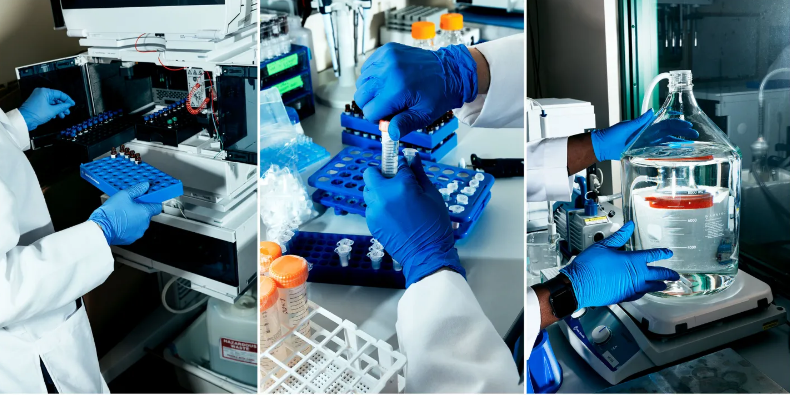
Researchers from Valisure, a laboratory based in New Haven, Connecticut, along with professors from Yale and Long Island universities, examined over 100 benzoyl peroxide (BPO) acne products sold at major retailers across six states. The results revealed that approximately one-third of these products contained dangerously high levels of benzene. Notably, Proactiv was found to contain 18 times the maximum allowable limit of the carcinogen in U.S. drugs, while a CVS-brand face wash had 13 times the FDA’s safety threshold.

“The results presented here suggest that a substantial portion of the BPO acne treatment market currently contains unacceptably high levels of benzene in products sitting on the shelf,” the researchers stated in their findings, published on Monday in the Journal of Investigative Dermatology.

This latest study follows an earlier analysis conducted by Valisure, which raised alarms about the presence of benzene in acne products. In March, the lab filed a petition with the FDA to recall the affected products. Although the FDA initially pledged to investigate Valisure’s claims, a spokesperson indicated in July that research is still ongoing. The earlier study received criticism for testing products at high temperatures, but the current research maintained products at room temperature, benefiting from peer review for added rigor.

While some acne products still showed elevated benzene levels, approximately 70 others, including Clean & Clear and Neutrogena, remained within safe limits when stored properly. However, certain Clearasil products had benzene levels marginally exceeding the U.S. limit of 2 parts per million. Alarmingly, the study also highlighted that benzene levels in acne treatments could significantly increase when exposed to ultraviolet light at body temperature, raising potential risks for users in sunny conditions.

In response to the findings, CVS Health Corp. stated its commitment to ensuring product safety, while Reckitt Benckiser Group Plc, the maker of Clearasil, expressed confidence in the safety of its products. Sun Pharmaceutical Industries Ltd., which acquired Proactiv maker Taro Pharmaceutical Industries Ltd. in June, has not yet commented.

The FDA had instructed drug manufacturers in 2021 to test certain products for benzene, particularly those containing hydrocarbons like benzoyl peroxide. However, none of the companies have responded to inquiries about their testing practices for benzene.

Christopher Bunick, a Yale University associate professor of dermatology and co-author of the study, emphasized the need for manufacturers to prioritize consumer safety, stating, “I think we’re going to see a little more careful attention from the manufacturers. They have a duty to the consumer to check.”


Business

Fraudsters are increasingly using AI-generated images and videos to trick people into handing over sensitive personal and financial information, according to FraudSMART, the financial crime awareness initiative operated by the Banking and Payments Federation Ireland (BPFI). The organisation has reported a rise in online adverts promoting fake, State-backed investment schemes. These scams often use fabricated images of well-known politicians and business figures to make the offers appear legitimate and encourage users to click on registration links. Niamh Davenport, head of financial crime at BPFI, said scammers are deliberately exploiting recent media coverage of a planned State-backed savings and investment scheme to give their frauds a sense of credibility. “They often claim the scheme is open to everyone, but that places are limited and being ‘snapped up’ fast, in order to pressure people to act quickly,” she said. “They typically promise guaranteed returns or a guaranteed monthly income.” FraudSMART said that while anyone can be targeted, people in their early 50s are particularly vulnerable to investment scams. This age group is often focused on retirement planning, making them more receptive to financial offers that appear secure or high-yield. According to the organisation, most scams follow a similar pattern. Victims are first directed to click a registration link and complete a short online form providing their contact details. They are then contacted by someone posing as a financial adviser, who urges them to make an immediate “security deposit” to secure participation in the scheme. Once a payment is made, the money is quickly moved through multiple accounts, often overseas, making recovery extremely difficult. Davenport warned that scammers are becoming more sophisticated in their use of technology, particularly AI tools that allow them to create realistic but entirely fake promotional content. These materials are designed to mimic legitimate financial advertisements and build trust with potential victims. Recent figures from An Garda Síochána show investment fraud rose by 20% last year, with losses exceeding €20 million. The scale of individual scams varies widely, ranging from smaller crypto-related frauds involving a few hundred euro to large-scale investment schemes where victims lose tens of thousands. FraudSMART is urging the public to remain cautious when encountering online investment advertisements, especially those promising guaranteed returns or requiring urgent action. It also advises consumers to avoid sharing personal information with unverified sources and to be wary of pressure tactics designed to rush financial decisions. Authorities continue to warn that fraudsters are adapting quickly, using advanced digital tools to target victims across multiple platforms.

Trending

Business

Fraudsters are increasingly using AI-generated images and videos to trick people into handing over sensitive personal and financial information, according to FraudSMART, the financial crime awareness initiative operated by the Banking and Payments Federation Ireland (BPFI). The organisation has reported a rise in online adverts promoting fake, State-backed investment schemes. These scams often use fabricated images of well-known politicians and business figures to make the offers appear legitimate and encourage users to click on registration links. Niamh Davenport, head of financial crime at BPFI, said scammers are deliberately exploiting recent media coverage of a planned State-backed savings and investment scheme to give their frauds a sense of credibility. “They often claim the scheme is open to everyone, but that places are limited and being ‘snapped up’ fast, in order to pressure people to act quickly,” she said. “They typically promise guaranteed returns or a guaranteed monthly income.” FraudSMART said that while anyone can be targeted, people in their early 50s are particularly vulnerable to investment scams. This age group is often focused on retirement planning, making them more receptive to financial offers that appear secure or high-yield. According to the organisation, most scams follow a similar pattern. Victims are first directed to click a registration link and complete a short online form providing their contact details. They are then contacted by someone posing as a financial adviser, who urges them to make an immediate “security deposit” to secure participation in the scheme. Once a payment is made, the money is quickly moved through multiple accounts, often overseas, making recovery extremely difficult. Davenport warned that scammers are becoming more sophisticated in their use of technology, particularly AI tools that allow them to create realistic but entirely fake promotional content. These materials are designed to mimic legitimate financial advertisements and build trust with potential victims. Recent figures from An Garda Síochána show investment fraud rose by 20% last year, with losses exceeding €20 million. The scale of individual scams varies widely, ranging from smaller crypto-related frauds involving a few hundred euro to large-scale investment schemes where victims lose tens of thousands. FraudSMART is urging the public to remain cautious when encountering online investment advertisements, especially those promising guaranteed returns or requiring urgent action. It also advises consumers to avoid sharing personal information with unverified sources and to be wary of pressure tactics designed to rush financial decisions. Authorities continue to warn that fraudsters are adapting quickly, using advanced digital tools to target victims across multiple platforms.

You May Also Like

Politics

WASHINGTON — The Pentagon announced on Sunday that the United States will send a Terminal High Altitude Area Defense (THAAD) battery to Israel, alongside...

Health

NEW YORK — Teen smoking in the United States has reached an all-time low in 2024, with significant declines in overall youth tobacco use,...

Politics

WASHINGTON — As the countdown to the November 5 presidential election continues, former President Donald Trump is urging his supporters to aim for a...

Politics

In September, NASA announced that summer 2024 was the hottest on record. Just days later, the U.S. faced the dual impact of Hurricanes Helene...