



















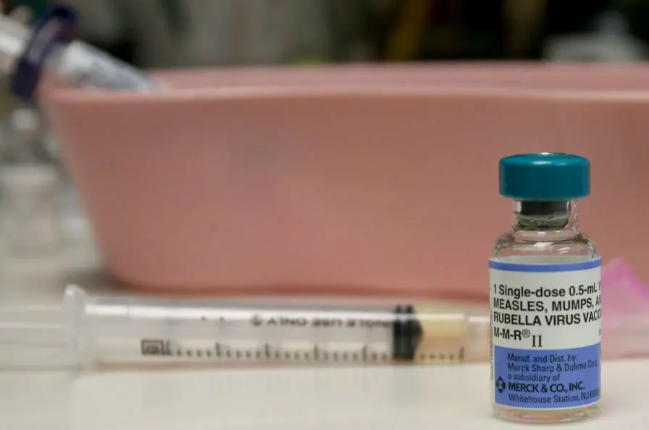
More than 130 unvaccinated students at two schools in South Carolina have been placed under quarantine after being exposed to measles, amid what health officials are calling one of the most concerning outbreaks in the state’s recent history.
The South Carolina Department of Public Health confirmed on Tuesday the state’s 16th measles case of the year. Officials said students at Global Academy and Fairforest Elementary School were exposed to the virus last week and will be required to remain out of school for 21 days — the full incubation period for measles — to prevent further transmission.
Of the 16 confirmed infections, five individuals were exposed in school settings and are currently quarantining at home, according to state officials.
“This is the most contagious human infection,” warned Dr. Paul Offit, director of the Vaccine Education Center at the Children’s Hospital of Philadelphia. “It’s not surprising that as kids go back to school and we move into the winter and early spring months, we’re seeing this virus once again surge.”
The outbreak in South Carolina mirrors a nationwide resurgence of measles. This summer, the United States reported its highest number of measles cases in 33 years, according to federal health data. Minnesota is also grappling with an outbreak, with 20 confirmed or probable cases so far this year.
Health experts attribute the resurgence to declining vaccination rates. The Centers for Disease Control and Prevention (CDC) says that when 95% or more of a community is vaccinated against measles, mumps, and rubella (MMR), herd immunity prevents widespread transmission. However, vaccination rates among U.S. kindergarteners fell to 92.7% in the 2023–2024 school year, and some parts of South Carolina have dropped as low as 90%.
Public health officials have repeatedly emphasized that the MMR vaccine remains the most effective protection against measles, a disease once declared eliminated in the U.S. more than two decades ago.
Nationwide, the CDC has confirmed 1,563 measles cases so far this year. Many stemmed from a major outbreak in Texas that began in January, which infected more than 700 people and led to three deaths — including two unvaccinated children.
Although Texas health officials declared that outbreak over in August, they warned the risk of resurgence remains high. Dr. Offit echoed that concern, saying that weakened vaccination policies and reduced disease monitoring could make future outbreaks harder to contain.
“Not only is this getting worse,” Offit said, “but we may not even know the full extent because the country’s surveillance capacity has been diminished.”
Health experts are urging parents to ensure their children are up to date with vaccinations as schools brace for the possibility of further spread in the coming months.