
















Connect with us

Hi, what are you looking for?

Health

Experts Warn Against TikTok Fertility Claims as Diet Alone Cannot Cure PCOS or Guarantee Pregnancy

As TikTok continues to grow as a platform for health and lifestyle content, an increasing number of influencers are sharing personal stories about how specific diets helped them get pregnant—particularly those living with polycystic ovary syndrome (PCOS). However, medical and nutrition experts caution that such claims can be misleading and potentially harmful.

PCOS is a common hormonal disorder that affects fertility and metabolic health. It can cause irregular menstrual cycles, infertility, hair loss, and complications with blood sugar and cholesterol. While nutrition plays a role in managing PCOS symptoms, experts emphasize that there is no one-size-fits-all food or diet that guarantees pregnancy.

“People are just sharing their personal experiences versus what might be more evidence-based for the broader population,” said McKenzie Caldwell, a registered dietitian and founder of Feed Your Zest Nutrition & Wellness. “We have to take them with a grain of salt.”

Some influencers promote the idea that dietary changes can “balance hormones” and lead to pregnancy. But health professionals point out that the term “hormone balancing” is vague and not medically accurate. Dr. Lora Shahine, a reproductive endocrinologist based in Seattle and host of the Brave & Curious podcast, supports healthy eating but warns that relying solely on diet may delay appropriate medical care.

“I see people who I wish would have come to see me sooner,” said Dr. Shahine. “Diet and lifestyle are important pieces of the picture, but they’re not the whole picture.”

Vanessa Rissetto, co-founder of Culina Health, echoed this concern, saying that although food can support fertility, it is dangerous to assume that what worked for one person will work for another. “IVF is expensive and emotionally taxing, so I understand the desire to try natural methods first. But telling people ‘just do this and it’ll work’ is irresponsible.”

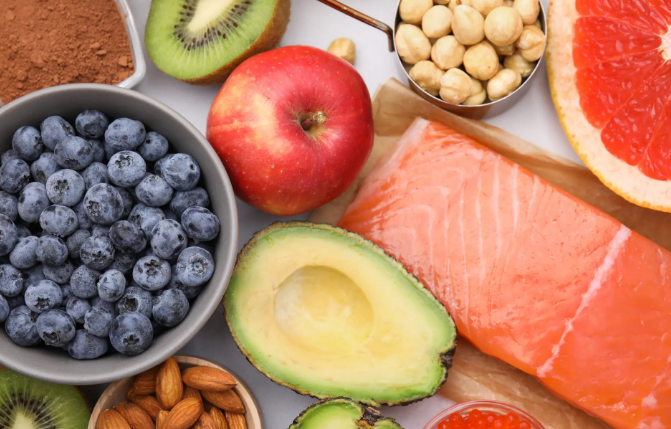
While the Mediterranean diet—rich in fruits, vegetables, whole grains, and healthy fats—has been associated with improved fertility outcomes, there is no conclusive evidence that it, or any other diet, can guarantee conception. Experts also challenge common internet trends like cutting out gluten or dairy unless medically necessary.

“There is zero evidence that avoiding gluten or dairy improves fertility unless someone has a diagnosed intolerance,” Caldwell explained, adding that these foods often provide essential nutrients and fiber.

Some also promote the keto diet, but Caldwell advises against it, noting that low-carbohydrate eating may deprive the body of important antioxidants and fiber needed for hormonal and overall health.

Anthea Levi, a registered dietitian and founder of ALIVE+WELL Nutrition, said some online claims—such as the necessity of eating only raw vegetables—are unfounded. “Cooking vegetables can actually improve digestibility and nutrient absorption for many people,” she said.

Levi and others encourage individuals to consult credentialed professionals rather than rely on social media influencers. “It’s never about one food,” she said. “Your overall dietary patterns matter far more than any singular ingredient when it comes to supporting fertility and hormone health.”


Business

Fraudsters are increasingly using AI-generated images and videos to trick people into handing over sensitive personal and financial information, according to FraudSMART, the financial crime awareness initiative operated by the Banking and Payments Federation Ireland (BPFI). The organisation has reported a rise in online adverts promoting fake, State-backed investment schemes. These scams often use fabricated images of well-known politicians and business figures to make the offers appear legitimate and encourage users to click on registration links. Niamh Davenport, head of financial crime at BPFI, said scammers are deliberately exploiting recent media coverage of a planned State-backed savings and investment scheme to give their frauds a sense of credibility. “They often claim the scheme is open to everyone, but that places are limited and being ‘snapped up’ fast, in order to pressure people to act quickly,” she said. “They typically promise guaranteed returns or a guaranteed monthly income.” FraudSMART said that while anyone can be targeted, people in their early 50s are particularly vulnerable to investment scams. This age group is often focused on retirement planning, making them more receptive to financial offers that appear secure or high-yield. According to the organisation, most scams follow a similar pattern. Victims are first directed to click a registration link and complete a short online form providing their contact details. They are then contacted by someone posing as a financial adviser, who urges them to make an immediate “security deposit” to secure participation in the scheme. Once a payment is made, the money is quickly moved through multiple accounts, often overseas, making recovery extremely difficult. Davenport warned that scammers are becoming more sophisticated in their use of technology, particularly AI tools that allow them to create realistic but entirely fake promotional content. These materials are designed to mimic legitimate financial advertisements and build trust with potential victims. Recent figures from An Garda Síochána show investment fraud rose by 20% last year, with losses exceeding €20 million. The scale of individual scams varies widely, ranging from smaller crypto-related frauds involving a few hundred euro to large-scale investment schemes where victims lose tens of thousands. FraudSMART is urging the public to remain cautious when encountering online investment advertisements, especially those promising guaranteed returns or requiring urgent action. It also advises consumers to avoid sharing personal information with unverified sources and to be wary of pressure tactics designed to rush financial decisions. Authorities continue to warn that fraudsters are adapting quickly, using advanced digital tools to target victims across multiple platforms.

Trending

Business

Fraudsters are increasingly using AI-generated images and videos to trick people into handing over sensitive personal and financial information, according to FraudSMART, the financial crime awareness initiative operated by the Banking and Payments Federation Ireland (BPFI). The organisation has reported a rise in online adverts promoting fake, State-backed investment schemes. These scams often use fabricated images of well-known politicians and business figures to make the offers appear legitimate and encourage users to click on registration links. Niamh Davenport, head of financial crime at BPFI, said scammers are deliberately exploiting recent media coverage of a planned State-backed savings and investment scheme to give their frauds a sense of credibility. “They often claim the scheme is open to everyone, but that places are limited and being ‘snapped up’ fast, in order to pressure people to act quickly,” she said. “They typically promise guaranteed returns or a guaranteed monthly income.” FraudSMART said that while anyone can be targeted, people in their early 50s are particularly vulnerable to investment scams. This age group is often focused on retirement planning, making them more receptive to financial offers that appear secure or high-yield. According to the organisation, most scams follow a similar pattern. Victims are first directed to click a registration link and complete a short online form providing their contact details. They are then contacted by someone posing as a financial adviser, who urges them to make an immediate “security deposit” to secure participation in the scheme. Once a payment is made, the money is quickly moved through multiple accounts, often overseas, making recovery extremely difficult. Davenport warned that scammers are becoming more sophisticated in their use of technology, particularly AI tools that allow them to create realistic but entirely fake promotional content. These materials are designed to mimic legitimate financial advertisements and build trust with potential victims. Recent figures from An Garda Síochána show investment fraud rose by 20% last year, with losses exceeding €20 million. The scale of individual scams varies widely, ranging from smaller crypto-related frauds involving a few hundred euro to large-scale investment schemes where victims lose tens of thousands. FraudSMART is urging the public to remain cautious when encountering online investment advertisements, especially those promising guaranteed returns or requiring urgent action. It also advises consumers to avoid sharing personal information with unverified sources and to be wary of pressure tactics designed to rush financial decisions. Authorities continue to warn that fraudsters are adapting quickly, using advanced digital tools to target victims across multiple platforms.

You May Also Like

Politics

WASHINGTON — The Pentagon announced on Sunday that the United States will send a Terminal High Altitude Area Defense (THAAD) battery to Israel, alongside...

Health

NEW YORK — Teen smoking in the United States has reached an all-time low in 2024, with significant declines in overall youth tobacco use,...

Politics

WASHINGTON — As the countdown to the November 5 presidential election continues, former President Donald Trump is urging his supporters to aim for a...

Politics

In September, NASA announced that summer 2024 was the hottest on record. Just days later, the U.S. faced the dual impact of Hurricanes Helene...