


















The Environmental Protection Agency (EPA) has approved the use of two pesticides containing per- and polyfluoroalkyl substances (PFAS), commonly known as “forever chemicals,” on a wide range of crops and landscapes, raising alarm among environmentalists and public health experts.
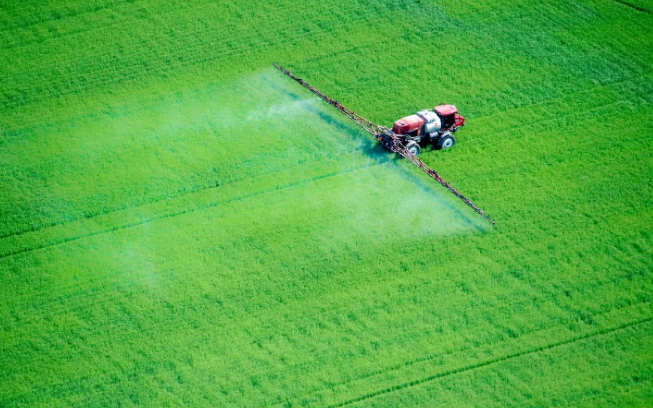
On November 18, the agency cleared the pesticide isocycloseram for use on golf courses, decorative lawns, institutional grounds, and crops including cereal grains, beans, peas, tomatoes, oranges, and almonds. This follows a similar approval two weeks earlier for cyclobutrifluram. Both pesticides contain PFAS, chemicals that persist in the environment and have been linked to serious health effects, including reproductive harm, hormonal disruptions, kidney cancer, developmental delays, and immune system suppression.
PFAS are highly resistant to breakdown and can accumulate in the human body over time. A 2020 study published in the Journal of the National Cancer Institute found that 98% of Americans tested had detectable levels of PFAS in their blood. While the chemicals are eventually excreted, ongoing exposure replaces what is lost, creating a continuous risk.
Environmental experts have warned that the approval of these chemicals may have long-term consequences. Erik Olson, a senior attorney at the Natural Resources Defense Council, said, “These forever chemicals are highly toxic even at very low doses. Spraying them on food crops raises serious concerns about human exposure.”
The EPA’s regulatory definition of PFAS has also drawn criticism. Internationally, the Organisation for Economic Co-operation and Development (OECD) defines PFAS as chemicals with at least one fully fluorinated carbon atom, covering roughly 15,000 compounds. The EPA, however, now only considers compounds with two fully fluorinated carbons as PFAS, potentially excluding over 10,000 chemicals from regulation. Nathan Donley, director of environmental health science at the Center for Biological Diversity, said, “The EPA is effectively defining away thousands of chemicals that scientists consider hazardous, prioritizing industry interests over public safety.”
Concerns are heightened by the current leadership at the EPA’s pesticide office. Several top officials, including Kyle Kunkler, Nancy Beck, and Lynn Dekleva, have backgrounds in chemical and agricultural industry lobbying, prompting criticism that regulatory decisions favor industry over public health.
PFAS contamination in agriculture is difficult to avoid. Organic produce can reduce exposure, but PFAS are present in soil and water across the United States. Studies indicate that water-rich crops, such as tomatoes and watermelon, accumulate particularly high levels. Children are especially vulnerable due to their higher intake of water, food, and air relative to body weight, and PFAS can be transmitted through breast milk.
Annual pesticide use containing PFAS is staggering. Research from the Center for Biological Diversity estimates that roughly 30 million pounds are applied to U.S. crops each year, with California alone accounting for 2.5 million pounds, according to the Environmental Working Group.
Nathan Donley warns that the burden of contamination will affect future generations. “This is pollution that never goes away. It is not us paying the price—it will be our children and their children,” he said.
The EPA declined to comment directly on the recent approvals but maintains that the chemicals do not meet its definition of PFAS, a stance critics say contradicts scientific consensus. The approvals mark a significant expansion of PFAS-containing pesticide use in the United States, raising questions about long-term environmental and public health impacts.