















Connect with us

Hi, what are you looking for?

Health

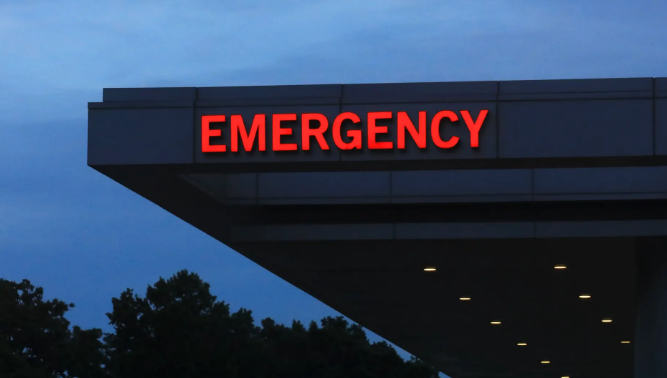
Emergency Rooms at Risk as Provider Tax Cuts Threaten U.S. Health Care System

A significant but little-known provision in the recently passed “One Big Beautiful Bill Act” could jeopardize a cornerstone of American health care: the reliability of emergency rooms. The legislation includes a phased reduction of the nationwide provider tax—from 6% to 3.5%—a move that health experts warn could trigger widespread hospital disruptions and the closure of hundreds of nursing homes.

The provider tax, used by 47 states, is a key mechanism for funding Medicaid. Hospitals pay the tax, which states then leverage to draw down additional federal Medicaid funds. That money helps keep ERs staffed, hospital beds open, and nursing homes operational. With the new federal cut, states will receive less Medicaid funding—leaving health care providers scrambling to fill the gap.

“This might sound like a technical adjustment, but the ripple effects will be felt in every hospital and emergency room across the country,” said a health policy researcher at Brown University’s School of Public Health. Their analysis estimates that more than 600 nursing homes could close nationwide as a direct result of the cuts.

These closures would have cascading effects. Nursing homes care for patients recovering from surgeries or chronic illnesses who can’t return home but don’t need intensive hospital care. If these facilities shut down, patients may remain in hospital beds longer, clogging the system and crowding emergency departments.

“This is how the system breaks down,” said one emergency physician. “When hospital beds are full, patients back up in the ER, and when ERs are overwhelmed, care delays become deadly.”

The strain will likely hit rural communities and low-income families hardest. In rural areas, where the nearest hospital may already be miles away, nursing home closures could mean even longer travel times in emergencies. For Medicaid-dependent patients, especially the elderly and disabled, losing access to care could be devastating.

Though states could choose to increase taxes or implement new fees to replace the lost funding, such efforts would vary widely across states, creating a patchwork of care quality nationwide.

The cut was included in a bill that also featured sweeping tax reductions, including the elimination of taxes on overtime and tips, and major cuts to clean energy and social welfare programmes. While supporters argue the bill offers economic relief, critics warn that undermining Medicaid support infrastructure could cost lives.

As Americans gather for summer celebrations, experts urge the public and policymakers alike to consider the broader implications. “A functioning ER is something we all rely on,” said one health advocate. “Weakening the system behind it could leave us all vulnerable when we need it most.”

Business

Fraudsters are increasingly using AI-generated images and videos to trick people into handing over sensitive personal and financial information, according to FraudSMART, the financial crime awareness initiative operated by the Banking and Payments Federation Ireland (BPFI). The organisation has reported a rise in online adverts promoting fake, State-backed investment schemes. These scams often use fabricated images of well-known politicians and business figures to make the offers appear legitimate and encourage users to click on registration links. Niamh Davenport, head of financial crime at BPFI, said scammers are deliberately exploiting recent media coverage of a planned State-backed savings and investment scheme to give their frauds a sense of credibility. “They often claim the scheme is open to everyone, but that places are limited and being ‘snapped up’ fast, in order to pressure people to act quickly,” she said. “They typically promise guaranteed returns or a guaranteed monthly income.” FraudSMART said that while anyone can be targeted, people in their early 50s are particularly vulnerable to investment scams. This age group is often focused on retirement planning, making them more receptive to financial offers that appear secure or high-yield. According to the organisation, most scams follow a similar pattern. Victims are first directed to click a registration link and complete a short online form providing their contact details. They are then contacted by someone posing as a financial adviser, who urges them to make an immediate “security deposit” to secure participation in the scheme. Once a payment is made, the money is quickly moved through multiple accounts, often overseas, making recovery extremely difficult. Davenport warned that scammers are becoming more sophisticated in their use of technology, particularly AI tools that allow them to create realistic but entirely fake promotional content. These materials are designed to mimic legitimate financial advertisements and build trust with potential victims. Recent figures from An Garda Síochána show investment fraud rose by 20% last year, with losses exceeding €20 million. The scale of individual scams varies widely, ranging from smaller crypto-related frauds involving a few hundred euro to large-scale investment schemes where victims lose tens of thousands. FraudSMART is urging the public to remain cautious when encountering online investment advertisements, especially those promising guaranteed returns or requiring urgent action. It also advises consumers to avoid sharing personal information with unverified sources and to be wary of pressure tactics designed to rush financial decisions. Authorities continue to warn that fraudsters are adapting quickly, using advanced digital tools to target victims across multiple platforms.

Trending

Business

Fraudsters are increasingly using AI-generated images and videos to trick people into handing over sensitive personal and financial information, according to FraudSMART, the financial crime awareness initiative operated by the Banking and Payments Federation Ireland (BPFI). The organisation has reported a rise in online adverts promoting fake, State-backed investment schemes. These scams often use fabricated images of well-known politicians and business figures to make the offers appear legitimate and encourage users to click on registration links. Niamh Davenport, head of financial crime at BPFI, said scammers are deliberately exploiting recent media coverage of a planned State-backed savings and investment scheme to give their frauds a sense of credibility. “They often claim the scheme is open to everyone, but that places are limited and being ‘snapped up’ fast, in order to pressure people to act quickly,” she said. “They typically promise guaranteed returns or a guaranteed monthly income.” FraudSMART said that while anyone can be targeted, people in their early 50s are particularly vulnerable to investment scams. This age group is often focused on retirement planning, making them more receptive to financial offers that appear secure or high-yield. According to the organisation, most scams follow a similar pattern. Victims are first directed to click a registration link and complete a short online form providing their contact details. They are then contacted by someone posing as a financial adviser, who urges them to make an immediate “security deposit” to secure participation in the scheme. Once a payment is made, the money is quickly moved through multiple accounts, often overseas, making recovery extremely difficult. Davenport warned that scammers are becoming more sophisticated in their use of technology, particularly AI tools that allow them to create realistic but entirely fake promotional content. These materials are designed to mimic legitimate financial advertisements and build trust with potential victims. Recent figures from An Garda Síochána show investment fraud rose by 20% last year, with losses exceeding €20 million. The scale of individual scams varies widely, ranging from smaller crypto-related frauds involving a few hundred euro to large-scale investment schemes where victims lose tens of thousands. FraudSMART is urging the public to remain cautious when encountering online investment advertisements, especially those promising guaranteed returns or requiring urgent action. It also advises consumers to avoid sharing personal information with unverified sources and to be wary of pressure tactics designed to rush financial decisions. Authorities continue to warn that fraudsters are adapting quickly, using advanced digital tools to target victims across multiple platforms.

You May Also Like

Politics

WASHINGTON — The Pentagon announced on Sunday that the United States will send a Terminal High Altitude Area Defense (THAAD) battery to Israel, alongside...

Health

NEW YORK — Teen smoking in the United States has reached an all-time low in 2024, with significant declines in overall youth tobacco use,...

Politics

WASHINGTON — As the countdown to the November 5 presidential election continues, former President Donald Trump is urging his supporters to aim for a...

Politics

In September, NASA announced that summer 2024 was the hottest on record. Just days later, the U.S. faced the dual impact of Hurricanes Helene...