


















Connect with us

Hi, what are you looking for?

KAUST and AcademyHots Conclude Successful SparkTech Summer Camp, Empowering Youth in Cybersecurity, Gaming, and AI

Education

KAUST and AcademyHots Conclude Successful SparkTech Summer Camp, Empowering Youth in Cybersecurity, Gaming, and AI

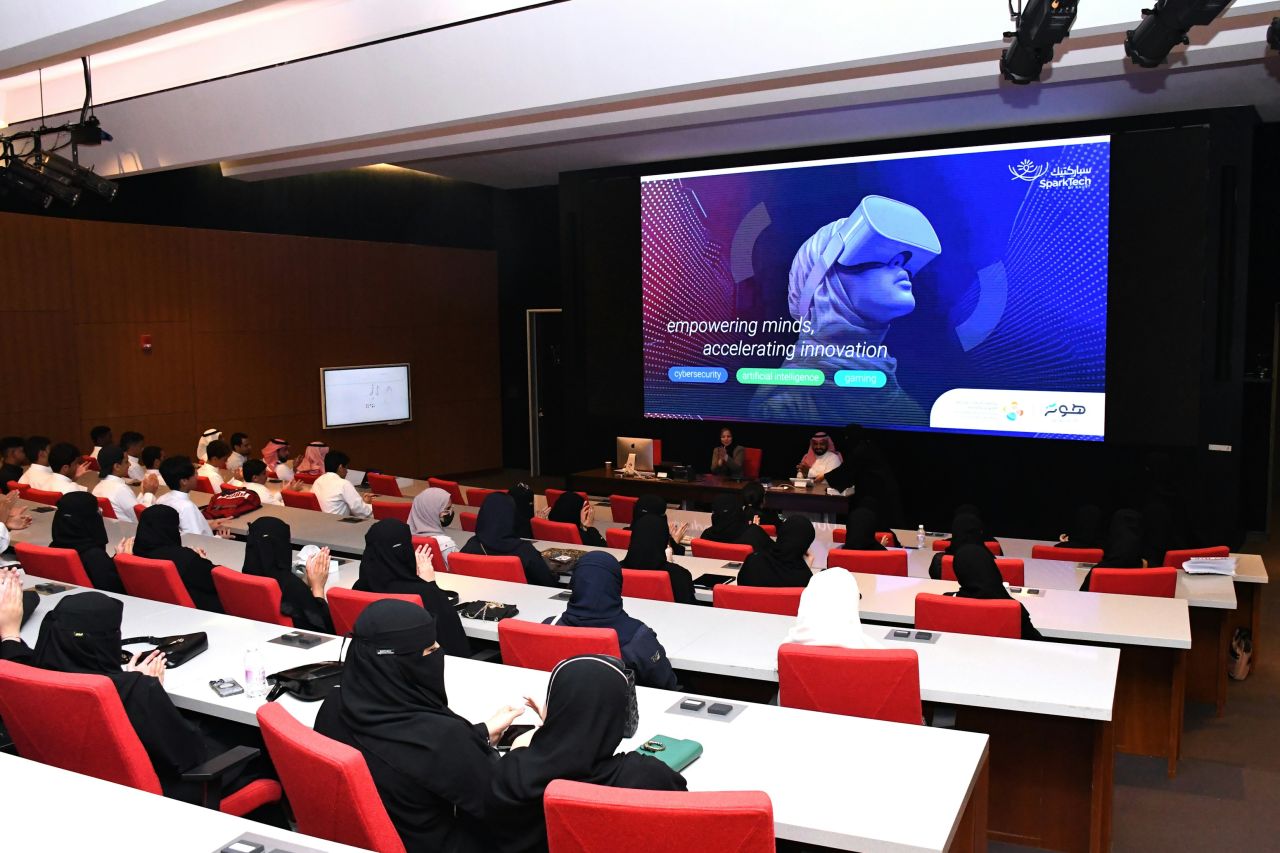
Thuwal, Saudi Arabia – King Abdullah University of Science and Technology (KAUST), in collaboration with AcademyHots, has successfully concluded the SparkTech Summer Camp, a transformative initiative designed to immerse local high school students in cutting-edge technology fields. The camp, held over the summer, brought together 100 young Saudi students aged 17-18 to explore the realms of cybersecurity, gaming, and artificial intelligence (AI).

The SparkTech Summer Camp aligns with Saudi Arabia’s ambitious Vision 2030, which emphasizes the importance of youth empowerment and innovation in the Kingdom’s transition to a knowledge-based economy. Through this initiative, KAUST and AcademyHots aimed to ignite a passion for technology and equip the next generation with the skills necessary to thrive in a rapidly evolving digital landscape.

Over the course of the camp, students participated in a series of hands-on workshops and interactive sessions led by experts in the fields of cybersecurity, gaming, and AI. The curriculum was designed to provide a comprehensive understanding of these critical areas, offering participants the opportunity to develop practical skills, work on real-world projects, and gain insights into potential career paths.

KAUST and AcademyHots Conclude Successful SparkTech Summer Camp, Empowering Youth in Cybersecurity, Gaming, and AI-0

Dr. Tony Chan, President of KAUST, highlighted the significance of the camp in fostering innovation and preparing young Saudis for future challenges. “At KAUST, we are committed to nurturing the talent of tomorrow. The SparkTech Summer Camp is a testament to our dedication to education and innovation, providing students with the tools they need to become leaders in the tech industry,” said Dr. Chan.

AcademyHots, known for its focus on youth education and technological advancement, played a pivotal role in shaping the camp’s curriculum. The collaboration with KAUST allowed for a unique blend of academic rigor and practical experience, ensuring that students left the camp with a strong foundation in their chosen fields.

Participants expressed enthusiasm for the program, with many citing the camp as a turning point in their academic and professional aspirations. “The SparkTech Summer Camp has been an incredible experience. I learned so much about cybersecurity and AI, and I now feel more confident about pursuing a career in technology,” said one participant.

The successful conclusion of the SparkTech Summer Camp marks a significant milestone in KAUST’s ongoing efforts to support Saudi Vision 2030 by fostering a culture of innovation and empowering the Kingdom’s youth. As the world becomes increasingly digital, initiatives like these are crucial in ensuring that Saudi Arabia remains at the forefront of technological advancements.

KAUST and AcademyHots plan to continue their collaboration in the future, with hopes of expanding the program to reach even more students across the Kingdom.


Business

Fraudsters are increasingly using AI-generated images and videos to trick people into handing over sensitive personal and financial information, according to FraudSMART, the financial crime awareness initiative operated by the Banking and Payments Federation Ireland (BPFI). The organisation has reported a rise in online adverts promoting fake, State-backed investment schemes. These scams often use fabricated images of well-known politicians and business figures to make the offers appear legitimate and encourage users to click on registration links. Niamh Davenport, head of financial crime at BPFI, said scammers are deliberately exploiting recent media coverage of a planned State-backed savings and investment scheme to give their frauds a sense of credibility. “They often claim the scheme is open to everyone, but that places are limited and being ‘snapped up’ fast, in order to pressure people to act quickly,” she said. “They typically promise guaranteed returns or a guaranteed monthly income.” FraudSMART said that while anyone can be targeted, people in their early 50s are particularly vulnerable to investment scams. This age group is often focused on retirement planning, making them more receptive to financial offers that appear secure or high-yield. According to the organisation, most scams follow a similar pattern. Victims are first directed to click a registration link and complete a short online form providing their contact details. They are then contacted by someone posing as a financial adviser, who urges them to make an immediate “security deposit” to secure participation in the scheme. Once a payment is made, the money is quickly moved through multiple accounts, often overseas, making recovery extremely difficult. Davenport warned that scammers are becoming more sophisticated in their use of technology, particularly AI tools that allow them to create realistic but entirely fake promotional content. These materials are designed to mimic legitimate financial advertisements and build trust with potential victims. Recent figures from An Garda Síochána show investment fraud rose by 20% last year, with losses exceeding €20 million. The scale of individual scams varies widely, ranging from smaller crypto-related frauds involving a few hundred euro to large-scale investment schemes where victims lose tens of thousands. FraudSMART is urging the public to remain cautious when encountering online investment advertisements, especially those promising guaranteed returns or requiring urgent action. It also advises consumers to avoid sharing personal information with unverified sources and to be wary of pressure tactics designed to rush financial decisions. Authorities continue to warn that fraudsters are adapting quickly, using advanced digital tools to target victims across multiple platforms.

Trending

Business

Fraudsters are increasingly using AI-generated images and videos to trick people into handing over sensitive personal and financial information, according to FraudSMART, the financial crime awareness initiative operated by the Banking and Payments Federation Ireland (BPFI). The organisation has reported a rise in online adverts promoting fake, State-backed investment schemes. These scams often use fabricated images of well-known politicians and business figures to make the offers appear legitimate and encourage users to click on registration links. Niamh Davenport, head of financial crime at BPFI, said scammers are deliberately exploiting recent media coverage of a planned State-backed savings and investment scheme to give their frauds a sense of credibility. “They often claim the scheme is open to everyone, but that places are limited and being ‘snapped up’ fast, in order to pressure people to act quickly,” she said. “They typically promise guaranteed returns or a guaranteed monthly income.” FraudSMART said that while anyone can be targeted, people in their early 50s are particularly vulnerable to investment scams. This age group is often focused on retirement planning, making them more receptive to financial offers that appear secure or high-yield. According to the organisation, most scams follow a similar pattern. Victims are first directed to click a registration link and complete a short online form providing their contact details. They are then contacted by someone posing as a financial adviser, who urges them to make an immediate “security deposit” to secure participation in the scheme. Once a payment is made, the money is quickly moved through multiple accounts, often overseas, making recovery extremely difficult. Davenport warned that scammers are becoming more sophisticated in their use of technology, particularly AI tools that allow them to create realistic but entirely fake promotional content. These materials are designed to mimic legitimate financial advertisements and build trust with potential victims. Recent figures from An Garda Síochána show investment fraud rose by 20% last year, with losses exceeding €20 million. The scale of individual scams varies widely, ranging from smaller crypto-related frauds involving a few hundred euro to large-scale investment schemes where victims lose tens of thousands. FraudSMART is urging the public to remain cautious when encountering online investment advertisements, especially those promising guaranteed returns or requiring urgent action. It also advises consumers to avoid sharing personal information with unverified sources and to be wary of pressure tactics designed to rush financial decisions. Authorities continue to warn that fraudsters are adapting quickly, using advanced digital tools to target victims across multiple platforms.

You May Also Like

Politics

WASHINGTON — The Pentagon announced on Sunday that the United States will send a Terminal High Altitude Area Defense (THAAD) battery to Israel, alongside...

Health

NEW YORK — Teen smoking in the United States has reached an all-time low in 2024, with significant declines in overall youth tobacco use,...

Politics

WASHINGTON — As the countdown to the November 5 presidential election continues, former President Donald Trump is urging his supporters to aim for a...

Politics

In September, NASA announced that summer 2024 was the hottest on record. Just days later, the U.S. faced the dual impact of Hurricanes Helene...
















