
















Connect with us

Hi, what are you looking for?

Business

US Inflation Picks Up as Iran Conflict Drives Energy Costs and Supply Pressures

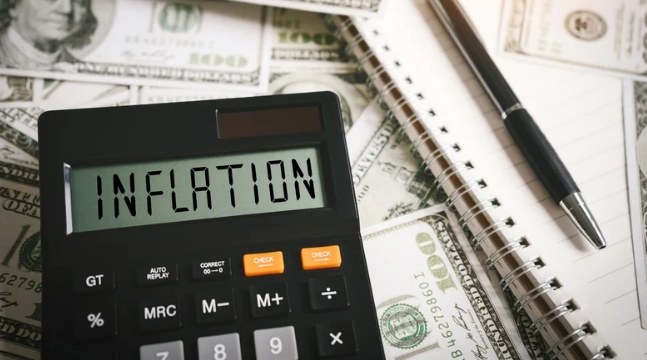
Prices across the United States have been rising at a “moderate to strong pace” in recent weeks, with the Federal Reserve pointing to surging energy costs linked to the ongoing war with Iran as a key driver of inflationary pressure.

In its latest Beige Book survey, which compiles economic insights from the Fed’s 12 regional districts, the central bank said businesses widely reported that higher costs tied to the Middle East conflict were filtering through the economy. These increases were most visible in energy markets, but were also spilling into shipping, packaging, grocery prices and fertiliser.

The conflict, which escalated after the US and Israel launched military action against Iran on February 28, has destabilised the region and disrupted global energy flows. Retaliatory strikes and escalating tensions have effectively blocked the Strait of Hormuz, a vital shipping route through which roughly one-fifth of global oil and gas supplies normally pass. The disruption has contributed to a sharp rise in energy prices and created widespread supply chain strain.

The Federal Reserve noted that inflationary pressures have been unevenly absorbed across businesses. Some firms reported that they were unable to pass rising costs fully onto consumers, forcing them to absorb losses through reduced profit margins in order to maintain sales volumes.

Consumer behaviour has also shifted under the pressure of higher prices. The report highlighted what economists describe as a “K-shaped economy,” where wealthier households continue to spend steadily or even increase consumption, while lower-income groups face tightening financial conditions.

Middle-income households were described as becoming more cautious, delaying discretionary purchases and seeking greater value from everyday spending. Lower-income consumers, meanwhile, are experiencing more acute financial strain.

Spending patterns reflected these pressures, with increased reliance on credit cards, fewer retail store visits and stronger demand for essential goods.

Despite inflationary concerns, overall economic activity in the United States continued to expand at a slight to moderate pace in 10 of the 12 Federal Reserve districts. One district reported a slight decline, while another saw no change.

Employment conditions remained broadly stable, with little movement in hiring across 11 districts. Only one district reported modest job growth.

Manufacturing-related hiring showed relative strength in several regions, supported by defence contracts and growing demand linked to data centre expansion. The Fed also observed a continued “low-hire, low-fire” labour market environment, where job switching has slowed as workers remain cautious amid economic uncertainty.

Taken together, the Beige Book suggests an economy still expanding, but increasingly shaped by energy-driven inflation, uneven consumer resilience, and cautious business hiring behaviour.


Click to comment

You must be logged in to post a comment Login

Leave a Reply

Business

Fraudsters are increasingly using AI-generated images and videos to trick people into handing over sensitive personal and financial information, according to FraudSMART, the financial crime awareness initiative operated by the Banking and Payments Federation Ireland (BPFI). The organisation has reported a rise in online adverts promoting fake, State-backed investment schemes. These scams often use fabricated images of well-known politicians and business figures to make the offers appear legitimate and encourage users to click on registration links. Niamh Davenport, head of financial crime at BPFI, said scammers are deliberately exploiting recent media coverage of a planned State-backed savings and investment scheme to give their frauds a sense of credibility. “They often claim the scheme is open to everyone, but that places are limited and being ‘snapped up’ fast, in order to pressure people to act quickly,” she said. “They typically promise guaranteed returns or a guaranteed monthly income.” FraudSMART said that while anyone can be targeted, people in their early 50s are particularly vulnerable to investment scams. This age group is often focused on retirement planning, making them more receptive to financial offers that appear secure or high-yield. According to the organisation, most scams follow a similar pattern. Victims are first directed to click a registration link and complete a short online form providing their contact details. They are then contacted by someone posing as a financial adviser, who urges them to make an immediate “security deposit” to secure participation in the scheme. Once a payment is made, the money is quickly moved through multiple accounts, often overseas, making recovery extremely difficult. Davenport warned that scammers are becoming more sophisticated in their use of technology, particularly AI tools that allow them to create realistic but entirely fake promotional content. These materials are designed to mimic legitimate financial advertisements and build trust with potential victims. Recent figures from An Garda Síochána show investment fraud rose by 20% last year, with losses exceeding €20 million. The scale of individual scams varies widely, ranging from smaller crypto-related frauds involving a few hundred euro to large-scale investment schemes where victims lose tens of thousands. FraudSMART is urging the public to remain cautious when encountering online investment advertisements, especially those promising guaranteed returns or requiring urgent action. It also advises consumers to avoid sharing personal information with unverified sources and to be wary of pressure tactics designed to rush financial decisions. Authorities continue to warn that fraudsters are adapting quickly, using advanced digital tools to target victims across multiple platforms.

Trending

Business

Fraudsters are increasingly using AI-generated images and videos to trick people into handing over sensitive personal and financial information, according to FraudSMART, the financial crime awareness initiative operated by the Banking and Payments Federation Ireland (BPFI). The organisation has reported a rise in online adverts promoting fake, State-backed investment schemes. These scams often use fabricated images of well-known politicians and business figures to make the offers appear legitimate and encourage users to click on registration links. Niamh Davenport, head of financial crime at BPFI, said scammers are deliberately exploiting recent media coverage of a planned State-backed savings and investment scheme to give their frauds a sense of credibility. “They often claim the scheme is open to everyone, but that places are limited and being ‘snapped up’ fast, in order to pressure people to act quickly,” she said. “They typically promise guaranteed returns or a guaranteed monthly income.” FraudSMART said that while anyone can be targeted, people in their early 50s are particularly vulnerable to investment scams. This age group is often focused on retirement planning, making them more receptive to financial offers that appear secure or high-yield. According to the organisation, most scams follow a similar pattern. Victims are first directed to click a registration link and complete a short online form providing their contact details. They are then contacted by someone posing as a financial adviser, who urges them to make an immediate “security deposit” to secure participation in the scheme. Once a payment is made, the money is quickly moved through multiple accounts, often overseas, making recovery extremely difficult. Davenport warned that scammers are becoming more sophisticated in their use of technology, particularly AI tools that allow them to create realistic but entirely fake promotional content. These materials are designed to mimic legitimate financial advertisements and build trust with potential victims. Recent figures from An Garda Síochána show investment fraud rose by 20% last year, with losses exceeding €20 million. The scale of individual scams varies widely, ranging from smaller crypto-related frauds involving a few hundred euro to large-scale investment schemes where victims lose tens of thousands. FraudSMART is urging the public to remain cautious when encountering online investment advertisements, especially those promising guaranteed returns or requiring urgent action. It also advises consumers to avoid sharing personal information with unverified sources and to be wary of pressure tactics designed to rush financial decisions. Authorities continue to warn that fraudsters are adapting quickly, using advanced digital tools to target victims across multiple platforms.

You May Also Like

Politics

WASHINGTON — The Pentagon announced on Sunday that the United States will send a Terminal High Altitude Area Defense (THAAD) battery to Israel, alongside...

Health

NEW YORK — Teen smoking in the United States has reached an all-time low in 2024, with significant declines in overall youth tobacco use,...

Politics

WASHINGTON — As the countdown to the November 5 presidential election continues, former President Donald Trump is urging his supporters to aim for a...

Politics

In September, NASA announced that summer 2024 was the hottest on record. Just days later, the U.S. faced the dual impact of Hurricanes Helene...