













Connect with us

Hi, what are you looking for?

Business

‘Quiet Cracking’: The New Workplace Trend Raising Alarm Among Employers

First came “quiet quitting” and “quiet firing.” Now, a new workplace trend called “quiet cracking” is emerging, describing employees who appear to be coping but are privately struggling and disengaging from their work.

The phrase, coined by workplace training platform TalentLMS, follows the results of a March 2025 survey of 1,000 U.S. employees across multiple industries. The study found that 54% of workers reported experiencing some level of quiet cracking, while 20% said they were persistently unhappy at work—leading to disengagement, declining performance, or even plans to quit.

Unlike burnout, which leaves employees visibly exhausted, or quiet quitting, where workers openly withdraw and do the bare minimum, quiet cracking is more difficult to detect. Employees may continue meeting deadlines but feel increasingly demotivated, eroding job satisfaction from within.

Behavioral psychologist Padraig Walsh believes the trend reflects a broader “trendification” of workplace emotions, popularized by TikTok and amplified by U.S. media. “The way quiet cracking is defined is the erosion of workplace satisfaction from within. I don’t know anyone who hasn’t felt that way at some stage,” Walsh said.

The rise of quiet cracking coincides with broader challenges facing businesses in the post-pandemic workplace, including heavier workloads, unclear expectations, and economic uncertainty. The Gallup State of the Global Workplace 2025 report estimates that disengaged employees cost the global economy $9.6 trillion in lost productivity—equivalent to 9% of global GDP.

Experts say the problem is not just about unhappiness, but about long-term risks for employers. Disengaged employees can influence colleagues, leading to wider dissatisfaction and higher turnover. “It only takes one person leaving to spark others to take action,” Walsh warned.

The TalentLMS survey also linked a lack of training opportunities with higher insecurity, noting employees who had not received training in the past year were 140% more likely to feel vulnerable about their roles. The report summed it up simply: “No growth, no recognition, no reason to stay.”

Business leaders and HR experts agree that addressing quiet cracking requires more than new labels—it calls for stronger employee engagement strategies. Alison Hodgson of the Chartered Institute of Personnel and Development (CIPD) said organizations need to move beyond “one-size-fits-all” HR practices toward “hyper-personalization” to meet employee needs.

Technology is also a growing source of anxiety. With AI reshaping industries, many employees fear displacement. Technology journalist Peggy Smedley urged employers to focus on reassurance and reskilling. “The future of work will see workers and technology hand in hand. Companies need to make people feel they’re not being replaced, but repositioned,” she said.

While the buzzwords may come and go, experts argue the real challenge for employers is ensuring workers feel valued, supported, and equipped to grow—before quiet cracking turns into open quitting.


Business

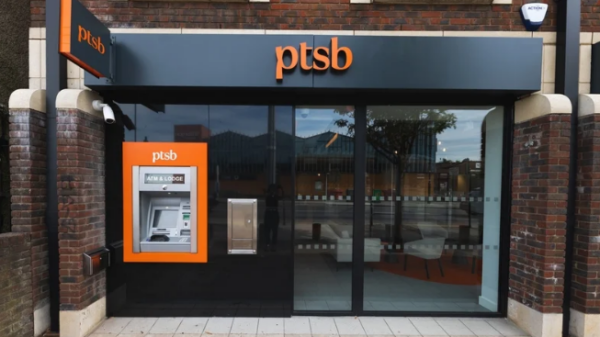
Fraudsters are increasingly using AI-generated images and videos to trick people into handing over sensitive personal and financial information, according to FraudSMART, the financial crime awareness initiative operated by the Banking and Payments Federation Ireland (BPFI). The organisation has reported a rise in online adverts promoting fake, State-backed investment schemes. These scams often use fabricated images of well-known politicians and business figures to make the offers appear legitimate and encourage users to click on registration links. Niamh Davenport, head of financial crime at BPFI, said scammers are deliberately exploiting recent media coverage of a planned State-backed savings and investment scheme to give their frauds a sense of credibility. “They often claim the scheme is open to everyone, but that places are limited and being ‘snapped up’ fast, in order to pressure people to act quickly,” she said. “They typically promise guaranteed returns or a guaranteed monthly income.” FraudSMART said that while anyone can be targeted, people in their early 50s are particularly vulnerable to investment scams. This age group is often focused on retirement planning, making them more receptive to financial offers that appear secure or high-yield. According to the organisation, most scams follow a similar pattern. Victims are first directed to click a registration link and complete a short online form providing their contact details. They are then contacted by someone posing as a financial adviser, who urges them to make an immediate “security deposit” to secure participation in the scheme. Once a payment is made, the money is quickly moved through multiple accounts, often overseas, making recovery extremely difficult. Davenport warned that scammers are becoming more sophisticated in their use of technology, particularly AI tools that allow them to create realistic but entirely fake promotional content. These materials are designed to mimic legitimate financial advertisements and build trust with potential victims. Recent figures from An Garda Síochána show investment fraud rose by 20% last year, with losses exceeding €20 million. The scale of individual scams varies widely, ranging from smaller crypto-related frauds involving a few hundred euro to large-scale investment schemes where victims lose tens of thousands. FraudSMART is urging the public to remain cautious when encountering online investment advertisements, especially those promising guaranteed returns or requiring urgent action. It also advises consumers to avoid sharing personal information with unverified sources and to be wary of pressure tactics designed to rush financial decisions. Authorities continue to warn that fraudsters are adapting quickly, using advanced digital tools to target victims across multiple platforms.

Trending

Business

Fraudsters are increasingly using AI-generated images and videos to trick people into handing over sensitive personal and financial information, according to FraudSMART, the financial crime awareness initiative operated by the Banking and Payments Federation Ireland (BPFI). The organisation has reported a rise in online adverts promoting fake, State-backed investment schemes. These scams often use fabricated images of well-known politicians and business figures to make the offers appear legitimate and encourage users to click on registration links. Niamh Davenport, head of financial crime at BPFI, said scammers are deliberately exploiting recent media coverage of a planned State-backed savings and investment scheme to give their frauds a sense of credibility. “They often claim the scheme is open to everyone, but that places are limited and being ‘snapped up’ fast, in order to pressure people to act quickly,” she said. “They typically promise guaranteed returns or a guaranteed monthly income.” FraudSMART said that while anyone can be targeted, people in their early 50s are particularly vulnerable to investment scams. This age group is often focused on retirement planning, making them more receptive to financial offers that appear secure or high-yield. According to the organisation, most scams follow a similar pattern. Victims are first directed to click a registration link and complete a short online form providing their contact details. They are then contacted by someone posing as a financial adviser, who urges them to make an immediate “security deposit” to secure participation in the scheme. Once a payment is made, the money is quickly moved through multiple accounts, often overseas, making recovery extremely difficult. Davenport warned that scammers are becoming more sophisticated in their use of technology, particularly AI tools that allow them to create realistic but entirely fake promotional content. These materials are designed to mimic legitimate financial advertisements and build trust with potential victims. Recent figures from An Garda Síochána show investment fraud rose by 20% last year, with losses exceeding €20 million. The scale of individual scams varies widely, ranging from smaller crypto-related frauds involving a few hundred euro to large-scale investment schemes where victims lose tens of thousands. FraudSMART is urging the public to remain cautious when encountering online investment advertisements, especially those promising guaranteed returns or requiring urgent action. It also advises consumers to avoid sharing personal information with unverified sources and to be wary of pressure tactics designed to rush financial decisions. Authorities continue to warn that fraudsters are adapting quickly, using advanced digital tools to target victims across multiple platforms.

You May Also Like

Politics

WASHINGTON — The Pentagon announced on Sunday that the United States will send a Terminal High Altitude Area Defense (THAAD) battery to Israel, alongside...

Health

NEW YORK — Teen smoking in the United States has reached an all-time low in 2024, with significant declines in overall youth tobacco use,...

Politics

WASHINGTON — As the countdown to the November 5 presidential election continues, former President Donald Trump is urging his supporters to aim for a...

Politics

In September, NASA announced that summer 2024 was the hottest on record. Just days later, the U.S. faced the dual impact of Hurricanes Helene...