
















Connect with us

Hi, what are you looking for?

Business

Oil Prices Fall After Trump Signals Short-Lived Middle East Conflict

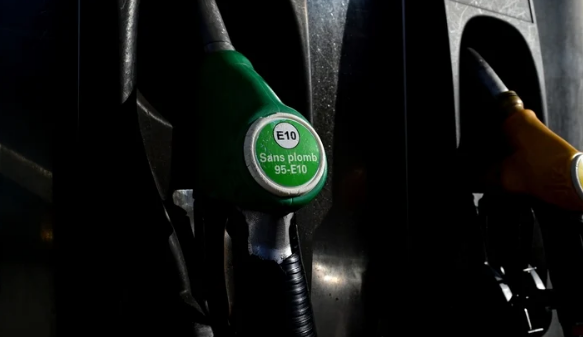
Oil prices retreated sharply on Tuesday after hitting their highest levels in over three years, following remarks by US President Donald Trump suggesting the war in the Middle East could end soon. The comments eased investor fears of prolonged disruptions to global oil supplies.

Brent crude futures fell $6.28, or 6.35 percent, to $92.68 a barrel by 10:24 a.m. Saudi time, while US West Texas Intermediate (WTI) crude dropped $6.24, or 6.58 percent, to $88.53 a barrel. Both contracts initially fell as much as 11 percent before moderating losses.

Prices had surged past $100 a barrel on Monday, marking the highest levels since mid-2022, amid supply cuts by Saudi Arabia and other producers and escalating tensions in the US-Israeli conflict with Iran. Concerns over major disruptions to global energy supplies drove the spike.

Markets eased after Russian President Vladimir Putin spoke with Trump and shared proposals aimed at a quick resolution to the war in Iran, according to a Kremlin aide. Trump told CBS News that the conflict was “very complete” and that Washington was “very far ahead” of his initial four- to five-week timeframe.

“Clearly Trump’s comments about a short-lived war have calmed markets. While there was an overreaction to the upside yesterday, we think there is an overreaction to the downside today,” said Suvro Sarkar, energy sector lead at DBS Bank. He noted that benchmark Middle Eastern oil grades, including Murban and Dubai, remain above $100 per barrel, highlighting that underlying supply risks have not disappeared.

Iran’s Islamic Revolutionary Guards Corps (IRGC) responded to Trump’s remarks by saying Tehran would “determine the end of the war” and would not allow “one liter of oil” to leave the region if US and Israeli attacks continued, according to state media citing an IRGC spokesperson.

Oil prices remain under pressure as Trump is reportedly considering easing sanctions on Russian oil and releasing emergency crude reserves to mitigate global price spikes. “Discussions around easing sanctions on Russian oil, comments from Donald Trump hinting that the conflict could eventually de-escalate, and the possibility of G7 countries tapping strategic oil reserves all pointed to the same message — that oil barrels will somehow continue to reach the market,” said Phillip Nova analyst Priyanka Sachdeva. She added that once traders believed supply routes could remain open, the initial panic premium above $100 per barrel began to fade.

G7 nations indicated readiness to take “necessary measures” in response to rising oil prices but did not commit to releasing emergency stockpiles. Analysts caution that while short-term volatility may ease, the situation remains fragile as geopolitical risks continue to influence global energy markets.


Business

Fraudsters are increasingly using AI-generated images and videos to trick people into handing over sensitive personal and financial information, according to FraudSMART, the financial crime awareness initiative operated by the Banking and Payments Federation Ireland (BPFI). The organisation has reported a rise in online adverts promoting fake, State-backed investment schemes. These scams often use fabricated images of well-known politicians and business figures to make the offers appear legitimate and encourage users to click on registration links. Niamh Davenport, head of financial crime at BPFI, said scammers are deliberately exploiting recent media coverage of a planned State-backed savings and investment scheme to give their frauds a sense of credibility. “They often claim the scheme is open to everyone, but that places are limited and being ‘snapped up’ fast, in order to pressure people to act quickly,” she said. “They typically promise guaranteed returns or a guaranteed monthly income.” FraudSMART said that while anyone can be targeted, people in their early 50s are particularly vulnerable to investment scams. This age group is often focused on retirement planning, making them more receptive to financial offers that appear secure or high-yield. According to the organisation, most scams follow a similar pattern. Victims are first directed to click a registration link and complete a short online form providing their contact details. They are then contacted by someone posing as a financial adviser, who urges them to make an immediate “security deposit” to secure participation in the scheme. Once a payment is made, the money is quickly moved through multiple accounts, often overseas, making recovery extremely difficult. Davenport warned that scammers are becoming more sophisticated in their use of technology, particularly AI tools that allow them to create realistic but entirely fake promotional content. These materials are designed to mimic legitimate financial advertisements and build trust with potential victims. Recent figures from An Garda Síochána show investment fraud rose by 20% last year, with losses exceeding €20 million. The scale of individual scams varies widely, ranging from smaller crypto-related frauds involving a few hundred euro to large-scale investment schemes where victims lose tens of thousands. FraudSMART is urging the public to remain cautious when encountering online investment advertisements, especially those promising guaranteed returns or requiring urgent action. It also advises consumers to avoid sharing personal information with unverified sources and to be wary of pressure tactics designed to rush financial decisions. Authorities continue to warn that fraudsters are adapting quickly, using advanced digital tools to target victims across multiple platforms.

Trending

Business

Fraudsters are increasingly using AI-generated images and videos to trick people into handing over sensitive personal and financial information, according to FraudSMART, the financial crime awareness initiative operated by the Banking and Payments Federation Ireland (BPFI). The organisation has reported a rise in online adverts promoting fake, State-backed investment schemes. These scams often use fabricated images of well-known politicians and business figures to make the offers appear legitimate and encourage users to click on registration links. Niamh Davenport, head of financial crime at BPFI, said scammers are deliberately exploiting recent media coverage of a planned State-backed savings and investment scheme to give their frauds a sense of credibility. “They often claim the scheme is open to everyone, but that places are limited and being ‘snapped up’ fast, in order to pressure people to act quickly,” she said. “They typically promise guaranteed returns or a guaranteed monthly income.” FraudSMART said that while anyone can be targeted, people in their early 50s are particularly vulnerable to investment scams. This age group is often focused on retirement planning, making them more receptive to financial offers that appear secure or high-yield. According to the organisation, most scams follow a similar pattern. Victims are first directed to click a registration link and complete a short online form providing their contact details. They are then contacted by someone posing as a financial adviser, who urges them to make an immediate “security deposit” to secure participation in the scheme. Once a payment is made, the money is quickly moved through multiple accounts, often overseas, making recovery extremely difficult. Davenport warned that scammers are becoming more sophisticated in their use of technology, particularly AI tools that allow them to create realistic but entirely fake promotional content. These materials are designed to mimic legitimate financial advertisements and build trust with potential victims. Recent figures from An Garda Síochána show investment fraud rose by 20% last year, with losses exceeding €20 million. The scale of individual scams varies widely, ranging from smaller crypto-related frauds involving a few hundred euro to large-scale investment schemes where victims lose tens of thousands. FraudSMART is urging the public to remain cautious when encountering online investment advertisements, especially those promising guaranteed returns or requiring urgent action. It also advises consumers to avoid sharing personal information with unverified sources and to be wary of pressure tactics designed to rush financial decisions. Authorities continue to warn that fraudsters are adapting quickly, using advanced digital tools to target victims across multiple platforms.

You May Also Like

Politics

WASHINGTON — The Pentagon announced on Sunday that the United States will send a Terminal High Altitude Area Defense (THAAD) battery to Israel, alongside...

Health

NEW YORK — Teen smoking in the United States has reached an all-time low in 2024, with significant declines in overall youth tobacco use,...

Politics

WASHINGTON — As the countdown to the November 5 presidential election continues, former President Donald Trump is urging his supporters to aim for a...

Politics

In September, NASA announced that summer 2024 was the hottest on record. Just days later, the U.S. faced the dual impact of Hurricanes Helene...