

















Connect with us

Hi, what are you looking for?

Business

Irish Banks Launch Zippay to Rival Fintech Mobile Payments

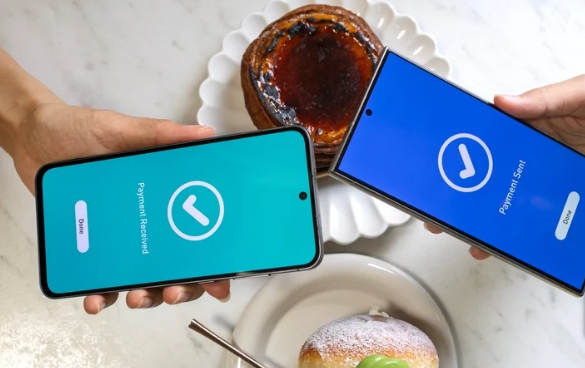
A new person-to-person mobile payment service, Zippay, has been officially launched by Ireland’s three pillar banks – AIB, Bank of Ireland, and PTSB – offering customers an alternative to fintech platforms like Revolut and N26. The service, integrated into the banks’ existing mobile banking apps, will be rolled out to roughly five million customers on a phased basis starting tomorrow.

Zippay allows users to send, request, and split payments instantly using the mobile numbers of contacts who are also enrolled in the service. Customers will not need to know IBANs, BICs, or other account details, with daily transaction limits set at €1,000 for sending payments and €500 for requests. The service is free of additional charges.

Enrollment will operate on an opt-out basis, meaning eligible customers will automatically appear in Zippay within their banking apps unless they choose to decline. The system identifies other users through contacts saved on the customer’s phone.

Brian Hayes, Chief Executive of the Banking and Payments Federation Ireland, said the service combines convenience with security. “A key benefit of this payment service is that it is being delivered through customers’ existing mobile banking apps and therefore comes with all the same high levels of security, protection and digital safety,” he told RTÉ’s Morning Ireland. Hayes added that Zippay avoids the need for topping up separate digital wallets or downloading new apps.

Hayes described Zippay as a significant development for Irish consumers. “It’s a person-to-person mobile payment service that effectively links up those clunky IBAN numbers with your mobile phone network. It allows people to send, receive, and make split payments on an instant basis.” He highlighted that the platform could grow into a strong domestic solution, offering opportunities for scale and investment, with other banks and financial institutions invited to join.

The technology behind Zippay is provided by Italian payments company Nexi. Renato Martini, Nexi’s Digital Banking Solutions Director, said the service is “built for scalability and future growth” and is available on a non-discriminatory basis to any financial institution providing IBAN accounts and mobile banking apps in Ireland.

Zippay follows a previous unsuccessful attempt by the three banks to launch a standalone app in 2023, which was scrapped after regulatory delays and other challenges. The new service avoids these obstacles by integrating directly into existing apps rather than creating a separate platform.

As Zippay rolls out, eligible customers will receive information via email and in-app notifications. Additional guidance is available on a dedicated website at www.Zippay.ie. Hayes emphasized that the platform’s openness and integration with existing apps could allow broader participation in the future, including credit unions and fintech banks, offering users a simple and secure alternative for mobile payments.


Business

Fraudsters are increasingly using AI-generated images and videos to trick people into handing over sensitive personal and financial information, according to FraudSMART, the financial crime awareness initiative operated by the Banking and Payments Federation Ireland (BPFI). The organisation has reported a rise in online adverts promoting fake, State-backed investment schemes. These scams often use fabricated images of well-known politicians and business figures to make the offers appear legitimate and encourage users to click on registration links. Niamh Davenport, head of financial crime at BPFI, said scammers are deliberately exploiting recent media coverage of a planned State-backed savings and investment scheme to give their frauds a sense of credibility. “They often claim the scheme is open to everyone, but that places are limited and being ‘snapped up’ fast, in order to pressure people to act quickly,” she said. “They typically promise guaranteed returns or a guaranteed monthly income.” FraudSMART said that while anyone can be targeted, people in their early 50s are particularly vulnerable to investment scams. This age group is often focused on retirement planning, making them more receptive to financial offers that appear secure or high-yield. According to the organisation, most scams follow a similar pattern. Victims are first directed to click a registration link and complete a short online form providing their contact details. They are then contacted by someone posing as a financial adviser, who urges them to make an immediate “security deposit” to secure participation in the scheme. Once a payment is made, the money is quickly moved through multiple accounts, often overseas, making recovery extremely difficult. Davenport warned that scammers are becoming more sophisticated in their use of technology, particularly AI tools that allow them to create realistic but entirely fake promotional content. These materials are designed to mimic legitimate financial advertisements and build trust with potential victims. Recent figures from An Garda Síochána show investment fraud rose by 20% last year, with losses exceeding €20 million. The scale of individual scams varies widely, ranging from smaller crypto-related frauds involving a few hundred euro to large-scale investment schemes where victims lose tens of thousands. FraudSMART is urging the public to remain cautious when encountering online investment advertisements, especially those promising guaranteed returns or requiring urgent action. It also advises consumers to avoid sharing personal information with unverified sources and to be wary of pressure tactics designed to rush financial decisions. Authorities continue to warn that fraudsters are adapting quickly, using advanced digital tools to target victims across multiple platforms.

Trending

Business

Fraudsters are increasingly using AI-generated images and videos to trick people into handing over sensitive personal and financial information, according to FraudSMART, the financial crime awareness initiative operated by the Banking and Payments Federation Ireland (BPFI). The organisation has reported a rise in online adverts promoting fake, State-backed investment schemes. These scams often use fabricated images of well-known politicians and business figures to make the offers appear legitimate and encourage users to click on registration links. Niamh Davenport, head of financial crime at BPFI, said scammers are deliberately exploiting recent media coverage of a planned State-backed savings and investment scheme to give their frauds a sense of credibility. “They often claim the scheme is open to everyone, but that places are limited and being ‘snapped up’ fast, in order to pressure people to act quickly,” she said. “They typically promise guaranteed returns or a guaranteed monthly income.” FraudSMART said that while anyone can be targeted, people in their early 50s are particularly vulnerable to investment scams. This age group is often focused on retirement planning, making them more receptive to financial offers that appear secure or high-yield. According to the organisation, most scams follow a similar pattern. Victims are first directed to click a registration link and complete a short online form providing their contact details. They are then contacted by someone posing as a financial adviser, who urges them to make an immediate “security deposit” to secure participation in the scheme. Once a payment is made, the money is quickly moved through multiple accounts, often overseas, making recovery extremely difficult. Davenport warned that scammers are becoming more sophisticated in their use of technology, particularly AI tools that allow them to create realistic but entirely fake promotional content. These materials are designed to mimic legitimate financial advertisements and build trust with potential victims. Recent figures from An Garda Síochána show investment fraud rose by 20% last year, with losses exceeding €20 million. The scale of individual scams varies widely, ranging from smaller crypto-related frauds involving a few hundred euro to large-scale investment schemes where victims lose tens of thousands. FraudSMART is urging the public to remain cautious when encountering online investment advertisements, especially those promising guaranteed returns or requiring urgent action. It also advises consumers to avoid sharing personal information with unverified sources and to be wary of pressure tactics designed to rush financial decisions. Authorities continue to warn that fraudsters are adapting quickly, using advanced digital tools to target victims across multiple platforms.

You May Also Like

Politics

WASHINGTON — The Pentagon announced on Sunday that the United States will send a Terminal High Altitude Area Defense (THAAD) battery to Israel, alongside...

Health

NEW YORK — Teen smoking in the United States has reached an all-time low in 2024, with significant declines in overall youth tobacco use,...

Politics

WASHINGTON — As the countdown to the November 5 presidential election continues, former President Donald Trump is urging his supporters to aim for a...

Politics

In September, NASA announced that summer 2024 was the hottest on record. Just days later, the U.S. faced the dual impact of Hurricanes Helene...