
















The UK Government has announced a major overhaul of post-16 education, unveiling a new set of vocational qualifications known as V-levels to replace existing BTecs and other technical courses in England. The move aims to simplify what ministers have described as a “confusing” system and better align education with the country’s workforce needs.
A public consultation has been launched as part of a broader post-16 education and skills white paper. The reforms are designed to create clearer pathways into employment, apprenticeships, and higher education, addressing long-standing criticism that the current system lacks coherence and flexibility.
A New Route for Vocational Learners
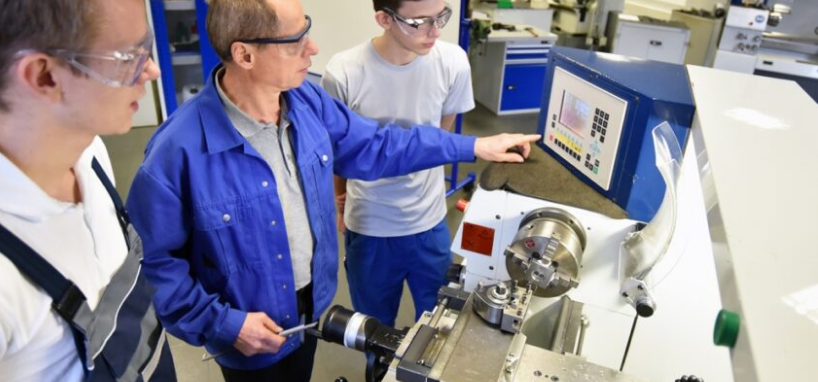
Unlike T-levels — introduced in 2020 and tailored to students with a defined career goal — V-levels will offer a broader, more adaptable route for learners aged 16 and over who wish to explore a range of vocational options. A-levels and apprenticeships will remain available alongside the new qualifications.
Skills Minister Baroness Jacqui Smith said the new framework would simplify choices for students. “There are over 900 courses at the moment that young people have the choice of, and it’s confusing,” she said. “V-levels will build on what’s good about BTecs — practical learning with a clear line of sight to employment — while offering a simpler and more recognisable framework.”
Early subject areas for V-levels may include craft and design, and media, broadcast and production, according to the Department for Education (DfE).
Addressing the GCSE Resit Challenge
The Government also plans to introduce a new “stepping stone” qualification in English and maths to support students who fail to achieve a grade 4 at GCSE. The qualification aims to end what ministers called a “demoralising roundabout” of repeated resits — a system that has faced growing criticism due to low pass rates and its impact on learner confidence.
Education Secretary Bridget Phillipson said the reforms were part of a wider strategy to strengthen vocational routes and ease pressure on the higher education system. “We want to create a vocational route into great careers by simplifying the current patchwork of qualifications,” she said.
Mixed Reactions from Education Leaders
Sector leaders have welcomed the potential for greater clarity but urged caution about removing BTecs before the new qualifications are established. Bill Watkin, chief executive of the Sixth Form Colleges Association, warned that “the new V-levels may not come close to filling the gap left by the removal of applied general qualifications.”
David Hughes, CEO of the Association of Colleges, said the reforms could bring “clarity and certainty” but stressed the importance of sustained investment and collaboration with industry.
The Government has not yet confirmed when V-levels will be introduced, but the reforms are central to Prime Minister Sir Keir Starmer’s ambition for two-thirds of young people to either attend university or earn a high-quality technical qualification.