


















Connect with us

Hi, what are you looking for?

European Markets and Euro Surge After US Inflation Data Eases

Business

European Markets and Euro Surge After US Inflation Data Eases

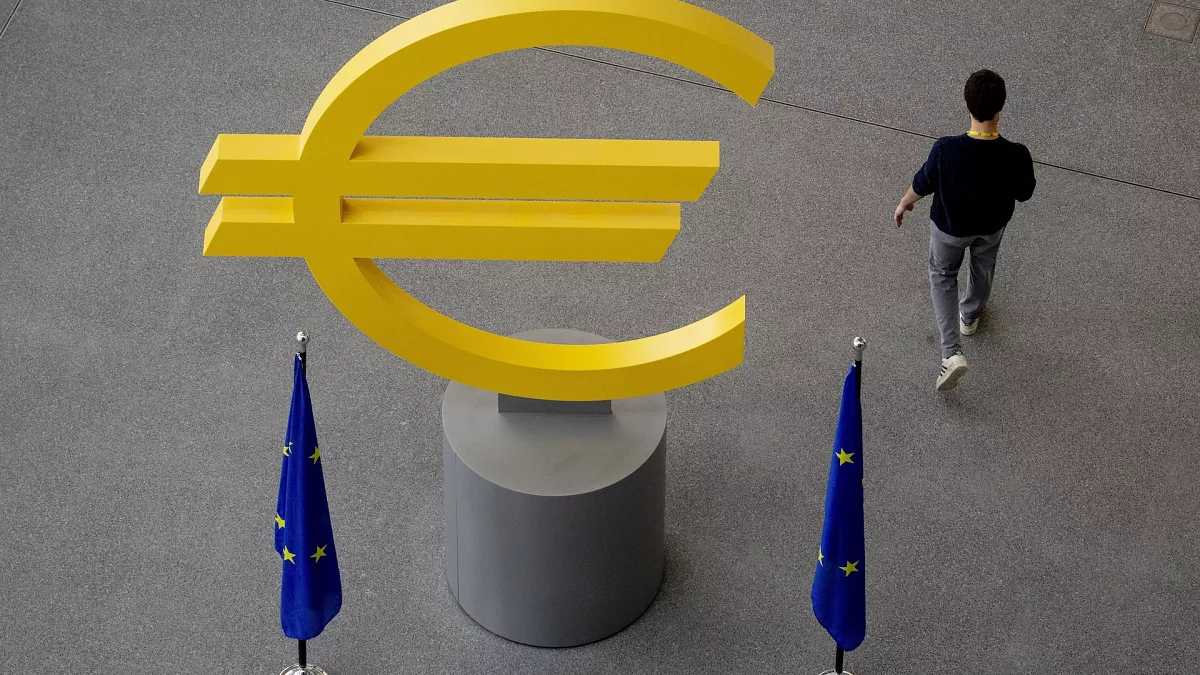
European financial markets and the euro experienced notable gains on Wednesday following the release of softer-than-expected US inflation data. The annual inflation rate in the US dropped to 2.9% in July, down from 3% in June and falling below the anticipated 3%, providing a boost to global financial markets.

The inflation data, coupled with a lower-than-expected Producer Price Index (PPI), has heightened expectations for a rate cut by the Federal Reserve (Fed) at its next meeting. Investors are now speculating on a potential 0.5 percentage point reduction in interest rates.

In response to the US inflation figures, the euro surged to its highest level of the year, surpassing 1.1 against the US dollar. The EUR/USD pair has climbed 3% since late June, reflecting a weakening US dollar. The US Dollar Index, which tracks the dollar’s value against a basket of foreign currencies, fell to a four-month low. With the Fed anticipated to start lowering rates next month, central banks globally may engage in a race to cut rates, potentially leading to a currency war.

The euro also strengthened against the British pound, climbing 0.44% to just under 0.86. This increase marks a one-week high for the EUR/GBP pair. The pound weakened amid speculation that the Bank of England may implement further rate cuts this year, following cooler-than-expected UK inflation data for July. The euro’s appeal as a safe-haven currency during global market turbulence earlier in August has also contributed to its rise.

Looking ahead, the European Central Bank (ECB) will be in focus as it holds its next meeting. An ECB official has hinted at the possibility of two additional rate cuts in September and November. However, with inflation in the eurozone showing signs of resurgence in July, the ECB’s rate-cutting plans could face challenges.

European stock markets also saw gains on Wednesday, driven by a broad-based rally following the US inflation data. The Euro Stoxx 600 index increased by 0.43% to 504.11, nearing a two-week high. The travel and leisure sector led the gains with a 3% rise, the largest one-day gain. Other indices, including the DAX and CAC 40, also advanced, rising by 0.41% and 0.79%, respectively.

European markets have largely recovered from losses incurred earlier in August, with improved investment sentiment driven by expectations of accelerating rate cuts. UBS’s strong quarterly earnings report, which saw its shares jump by 5.3%, further boosted the finance sector, contributing to a 1.4% increase.

In London, the FTSE 100 rose by 0.6%, marking its fourth consecutive session of gains. The homebuilder sector led this increase with a 3.4% surge, reflecting its sensitivity to interest rates.

Despite the positive market movements, concerns about softening economic data in the US, China’s economic slowdown, and ongoing conflicts in the Middle East and Ukraine are expected to maintain a volatile global economic environment.


Business

Fraudsters are increasingly using AI-generated images and videos to trick people into handing over sensitive personal and financial information, according to FraudSMART, the financial crime awareness initiative operated by the Banking and Payments Federation Ireland (BPFI). The organisation has reported a rise in online adverts promoting fake, State-backed investment schemes. These scams often use fabricated images of well-known politicians and business figures to make the offers appear legitimate and encourage users to click on registration links. Niamh Davenport, head of financial crime at BPFI, said scammers are deliberately exploiting recent media coverage of a planned State-backed savings and investment scheme to give their frauds a sense of credibility. “They often claim the scheme is open to everyone, but that places are limited and being ‘snapped up’ fast, in order to pressure people to act quickly,” she said. “They typically promise guaranteed returns or a guaranteed monthly income.” FraudSMART said that while anyone can be targeted, people in their early 50s are particularly vulnerable to investment scams. This age group is often focused on retirement planning, making them more receptive to financial offers that appear secure or high-yield. According to the organisation, most scams follow a similar pattern. Victims are first directed to click a registration link and complete a short online form providing their contact details. They are then contacted by someone posing as a financial adviser, who urges them to make an immediate “security deposit” to secure participation in the scheme. Once a payment is made, the money is quickly moved through multiple accounts, often overseas, making recovery extremely difficult. Davenport warned that scammers are becoming more sophisticated in their use of technology, particularly AI tools that allow them to create realistic but entirely fake promotional content. These materials are designed to mimic legitimate financial advertisements and build trust with potential victims. Recent figures from An Garda Síochána show investment fraud rose by 20% last year, with losses exceeding €20 million. The scale of individual scams varies widely, ranging from smaller crypto-related frauds involving a few hundred euro to large-scale investment schemes where victims lose tens of thousands. FraudSMART is urging the public to remain cautious when encountering online investment advertisements, especially those promising guaranteed returns or requiring urgent action. It also advises consumers to avoid sharing personal information with unverified sources and to be wary of pressure tactics designed to rush financial decisions. Authorities continue to warn that fraudsters are adapting quickly, using advanced digital tools to target victims across multiple platforms.

Trending

Business

Fraudsters are increasingly using AI-generated images and videos to trick people into handing over sensitive personal and financial information, according to FraudSMART, the financial crime awareness initiative operated by the Banking and Payments Federation Ireland (BPFI). The organisation has reported a rise in online adverts promoting fake, State-backed investment schemes. These scams often use fabricated images of well-known politicians and business figures to make the offers appear legitimate and encourage users to click on registration links. Niamh Davenport, head of financial crime at BPFI, said scammers are deliberately exploiting recent media coverage of a planned State-backed savings and investment scheme to give their frauds a sense of credibility. “They often claim the scheme is open to everyone, but that places are limited and being ‘snapped up’ fast, in order to pressure people to act quickly,” she said. “They typically promise guaranteed returns or a guaranteed monthly income.” FraudSMART said that while anyone can be targeted, people in their early 50s are particularly vulnerable to investment scams. This age group is often focused on retirement planning, making them more receptive to financial offers that appear secure or high-yield. According to the organisation, most scams follow a similar pattern. Victims are first directed to click a registration link and complete a short online form providing their contact details. They are then contacted by someone posing as a financial adviser, who urges them to make an immediate “security deposit” to secure participation in the scheme. Once a payment is made, the money is quickly moved through multiple accounts, often overseas, making recovery extremely difficult. Davenport warned that scammers are becoming more sophisticated in their use of technology, particularly AI tools that allow them to create realistic but entirely fake promotional content. These materials are designed to mimic legitimate financial advertisements and build trust with potential victims. Recent figures from An Garda Síochána show investment fraud rose by 20% last year, with losses exceeding €20 million. The scale of individual scams varies widely, ranging from smaller crypto-related frauds involving a few hundred euro to large-scale investment schemes where victims lose tens of thousands. FraudSMART is urging the public to remain cautious when encountering online investment advertisements, especially those promising guaranteed returns or requiring urgent action. It also advises consumers to avoid sharing personal information with unverified sources and to be wary of pressure tactics designed to rush financial decisions. Authorities continue to warn that fraudsters are adapting quickly, using advanced digital tools to target victims across multiple platforms.

You May Also Like

Politics

WASHINGTON — The Pentagon announced on Sunday that the United States will send a Terminal High Altitude Area Defense (THAAD) battery to Israel, alongside...

Health

NEW YORK — Teen smoking in the United States has reached an all-time low in 2024, with significant declines in overall youth tobacco use,...

Politics

WASHINGTON — As the countdown to the November 5 presidential election continues, former President Donald Trump is urging his supporters to aim for a...

Politics

In September, NASA announced that summer 2024 was the hottest on record. Just days later, the U.S. faced the dual impact of Hurricanes Helene...
















