


















In late September, the Dutch government invoked a Cold War-era emergency law to take control of Chinese-owned chipmaker Nexperia, triggering disruptions across Europe’s automotive supply chain. The decision came after authorities cited “serious governance shortcomings and actions within Nexperia” that posed a potential threat to critical technologies and the Dutch and European economies.
The extraordinary move immediately drew strong reactions from Beijing, which accused the Netherlands of political interference. China imposed export restrictions on Nexperia chips from its facilities to Europe, while Dutch authorities froze shipments of key materials needed for production in China. The restrictions caused significant concern in the automotive sector, which relies on the chips for essential vehicle systems, including power steering, airbags, and central locking.
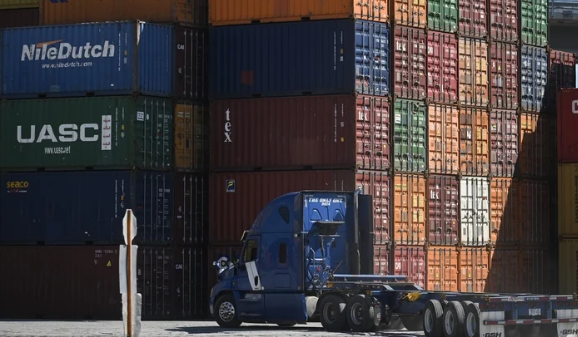
Nexperia’s products, though considered “legacy” semiconductors rather than cutting-edge chips, are critical components in modern vehicles. Around 70% to 80% of its output is sent to China for processing and packaging, creating a dependence that has left European carmakers exposed to disruptions stemming from geopolitical tensions.
The Dutch government defended the takeover as a necessary measure to safeguard supply continuity and strategic assets. In parliament, the economic affairs minister said the intervention was “highly exceptional” and designed solely to protect national and European interests. A Dutch court also suspended Nexperia’s former CEO, Zhang Xuezhen, citing mismanagement and concerns over the transfer of production capacity, financial resources, and intellectual property to China.
The controversy has exposed the fragility of global supply chains and the broader strategic competition between the US, China, and Europe. Experts argue that the Nexperia case illustrates the risks of reliance on Chinese-controlled supply networks for critical components. Bill Echikson, a senior fellow at the Center for European Policy Analysis, said the situation is as much about digital sovereignty as it is about semiconductors.
Beijing has since granted exemptions for chip exports intended for civilian use but has not defined what qualifies, leaving European carmakers seeking clarity. EU trade commissioner Maros Sefcovic confirmed that talks are ongoing to restore a “stable, predictable framework” for semiconductor flows.
The incident comes amid broader US-China tensions, including a recent one-year trade truce between Presidents Donald Trump and Xi Jinping that suspended some export restrictions on rare earths and other materials. Observers note that the Nexperia dispute underscores how fragile such agreements can be when key supply chains intersect with strategic interests.
Automakers face mounting uncertainty, as switching to alternative suppliers like Infineon, NXP, or Texas Instruments is complicated and costly. Analysts warn that the disruption highlights the dangers of overdependence on a single source for critical components and serves as a warning for Europe to strengthen its semiconductor capabilities.
The Dutch takeover of Nexperia has created a delicate diplomatic and economic balancing act. While China urges the Netherlands to reverse the decision, Brussels is actively involved in negotiations to lift export controls, seeking to prevent further disruption to European industries. Until the dispute is resolved, tensions between the EU and China over technology and supply chain control are likely to remain high.