













Connect with us

Hi, what are you looking for?

Business

Budget 2026: Government Pledges Investment in Jobs, Housing, and Public Services

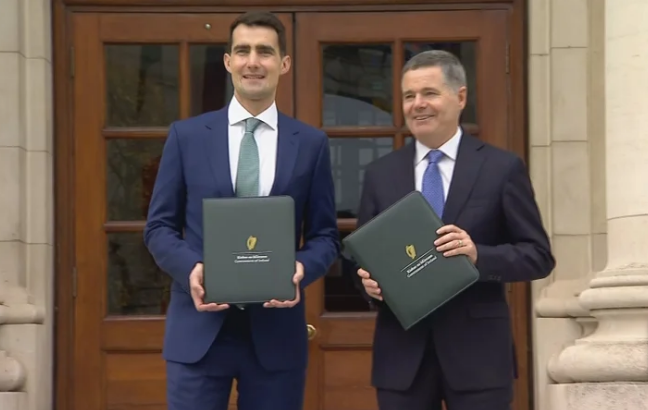
Minister for Finance Paschal Donohoe unveiled Ireland’s Budget 2026, pledging to “invest in our future” while safeguarding jobs, stability, and economic growth.

Speaking in the Dáil, Minister Donohoe said the first budget of the coalition government’s new term focuses on tackling housing shortages, boosting infrastructure, and supporting vulnerable citizens. “This Budget will secure jobs and stability at a time of global challenge,” he said.

Ireland’s economy is forecast to grow by 3.3% this year and 2.3% in 2026, with an additional 63,500 jobs expected by the end of the year. Inflation is projected to hover around 2% next year.

The Government’s National Development Plan will allocate €275 billion over the next decade to infrastructure, which Donohoe said would “boost growth and job creation” and enhance long-term national potential.

While overall spending will exceed previous targets, tax measures will be reduced to make room for social supports. The tax package has been cut by €150 million from earlier projections to fund “targeted supports for the most vulnerable.”

From January 1, the Universal Social Charge (USC) will see “targeted changes,” with the 2% rate band rising by €1,318 to €28,700. The national minimum wage will also increase by 65 cents to €14.15 per hour, ensuring full-time workers on minimum wage remain outside higher USC rates.

Other measures include extending the renters’ tax credit until 2028, cutting VAT on food, catering, and hairdressing services from 13.5% to 9% in July 2026, and extending the 9% VAT rate on gas and electricity until 2030. The research and development tax credit will rise from 30% to 35%.

Housing remains a key priority, with €200 million in extra funding for the Home Building Finance Ireland scheme. VAT on apartment sales will drop to 9% until 2030, while a new Derelict Property Tax will replace the existing Derelict Sites Levy to tackle urban blight.

A carbon tax increase will take effect tomorrow, raising the rate to €71 per tonne of CO₂, alongside a 50-cent increase on a pack of cigarettes.

Minister for Public Expenditure Jack Chambers announced €275 billion in funding for water, energy, and transport projects through 2035, including €4.7 billion for transport initiatives such as DART+, BusConnects, and the MetroLink project.

Social protection payments will rise by €10 per week, benefiting 1.5 million people. Additional supports include increases in child benefit, carer’s allowance, and the domiciliary care allowance.

Health will receive record funding of €27.4 billion, providing more hospital beds, community care, and mental health support. Education funding will increase to €13.1 billion, adding over 1,000 new teaching posts and 1,700 special needs assistants.

“The choices we make today will define Ireland’s future,” Minister Donohoe said, emphasizing that Budget 2026 aims to balance fiscal responsibility with investment in people and public services.


Business

Fraudsters are increasingly using AI-generated images and videos to trick people into handing over sensitive personal and financial information, according to FraudSMART, the financial crime awareness initiative operated by the Banking and Payments Federation Ireland (BPFI). The organisation has reported a rise in online adverts promoting fake, State-backed investment schemes. These scams often use fabricated images of well-known politicians and business figures to make the offers appear legitimate and encourage users to click on registration links. Niamh Davenport, head of financial crime at BPFI, said scammers are deliberately exploiting recent media coverage of a planned State-backed savings and investment scheme to give their frauds a sense of credibility. “They often claim the scheme is open to everyone, but that places are limited and being ‘snapped up’ fast, in order to pressure people to act quickly,” she said. “They typically promise guaranteed returns or a guaranteed monthly income.” FraudSMART said that while anyone can be targeted, people in their early 50s are particularly vulnerable to investment scams. This age group is often focused on retirement planning, making them more receptive to financial offers that appear secure or high-yield. According to the organisation, most scams follow a similar pattern. Victims are first directed to click a registration link and complete a short online form providing their contact details. They are then contacted by someone posing as a financial adviser, who urges them to make an immediate “security deposit” to secure participation in the scheme. Once a payment is made, the money is quickly moved through multiple accounts, often overseas, making recovery extremely difficult. Davenport warned that scammers are becoming more sophisticated in their use of technology, particularly AI tools that allow them to create realistic but entirely fake promotional content. These materials are designed to mimic legitimate financial advertisements and build trust with potential victims. Recent figures from An Garda Síochána show investment fraud rose by 20% last year, with losses exceeding €20 million. The scale of individual scams varies widely, ranging from smaller crypto-related frauds involving a few hundred euro to large-scale investment schemes where victims lose tens of thousands. FraudSMART is urging the public to remain cautious when encountering online investment advertisements, especially those promising guaranteed returns or requiring urgent action. It also advises consumers to avoid sharing personal information with unverified sources and to be wary of pressure tactics designed to rush financial decisions. Authorities continue to warn that fraudsters are adapting quickly, using advanced digital tools to target victims across multiple platforms.

Trending

Business

Fraudsters are increasingly using AI-generated images and videos to trick people into handing over sensitive personal and financial information, according to FraudSMART, the financial crime awareness initiative operated by the Banking and Payments Federation Ireland (BPFI). The organisation has reported a rise in online adverts promoting fake, State-backed investment schemes. These scams often use fabricated images of well-known politicians and business figures to make the offers appear legitimate and encourage users to click on registration links. Niamh Davenport, head of financial crime at BPFI, said scammers are deliberately exploiting recent media coverage of a planned State-backed savings and investment scheme to give their frauds a sense of credibility. “They often claim the scheme is open to everyone, but that places are limited and being ‘snapped up’ fast, in order to pressure people to act quickly,” she said. “They typically promise guaranteed returns or a guaranteed monthly income.” FraudSMART said that while anyone can be targeted, people in their early 50s are particularly vulnerable to investment scams. This age group is often focused on retirement planning, making them more receptive to financial offers that appear secure or high-yield. According to the organisation, most scams follow a similar pattern. Victims are first directed to click a registration link and complete a short online form providing their contact details. They are then contacted by someone posing as a financial adviser, who urges them to make an immediate “security deposit” to secure participation in the scheme. Once a payment is made, the money is quickly moved through multiple accounts, often overseas, making recovery extremely difficult. Davenport warned that scammers are becoming more sophisticated in their use of technology, particularly AI tools that allow them to create realistic but entirely fake promotional content. These materials are designed to mimic legitimate financial advertisements and build trust with potential victims. Recent figures from An Garda Síochána show investment fraud rose by 20% last year, with losses exceeding €20 million. The scale of individual scams varies widely, ranging from smaller crypto-related frauds involving a few hundred euro to large-scale investment schemes where victims lose tens of thousands. FraudSMART is urging the public to remain cautious when encountering online investment advertisements, especially those promising guaranteed returns or requiring urgent action. It also advises consumers to avoid sharing personal information with unverified sources and to be wary of pressure tactics designed to rush financial decisions. Authorities continue to warn that fraudsters are adapting quickly, using advanced digital tools to target victims across multiple platforms.

You May Also Like

Politics

WASHINGTON — The Pentagon announced on Sunday that the United States will send a Terminal High Altitude Area Defense (THAAD) battery to Israel, alongside...

Health

NEW YORK — Teen smoking in the United States has reached an all-time low in 2024, with significant declines in overall youth tobacco use,...

Politics

WASHINGTON — As the countdown to the November 5 presidential election continues, former President Donald Trump is urging his supporters to aim for a...

Politics

In September, NASA announced that summer 2024 was the hottest on record. Just days later, the U.S. faced the dual impact of Hurricanes Helene...