

















Connect with us

Hi, what are you looking for?

News

Small Businesses Alarmed by Andy Burnham’s Westminster Rise, Survey Finds

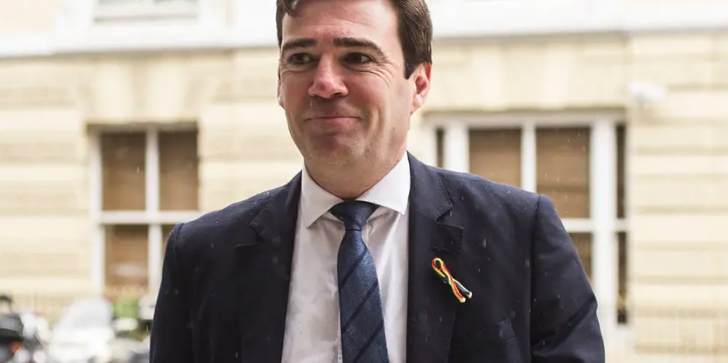
Britain’s small business community is reacting with concern after the recent Westminster by-election victory of Greater Manchester Mayor Andy Burnham, with new polling suggesting widespread anxiety over what his growing political influence could mean for the economy.

Exclusive research from Trends Research, based on a survey of 2,000 small and medium-sized enterprise owners conducted shortly after Burnham’s win in Makerfield, found that more than 80% expressed fear about the potential impact on their businesses if he were to play a leading role in national government.

Burnham secured nearly 55% of the vote in last Thursday’s contest, defeating Reform UK and gaining a seat in the House of Commons. Under Labour Party rules, his return to Westminster has fuelled speculation that he could mount a future leadership challenge against Sir Keir Starmer, intensifying scrutiny over his policy agenda and long-term ambitions.

For many business owners, however, the political mechanics are secondary to concerns over direction. Burnham has built his reputation on a more interventionist economic platform, with past proposals linked to higher redistribution, expanded local taxation, and measures such as potential land value-style levies and tourist charges. While none of these policies are currently government policy, they have contributed to uncertainty among entrepreneurs already dealing with rising costs and tighter margins.

The survey highlights the scale of unease within a sector that represents more than 5.5 million businesses and accounts for over 99% of the UK’s private enterprise base. Analysts note that confidence among small firms has been fragile in recent years, with inflationary pressures, tax changes, and labour costs already weighing heavily on investment decisions.

Separate industry research has pointed to growing stress among small business owners, and the latest findings suggest political volatility is adding to those pressures. Many respondents indicated that even the prospect of policy shifts is enough to affect hiring plans, expansion strategies, and long-term financial planning.

Despite the strong reaction, the picture is not uniform. Burnham has not formally declared any leadership challenge, and Sir Keir Starmer has made clear he intends to remain in post. The mayor has also previously positioned himself as supportive of regional growth and has advocated targeted relief for sectors such as hospitality, including lower VAT rates.

The survey’s authors suggest that the sentiment captured reflects uncertainty rather than firm opposition. In an environment where fiscal and regulatory decisions can quickly alter operating conditions, business owners appear increasingly sensitive to political developments at Westminster.

What the findings underline is a sector closely attuned to national politics and highly reactive to perceived instability. With taxation, employment regulation, and investment incentives all subject to change depending on government direction, small firms continue to prioritise predictability above all else.

For now, the mood among many entrepreneurs remains cautious. Rather than waiting for clarity, a significant proportion of Britain’s job creators appear to be preparing for potential disruption ahead.


Click to comment

You must be logged in to post a comment Login

Leave a Reply

Business

Fraudsters are increasingly using AI-generated images and videos to trick people into handing over sensitive personal and financial information, according to FraudSMART, the financial crime awareness initiative operated by the Banking and Payments Federation Ireland (BPFI). The organisation has reported a rise in online adverts promoting fake, State-backed investment schemes. These scams often use fabricated images of well-known politicians and business figures to make the offers appear legitimate and encourage users to click on registration links. Niamh Davenport, head of financial crime at BPFI, said scammers are deliberately exploiting recent media coverage of a planned State-backed savings and investment scheme to give their frauds a sense of credibility. “They often claim the scheme is open to everyone, but that places are limited and being ‘snapped up’ fast, in order to pressure people to act quickly,” she said. “They typically promise guaranteed returns or a guaranteed monthly income.” FraudSMART said that while anyone can be targeted, people in their early 50s are particularly vulnerable to investment scams. This age group is often focused on retirement planning, making them more receptive to financial offers that appear secure or high-yield. According to the organisation, most scams follow a similar pattern. Victims are first directed to click a registration link and complete a short online form providing their contact details. They are then contacted by someone posing as a financial adviser, who urges them to make an immediate “security deposit” to secure participation in the scheme. Once a payment is made, the money is quickly moved through multiple accounts, often overseas, making recovery extremely difficult. Davenport warned that scammers are becoming more sophisticated in their use of technology, particularly AI tools that allow them to create realistic but entirely fake promotional content. These materials are designed to mimic legitimate financial advertisements and build trust with potential victims. Recent figures from An Garda Síochána show investment fraud rose by 20% last year, with losses exceeding €20 million. The scale of individual scams varies widely, ranging from smaller crypto-related frauds involving a few hundred euro to large-scale investment schemes where victims lose tens of thousands. FraudSMART is urging the public to remain cautious when encountering online investment advertisements, especially those promising guaranteed returns or requiring urgent action. It also advises consumers to avoid sharing personal information with unverified sources and to be wary of pressure tactics designed to rush financial decisions. Authorities continue to warn that fraudsters are adapting quickly, using advanced digital tools to target victims across multiple platforms.

Trending

Business

Fraudsters are increasingly using AI-generated images and videos to trick people into handing over sensitive personal and financial information, according to FraudSMART, the financial crime awareness initiative operated by the Banking and Payments Federation Ireland (BPFI). The organisation has reported a rise in online adverts promoting fake, State-backed investment schemes. These scams often use fabricated images of well-known politicians and business figures to make the offers appear legitimate and encourage users to click on registration links. Niamh Davenport, head of financial crime at BPFI, said scammers are deliberately exploiting recent media coverage of a planned State-backed savings and investment scheme to give their frauds a sense of credibility. “They often claim the scheme is open to everyone, but that places are limited and being ‘snapped up’ fast, in order to pressure people to act quickly,” she said. “They typically promise guaranteed returns or a guaranteed monthly income.” FraudSMART said that while anyone can be targeted, people in their early 50s are particularly vulnerable to investment scams. This age group is often focused on retirement planning, making them more receptive to financial offers that appear secure or high-yield. According to the organisation, most scams follow a similar pattern. Victims are first directed to click a registration link and complete a short online form providing their contact details. They are then contacted by someone posing as a financial adviser, who urges them to make an immediate “security deposit” to secure participation in the scheme. Once a payment is made, the money is quickly moved through multiple accounts, often overseas, making recovery extremely difficult. Davenport warned that scammers are becoming more sophisticated in their use of technology, particularly AI tools that allow them to create realistic but entirely fake promotional content. These materials are designed to mimic legitimate financial advertisements and build trust with potential victims. Recent figures from An Garda Síochána show investment fraud rose by 20% last year, with losses exceeding €20 million. The scale of individual scams varies widely, ranging from smaller crypto-related frauds involving a few hundred euro to large-scale investment schemes where victims lose tens of thousands. FraudSMART is urging the public to remain cautious when encountering online investment advertisements, especially those promising guaranteed returns or requiring urgent action. It also advises consumers to avoid sharing personal information with unverified sources and to be wary of pressure tactics designed to rush financial decisions. Authorities continue to warn that fraudsters are adapting quickly, using advanced digital tools to target victims across multiple platforms.

You May Also Like

Politics

WASHINGTON — The Pentagon announced on Sunday that the United States will send a Terminal High Altitude Area Defense (THAAD) battery to Israel, alongside...

Health

NEW YORK — Teen smoking in the United States has reached an all-time low in 2024, with significant declines in overall youth tobacco use,...

Politics

WASHINGTON — As the countdown to the November 5 presidential election continues, former President Donald Trump is urging his supporters to aim for a...

Politics

In September, NASA announced that summer 2024 was the hottest on record. Just days later, the U.S. faced the dual impact of Hurricanes Helene...