


















Connect with us

Hi, what are you looking for?

News

Power Connection Delays Threaten Timeline for Tata Steel’s £1.25bn Green Furnace at Port Talbot

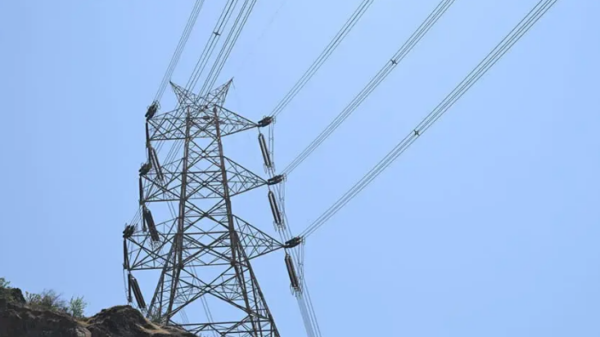
Tata Steel has warned that its £1.25 billion electric arc furnace project at Port Talbot could be delayed by up to eight months after National Grid raised concerns over setbacks in connecting the plant to the high-voltage electricity supply it requires to operate.

The furnace is central to the UK steel industry’s shift toward lower-carbon production and was originally scheduled to begin operations by the end of 2027. It is intended to replace traditional blast furnaces that were shut down two years ago, a move that resulted in the loss of around 2,000 jobs.

The company disclosed the potential delay during an investor briefing, where Tata Steel executive director and chief financial officer Koushik Chatterjee said construction work at the site was progressing, but grid connectivity remained a critical challenge.

“Securing access to high power electricity is critical for our planned transition,” he said, adding that National Grid had formally informed the company of delays in its connection project. “We are in conversation with National Grid and the UK government on resolution of the issues.”

Chatterjee said the setback could push commissioning back by “between six months to eight months,” and possibly longer, while discussions continue on mitigation measures.

Despite the delay, Tata Steel said major construction milestones had already been achieved, including significant demolition work at the Port Talbot site. The electric arc furnace itself began construction in July last year, supported by a £500 million government grant. Earlier this month, the company also completed the controlled demolition of a disused gas holder on site.

National Grid said its responsibilities include building two new substations, installing transformers, and laying around two kilometres of underground cable. It acknowledged that ground conditions, environmental considerations and planning processes had slowed progress, though it maintained that “good progress is being made”.

Electric arc furnaces represent a key part of the UK’s decarbonisation strategy for heavy industry. By melting recycled scrap steel instead of processing iron ore, they can reduce carbon emissions by up to 90 per cent. However, they require large and consistent electricity supplies, making them heavily dependent on grid infrastructure.

That reliance has exposed a broader structural challenge. UK Steel, the industry trade body, has warned that British manufacturers pay some of the highest industrial electricity prices in Europe, with costs reportedly up to 77 per cent higher than in France and Germany.

The Port Talbot project has been positioned by ministers as a flagship of the UK’s green industrial strategy, with the government linking its funding support to the preservation of around 5,000 jobs during the transition.

Any delay, however, risks complicating that narrative. While Tata Steel continues to work with National Grid and Whitehall to adjust timelines, no revised commissioning date has been confirmed.

For the workforce and the wider community, the uncertainty adds to an already difficult transition period. The episode also highlights a wider reality facing Britain’s net zero ambitions: industrial transformation depends not only on new technology, but on the infrastructure needed to power it.


Click to comment

You must be logged in to post a comment Login

Leave a Reply

Business

Fraudsters are increasingly using AI-generated images and videos to trick people into handing over sensitive personal and financial information, according to FraudSMART, the financial crime awareness initiative operated by the Banking and Payments Federation Ireland (BPFI). The organisation has reported a rise in online adverts promoting fake, State-backed investment schemes. These scams often use fabricated images of well-known politicians and business figures to make the offers appear legitimate and encourage users to click on registration links. Niamh Davenport, head of financial crime at BPFI, said scammers are deliberately exploiting recent media coverage of a planned State-backed savings and investment scheme to give their frauds a sense of credibility. “They often claim the scheme is open to everyone, but that places are limited and being ‘snapped up’ fast, in order to pressure people to act quickly,” she said. “They typically promise guaranteed returns or a guaranteed monthly income.” FraudSMART said that while anyone can be targeted, people in their early 50s are particularly vulnerable to investment scams. This age group is often focused on retirement planning, making them more receptive to financial offers that appear secure or high-yield. According to the organisation, most scams follow a similar pattern. Victims are first directed to click a registration link and complete a short online form providing their contact details. They are then contacted by someone posing as a financial adviser, who urges them to make an immediate “security deposit” to secure participation in the scheme. Once a payment is made, the money is quickly moved through multiple accounts, often overseas, making recovery extremely difficult. Davenport warned that scammers are becoming more sophisticated in their use of technology, particularly AI tools that allow them to create realistic but entirely fake promotional content. These materials are designed to mimic legitimate financial advertisements and build trust with potential victims. Recent figures from An Garda Síochána show investment fraud rose by 20% last year, with losses exceeding €20 million. The scale of individual scams varies widely, ranging from smaller crypto-related frauds involving a few hundred euro to large-scale investment schemes where victims lose tens of thousands. FraudSMART is urging the public to remain cautious when encountering online investment advertisements, especially those promising guaranteed returns or requiring urgent action. It also advises consumers to avoid sharing personal information with unverified sources and to be wary of pressure tactics designed to rush financial decisions. Authorities continue to warn that fraudsters are adapting quickly, using advanced digital tools to target victims across multiple platforms.

Trending

Business

Fraudsters are increasingly using AI-generated images and videos to trick people into handing over sensitive personal and financial information, according to FraudSMART, the financial crime awareness initiative operated by the Banking and Payments Federation Ireland (BPFI). The organisation has reported a rise in online adverts promoting fake, State-backed investment schemes. These scams often use fabricated images of well-known politicians and business figures to make the offers appear legitimate and encourage users to click on registration links. Niamh Davenport, head of financial crime at BPFI, said scammers are deliberately exploiting recent media coverage of a planned State-backed savings and investment scheme to give their frauds a sense of credibility. “They often claim the scheme is open to everyone, but that places are limited and being ‘snapped up’ fast, in order to pressure people to act quickly,” she said. “They typically promise guaranteed returns or a guaranteed monthly income.” FraudSMART said that while anyone can be targeted, people in their early 50s are particularly vulnerable to investment scams. This age group is often focused on retirement planning, making them more receptive to financial offers that appear secure or high-yield. According to the organisation, most scams follow a similar pattern. Victims are first directed to click a registration link and complete a short online form providing their contact details. They are then contacted by someone posing as a financial adviser, who urges them to make an immediate “security deposit” to secure participation in the scheme. Once a payment is made, the money is quickly moved through multiple accounts, often overseas, making recovery extremely difficult. Davenport warned that scammers are becoming more sophisticated in their use of technology, particularly AI tools that allow them to create realistic but entirely fake promotional content. These materials are designed to mimic legitimate financial advertisements and build trust with potential victims. Recent figures from An Garda Síochána show investment fraud rose by 20% last year, with losses exceeding €20 million. The scale of individual scams varies widely, ranging from smaller crypto-related frauds involving a few hundred euro to large-scale investment schemes where victims lose tens of thousands. FraudSMART is urging the public to remain cautious when encountering online investment advertisements, especially those promising guaranteed returns or requiring urgent action. It also advises consumers to avoid sharing personal information with unverified sources and to be wary of pressure tactics designed to rush financial decisions. Authorities continue to warn that fraudsters are adapting quickly, using advanced digital tools to target victims across multiple platforms.

You May Also Like

Politics

WASHINGTON — The Pentagon announced on Sunday that the United States will send a Terminal High Altitude Area Defense (THAAD) battery to Israel, alongside...

Health

NEW YORK — Teen smoking in the United States has reached an all-time low in 2024, with significant declines in overall youth tobacco use,...

Politics

WASHINGTON — As the countdown to the November 5 presidential election continues, former President Donald Trump is urging his supporters to aim for a...

Politics

In September, NASA announced that summer 2024 was the hottest on record. Just days later, the U.S. faced the dual impact of Hurricanes Helene...