



















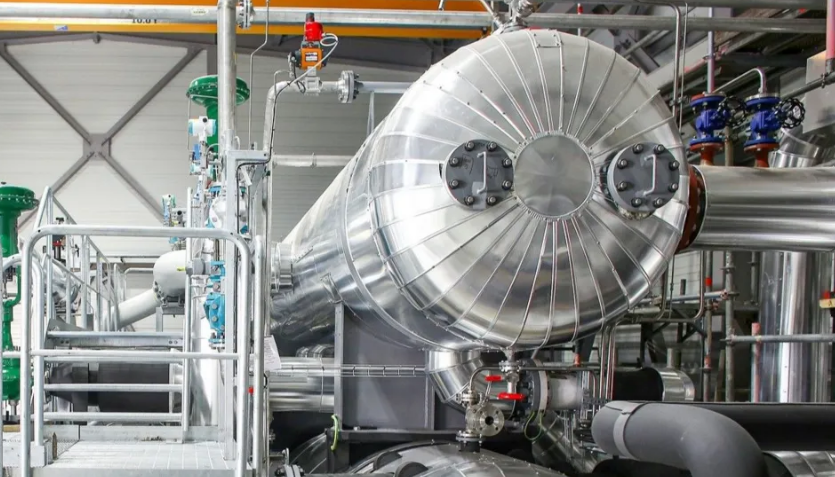
Energy company MVV Environment is set to construct some of the largest heat pumps ever, drawing water from the River Rhine to supply district heating to Mannheim. The pipe feeding the system is so large that “you could walk through it, fully upright,” according to Felix Hack, project manager at MVV Environment. The project aims to take 10,000 litres per second of river water, which will then be returned after heat is harvested.
The system will feature two heat pump units, each with a capacity of 82.5 megawatts, enough to supply approximately 40,000 homes. The heat pumps will be installed on the site of a coal-fired power plant that is being converted to cleaner technologies. Hack said the project’s scale was partly determined by transportation limits, though the components might be delivered via the Rhine.
Heat pumps operate by absorbing heat from air, ground, or water, then amplifying it through a compression cycle. While this is standard for home units, the Mannheim project applies the same principles on a much larger scale to serve an entire district. Hack explained that the technology benefits from large compressors developed for the oil and gas industry.
Work on the Mannheim project is scheduled to begin next year, with full operations expected in the winter of 2028-29. Hack noted that a multi-step filtration system will prevent fish from being drawn into the pipes, and modelling suggests the river’s average temperature will change by less than 0.1°C. The project is estimated to cost €200 million ($235 million; £176 million).
Other large-scale heat pump projects are underway in Europe. Everllence, formerly MAN Energy Solutions, is building a system in Aalborg, Denmark, with a total capacity of 176MW. Four 44MW units will supply nearly one-third of the city’s heating demand when the system comes online in 2027. Large hot water storage tanks, each holding 200,000 cubic metres, provide flexibility by storing heat for periods of high electricity prices.
Veronika Wilk at the Austrian Institute of Technology said heat pumps work well with district heating systems because multiple units allow operators to adjust output seasonally, improving efficiency. Some systems, including those in Helsinki, use air as a heat source when water sources are impractical. Helsinki’s network, which covers 1,400km and nearly 90% of buildings, combines heat pumps, biomass burners, and electric boilers to balance efficiency and cost.
The UK is beginning to explore similar systems. The Exeter Energy Network will feature three 4MW air-to-water heat pumps to supply the University of Exeter and other customers, with operations planned for 2028. Keith Baker at Glasgow Caledonian University highlighted that post-industrial and rural sites, including disused mines with stable water temperatures, present ideal opportunities for large-scale heat pump deployment.