













Connect with us

Hi, what are you looking for?

Politics

U.S. and China Escalate Trade Tensions with New Tariffs and Export Controls

The United States and China have reignited trade tensions with a fresh round of tariffs and export restrictions, sparking concerns over global supply chains and the future of negotiations between the world’s two largest economies. Despite the renewed confrontation, both sides signaled that the moves may ultimately serve as leverage ahead of a key meeting later this month.

China last week announced sweeping new export controls on rare earth elements—critical materials used in electronics, renewable energy, and defense systems—requiring overseas buyers to obtain special licenses. The curbs, set to take effect from December 1, apply to a wide range of rare earth products, including holmium, europium, ytterbium, thulium, and erbium. Exports for military purposes or to entities on China’s control lists will be denied, while applications linked to artificial intelligence or semiconductor research will be reviewed case by case.

Beijing said the measures were designed to protect national security and prevent Chinese resources from being used in global military conflicts. However, Washington and its allies view the move as a potential escalation in the ongoing economic standoff.

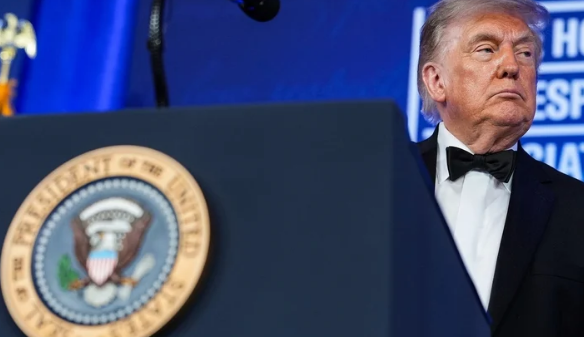
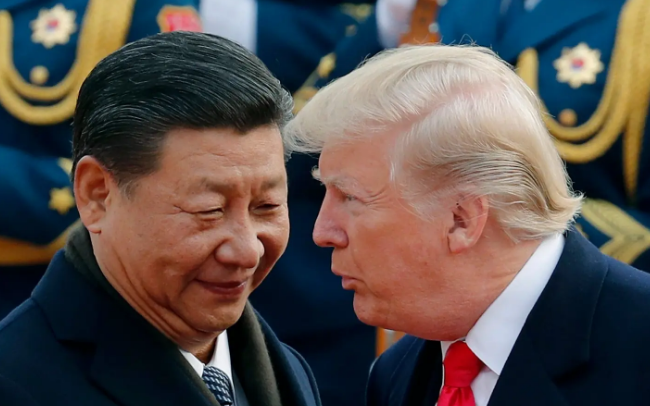
In response, President Donald Trump on Friday announced a 100% tariff on Chinese goods—doubling existing rates—and new export restrictions on critical U.S. software, both due to take effect November 1. Trump initially threatened to cancel a planned meeting with Chinese President Xi Jinping in South Korea later this month but later told reporters he would still attend, saying, “Nov. 1 is an eternity for me.”

On Sunday night, Trump appeared to downplay the tensions, posting on Truth Social: “Don’t worry about China, it will all be fine! Highly respected President Xi just had a bad moment. He doesn’t want Depression for his country, and neither do I.”

U.S. Trade Representative Jamieson Greer called China’s rare earth curbs a “power grab” but suggested there was still room for diplomacy. “These measures aren’t in place yet, the tariffs aren’t in place yet,” he said. “We’ll see the markets calm this coming week as things settle out, hopefully.”

Beijing hit back, accusing Washington of “double standards” and highlighting that the U.S. maintains far more extensive export controls—over 3,000 items—compared to China’s roughly 900. The Chinese Ministry of Commerce also criticized U.S. sanctions on semiconductor and shipbuilding industries as “abusive” and “discriminatory.”

The renewed confrontation comes as the countries’ fragile trade truce, which lowered tariffs earlier this year, is set to expire on November 10. Analysts warn that another escalation could sharply disrupt global trade. Bloomberg Economics estimates that a 100% U.S. tariff increase could raise effective duties on Chinese goods to 140%, a level that could “shut down trade, not just raise costs.”

Still, some economists believe the latest moves may be tactical. Goldman Sachs analysts said both sides are likely to pull back before the measures take effect, possibly extending the tariff pause and paving the way for renewed negotiations.


Business

Fraudsters are increasingly using AI-generated images and videos to trick people into handing over sensitive personal and financial information, according to FraudSMART, the financial crime awareness initiative operated by the Banking and Payments Federation Ireland (BPFI). The organisation has reported a rise in online adverts promoting fake, State-backed investment schemes. These scams often use fabricated images of well-known politicians and business figures to make the offers appear legitimate and encourage users to click on registration links. Niamh Davenport, head of financial crime at BPFI, said scammers are deliberately exploiting recent media coverage of a planned State-backed savings and investment scheme to give their frauds a sense of credibility. “They often claim the scheme is open to everyone, but that places are limited and being ‘snapped up’ fast, in order to pressure people to act quickly,” she said. “They typically promise guaranteed returns or a guaranteed monthly income.” FraudSMART said that while anyone can be targeted, people in their early 50s are particularly vulnerable to investment scams. This age group is often focused on retirement planning, making them more receptive to financial offers that appear secure or high-yield. According to the organisation, most scams follow a similar pattern. Victims are first directed to click a registration link and complete a short online form providing their contact details. They are then contacted by someone posing as a financial adviser, who urges them to make an immediate “security deposit” to secure participation in the scheme. Once a payment is made, the money is quickly moved through multiple accounts, often overseas, making recovery extremely difficult. Davenport warned that scammers are becoming more sophisticated in their use of technology, particularly AI tools that allow them to create realistic but entirely fake promotional content. These materials are designed to mimic legitimate financial advertisements and build trust with potential victims. Recent figures from An Garda Síochána show investment fraud rose by 20% last year, with losses exceeding €20 million. The scale of individual scams varies widely, ranging from smaller crypto-related frauds involving a few hundred euro to large-scale investment schemes where victims lose tens of thousands. FraudSMART is urging the public to remain cautious when encountering online investment advertisements, especially those promising guaranteed returns or requiring urgent action. It also advises consumers to avoid sharing personal information with unverified sources and to be wary of pressure tactics designed to rush financial decisions. Authorities continue to warn that fraudsters are adapting quickly, using advanced digital tools to target victims across multiple platforms.

Trending

Business

Fraudsters are increasingly using AI-generated images and videos to trick people into handing over sensitive personal and financial information, according to FraudSMART, the financial crime awareness initiative operated by the Banking and Payments Federation Ireland (BPFI). The organisation has reported a rise in online adverts promoting fake, State-backed investment schemes. These scams often use fabricated images of well-known politicians and business figures to make the offers appear legitimate and encourage users to click on registration links. Niamh Davenport, head of financial crime at BPFI, said scammers are deliberately exploiting recent media coverage of a planned State-backed savings and investment scheme to give their frauds a sense of credibility. “They often claim the scheme is open to everyone, but that places are limited and being ‘snapped up’ fast, in order to pressure people to act quickly,” she said. “They typically promise guaranteed returns or a guaranteed monthly income.” FraudSMART said that while anyone can be targeted, people in their early 50s are particularly vulnerable to investment scams. This age group is often focused on retirement planning, making them more receptive to financial offers that appear secure or high-yield. According to the organisation, most scams follow a similar pattern. Victims are first directed to click a registration link and complete a short online form providing their contact details. They are then contacted by someone posing as a financial adviser, who urges them to make an immediate “security deposit” to secure participation in the scheme. Once a payment is made, the money is quickly moved through multiple accounts, often overseas, making recovery extremely difficult. Davenport warned that scammers are becoming more sophisticated in their use of technology, particularly AI tools that allow them to create realistic but entirely fake promotional content. These materials are designed to mimic legitimate financial advertisements and build trust with potential victims. Recent figures from An Garda Síochána show investment fraud rose by 20% last year, with losses exceeding €20 million. The scale of individual scams varies widely, ranging from smaller crypto-related frauds involving a few hundred euro to large-scale investment schemes where victims lose tens of thousands. FraudSMART is urging the public to remain cautious when encountering online investment advertisements, especially those promising guaranteed returns or requiring urgent action. It also advises consumers to avoid sharing personal information with unverified sources and to be wary of pressure tactics designed to rush financial decisions. Authorities continue to warn that fraudsters are adapting quickly, using advanced digital tools to target victims across multiple platforms.

You May Also Like

Politics

WASHINGTON — The Pentagon announced on Sunday that the United States will send a Terminal High Altitude Area Defense (THAAD) battery to Israel, alongside...

Health

NEW YORK — Teen smoking in the United States has reached an all-time low in 2024, with significant declines in overall youth tobacco use,...

Politics

WASHINGTON — As the countdown to the November 5 presidential election continues, former President Donald Trump is urging his supporters to aim for a...

Politics

In September, NASA announced that summer 2024 was the hottest on record. Just days later, the U.S. faced the dual impact of Hurricanes Helene...