


















Wildfires are undermining decades of progress on clean air in North America, according to new research that links last year’s record-breaking fire season to the sharpest rise in pollution levels worldwide.
The University of Chicago’s Energy Policy Institute released its annual Air Quality Life Index (AQLI) on Thursday, showing that wildfire smoke pushed fine particle pollution in Canada and the United States to levels not seen in decades. The analysis, based on 2023 data, found that both countries experienced the steepest increases in air pollution globally, despite having some of the strictest air quality laws.
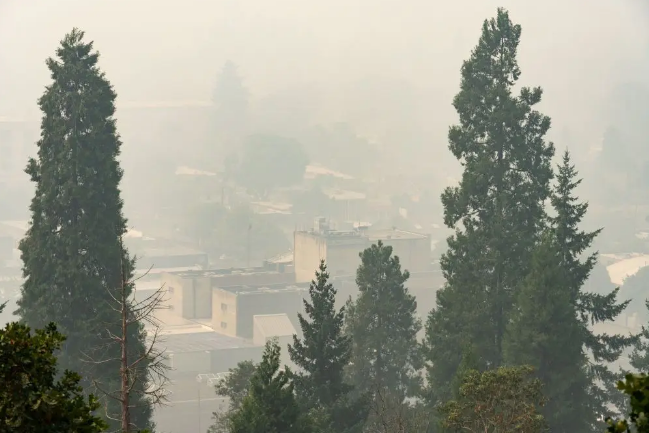
Canada’s unprecedented wildfire season last year burned more than 40 million acres, releasing smoke that blanketed vast swathes of North America. The AQLI reported that pollution concentrations rose to their highest levels since 1998 in Canada and since 2011 in the U.S.—the earliest years for which AQLI has comparable records.
The effects were felt far beyond traditional wildfire zones. Counties in the U.S. Midwest and South, including parts of Wisconsin, Illinois, Indiana, and even Mississippi, recorded pollution spikes severe enough to rank among the nation’s most polluted areas. Typically, such lists are dominated by California counties, where smog and wildfires have long been persistent challenges.
Globally, fine particulate matter (PM2.5) concentrations rose by 1.5% from 2022 to 2023, reaching nearly five times higher than World Health Organization guidelines. PM2.5 particles—tiny enough to penetrate deep into lungs and the bloodstream—are linked to severe health risks, including stroke, lung cancer, and cardiovascular disease.
The report described the findings as a warning that worsening wildfires could redefine the fight for clean air. Already, 2025 is on track to be the second worst fire season on record, with 18.5 million acres burned so far. Studies by NASA have tied rising wildfire frequency and intensity to climate change, particularly in the boreal forests of North America and across Russia.
The alarming data arrives as the Trump administration moves to loosen environmental protections. In March, the U.S. Environmental Protection Agency announced plans to roll back key regulations, including the National Ambient Air Quality Standards for particulate matter. It has also proposed revoking the 2009 “endangerment finding” that classified greenhouse gases as a threat to public health and underpinned U.S. climate regulations.
Researchers stressed that climate change and air pollution share the same root cause: fossil fuel use. “Both climate change and air pollution are driven by the same source—fossil fuel combustion from vehicles, power plants, and industry,” the report stated. “Reducing fossil fuel consumption is critical not only for tackling climate change but also for protecting public health from rising pollution.”