

















Connect with us

Hi, what are you looking for?

Health

Maryland Resident Contracts Rare Flesh-Eating Screwworm After Trip to El Salvador

The U.S. Department of Health and Human Services (HHS) has confirmed a rare case of human infestation by the New World screwworm, a flesh-eating parasite that typically preys on livestock but can also be fatal to people.

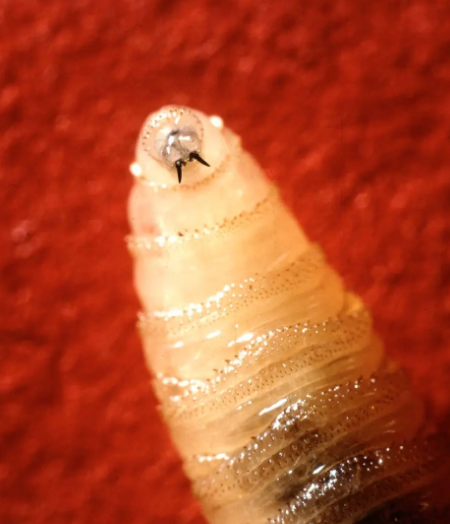
The patient, a Maryland resident, developed the condition after traveling to El Salvador, officials told TIME. The case, first reported by Reuters, was confirmed by the U.S. Centers for Disease Control and Prevention (CDC) on August 4 following a review of images showing the insect responsible.

“This is the first human case of travel-associated New World screwworm infestation from an outbreak-affected country identified in the United States,” HHS said in a statement. The agency stressed that the risk to public health in the U.S. remains “very low.”

Outbreaks of the parasite, which has long plagued Central America, have recently intensified. The U.S. embassy in Nicaragua reported in July that more than 120 human cases had been recorded in the past year alone.

The news has raised concern in the American cattle industry. According to the U.S. Department of Agriculture, the pest threatens $100 billion in economic activity tied to cattle and livestock. The National Cattlemen’s Beef Association warned that screwworm can kill a fully grown cow in just seven to ten days if left untreated.

The New World screwworm is a species of fly that lays its eggs in open wounds or mucous membranes of mammals and birds. Once hatched, maggots burrow into healthy tissue using hook-like mouthparts, causing severe pain, tissue destruction, and in some cases death. Treatment requires the manual removal of the maggots by medical professionals, as there are no approved drugs for human infestations.

While details about the Maryland patient remain limited, state health officials confirmed that the individual has recovered and there is no evidence the infection spread to others, The Herald-Mail reported.

The case comes as U.S. authorities announce new steps to guard against the parasite’s spread. Measures include permitting emergency use of veterinary medications and constructing a sterile fly production facility in Texas. The sterilization technique—where male flies are released in large numbers to prevent reproduction—was crucial to eradicating the screwworm from the U.S. in the 1960s and again during a small outbreak in Florida in 2017.

Though rare in people, the parasite has reappeared in recent years among travelers returning from affected regions. In 2023, a patient in Arkansas contracted the infestation after visiting Argentina and Brazil, while a case was reported in Florida last year linked to travel in the Dominican Republic.

The Maryland case serves as a reminder of the parasite’s persistent threat abroad and the need for continued vigilance to protect both public health and the nation’s livestock industry.


Business

Fraudsters are increasingly using AI-generated images and videos to trick people into handing over sensitive personal and financial information, according to FraudSMART, the financial crime awareness initiative operated by the Banking and Payments Federation Ireland (BPFI). The organisation has reported a rise in online adverts promoting fake, State-backed investment schemes. These scams often use fabricated images of well-known politicians and business figures to make the offers appear legitimate and encourage users to click on registration links. Niamh Davenport, head of financial crime at BPFI, said scammers are deliberately exploiting recent media coverage of a planned State-backed savings and investment scheme to give their frauds a sense of credibility. “They often claim the scheme is open to everyone, but that places are limited and being ‘snapped up’ fast, in order to pressure people to act quickly,” she said. “They typically promise guaranteed returns or a guaranteed monthly income.” FraudSMART said that while anyone can be targeted, people in their early 50s are particularly vulnerable to investment scams. This age group is often focused on retirement planning, making them more receptive to financial offers that appear secure or high-yield. According to the organisation, most scams follow a similar pattern. Victims are first directed to click a registration link and complete a short online form providing their contact details. They are then contacted by someone posing as a financial adviser, who urges them to make an immediate “security deposit” to secure participation in the scheme. Once a payment is made, the money is quickly moved through multiple accounts, often overseas, making recovery extremely difficult. Davenport warned that scammers are becoming more sophisticated in their use of technology, particularly AI tools that allow them to create realistic but entirely fake promotional content. These materials are designed to mimic legitimate financial advertisements and build trust with potential victims. Recent figures from An Garda Síochána show investment fraud rose by 20% last year, with losses exceeding €20 million. The scale of individual scams varies widely, ranging from smaller crypto-related frauds involving a few hundred euro to large-scale investment schemes where victims lose tens of thousands. FraudSMART is urging the public to remain cautious when encountering online investment advertisements, especially those promising guaranteed returns or requiring urgent action. It also advises consumers to avoid sharing personal information with unverified sources and to be wary of pressure tactics designed to rush financial decisions. Authorities continue to warn that fraudsters are adapting quickly, using advanced digital tools to target victims across multiple platforms.

Trending

Business

Fraudsters are increasingly using AI-generated images and videos to trick people into handing over sensitive personal and financial information, according to FraudSMART, the financial crime awareness initiative operated by the Banking and Payments Federation Ireland (BPFI). The organisation has reported a rise in online adverts promoting fake, State-backed investment schemes. These scams often use fabricated images of well-known politicians and business figures to make the offers appear legitimate and encourage users to click on registration links. Niamh Davenport, head of financial crime at BPFI, said scammers are deliberately exploiting recent media coverage of a planned State-backed savings and investment scheme to give their frauds a sense of credibility. “They often claim the scheme is open to everyone, but that places are limited and being ‘snapped up’ fast, in order to pressure people to act quickly,” she said. “They typically promise guaranteed returns or a guaranteed monthly income.” FraudSMART said that while anyone can be targeted, people in their early 50s are particularly vulnerable to investment scams. This age group is often focused on retirement planning, making them more receptive to financial offers that appear secure or high-yield. According to the organisation, most scams follow a similar pattern. Victims are first directed to click a registration link and complete a short online form providing their contact details. They are then contacted by someone posing as a financial adviser, who urges them to make an immediate “security deposit” to secure participation in the scheme. Once a payment is made, the money is quickly moved through multiple accounts, often overseas, making recovery extremely difficult. Davenport warned that scammers are becoming more sophisticated in their use of technology, particularly AI tools that allow them to create realistic but entirely fake promotional content. These materials are designed to mimic legitimate financial advertisements and build trust with potential victims. Recent figures from An Garda Síochána show investment fraud rose by 20% last year, with losses exceeding €20 million. The scale of individual scams varies widely, ranging from smaller crypto-related frauds involving a few hundred euro to large-scale investment schemes where victims lose tens of thousands. FraudSMART is urging the public to remain cautious when encountering online investment advertisements, especially those promising guaranteed returns or requiring urgent action. It also advises consumers to avoid sharing personal information with unverified sources and to be wary of pressure tactics designed to rush financial decisions. Authorities continue to warn that fraudsters are adapting quickly, using advanced digital tools to target victims across multiple platforms.

You May Also Like

Politics

WASHINGTON — The Pentagon announced on Sunday that the United States will send a Terminal High Altitude Area Defense (THAAD) battery to Israel, alongside...

Health

NEW YORK — Teen smoking in the United States has reached an all-time low in 2024, with significant declines in overall youth tobacco use,...

Politics

WASHINGTON — As the countdown to the November 5 presidential election continues, former President Donald Trump is urging his supporters to aim for a...

Politics

In September, NASA announced that summer 2024 was the hottest on record. Just days later, the U.S. faced the dual impact of Hurricanes Helene...