





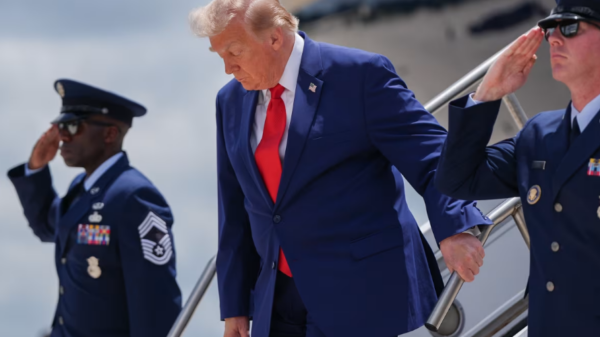










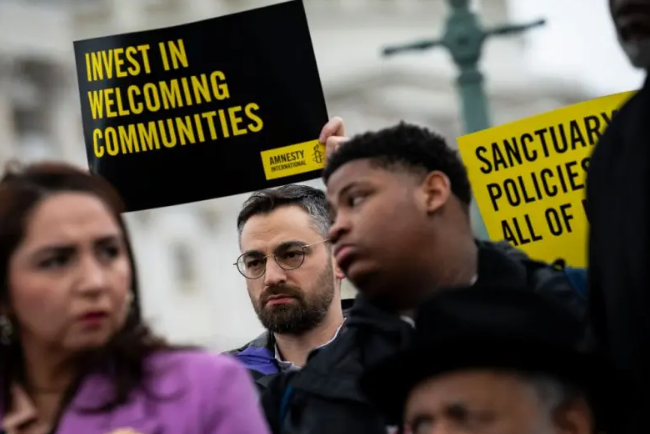
In a significant legal defeat for former U.S. President Donald Trump, a federal judge has dismissed a lawsuit brought by his administration that sought to overturn Illinois’ sanctuary state laws. The ruling is a major blow to Trump’s ongoing campaign to curb protections for undocumented immigrants in cities and states that limit cooperation with federal immigration authorities.
The lawsuit, filed by the Trump Administration, argued that Illinois’ laws—particularly those preventing local law enforcement from sharing information with federal immigration agencies—violated federal statutes. However, U.S. District Judge Lindsay C. Jenkins ruled on Friday that the state’s sanctuary policies are protected under the Tenth Amendment of the U.S. Constitution.
“It would allow the federal government to commandeer States under the guise of intergovernmental immunity—the exact type of direct regulation of states barred by the Tenth Amendment,” Judge Jenkins wrote in her decision.
Jenkins, who was appointed by President Joe Biden, emphasized that Illinois’ decision to restrict cooperation with federal agencies does not amount to regulating or discriminating against the federal government, and therefore remains lawful.
Illinois Governor J.B. Pritzker welcomed the ruling, posting on X (formerly Twitter), “Illinois just beat the Trump Administration in federal court.” Chicago Mayor Brandon Johnson also applauded the court’s decision, calling it a validation of the city’s Welcoming City Ordinance. “Chicago cannot be compelled to cooperate with the Trump Administration’s reckless and inhumane immigration agenda,” he said.
The Trump Administration has long targeted sanctuary jurisdictions, which it claims obstruct federal immigration enforcement and provide safe havens for undocumented immigrants. From his first days in office, Trump issued executive orders threatening to cut federal funding to cities and states that refused to fully cooperate with agencies like Immigration and Customs Enforcement (ICE).
Despite this week’s loss in Illinois, the Trump Administration has continued its legal campaign elsewhere. Just a day before the Illinois ruling, the Department of Justice filed a similar lawsuit against New York City. Other cities, including Los Angeles, Denver, Rochester, and several municipalities in New Jersey, remain in the administration’s crosshairs.
Trump’s immigration advisor Tom Homan reaffirmed the administration’s stance. “Sanctuary cities are sanctuaries for criminals—hard stop,” he said, pledging to prioritize legal action against them.
Still, not all sanctuary cities are taking a firm stance. Louisville, Kentucky, recently withdrew from its sanctuary designation, citing rising ICE raids and concerns for community safety. Meanwhile, New York City Mayor Eric Adams has faced criticism from immigration advocates after signaling openness to revising sanctuary laws in response to federal lawsuits.
While the legal battles continue across the country, the Illinois ruling signals that federal attempts to override state and local sanctuary policies may face stiff constitutional resistance in the courts.