














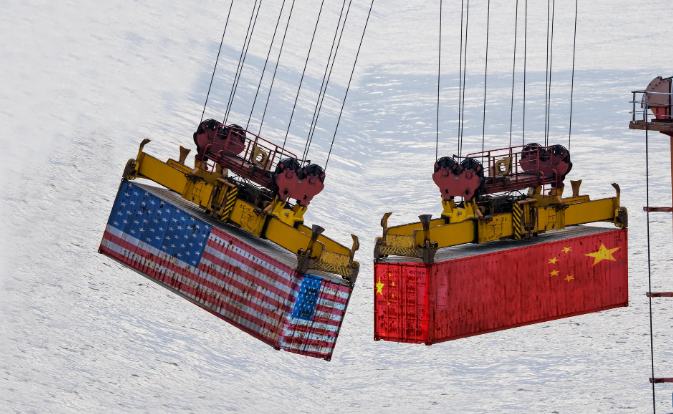
After months of escalating economic tensions and retaliatory trade measures, representatives from the United States and China are scheduled to meet in London on Monday in a bid to de-escalate what has become the most intense trade conflict between the two nations since former President Donald Trump returned to the White House.
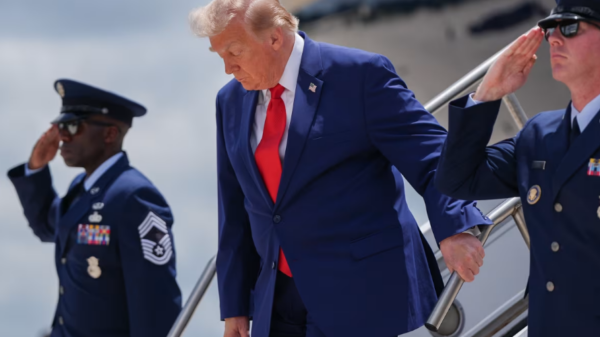
The high-stakes meeting follows a turbulent stretch marked by rapidly rising tariffs, export controls, and mounting strain on global markets. President Trump, who reignited his hardline stance on China earlier this year, has publicly expressed optimism, stating last week on Truth Social, “The meeting should go very well,” following a rare phone call with Chinese President Xi Jinping.
Since February, the Trump administration has imposed multiple rounds of steep tariffs on Chinese imports, citing concerns ranging from fentanyl trafficking to unfair trade practices. These include the elimination of the de minimis exemption for low-value packages from China and a sweeping set of tariffs that peaked at 145% on Chinese goods. China responded in kind, with matching tariff increases, export restrictions on rare earth minerals, and a lawsuit filed at the World Trade Organization.
In April, Trump unveiled what he dubbed the “Liberation Day” tariffs, pushing the effective rate on Chinese goods to 54%, which was later raised even further. In retaliation, China imposed mirror-image duties and tightened licensing rules for exports of critical materials such as samarium and terbium, essential to tech and defense industries.
A temporary truce appeared to emerge in mid-May after bilateral talks in Geneva led to a short-lived reduction in tariff rates and a 90-day pause on additional barriers. However, that fragile agreement quickly unraveled. Trump accused Beijing of violating the deal, particularly by failing to ease restrictions on rare earth exports. China, in turn, accused Washington of acting in bad faith by tightening export rules on AI chips and software and revoking visas for Chinese students.
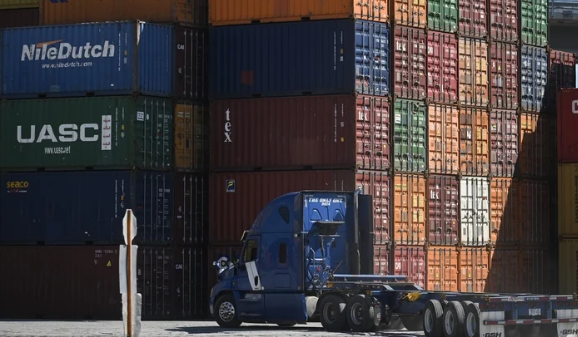
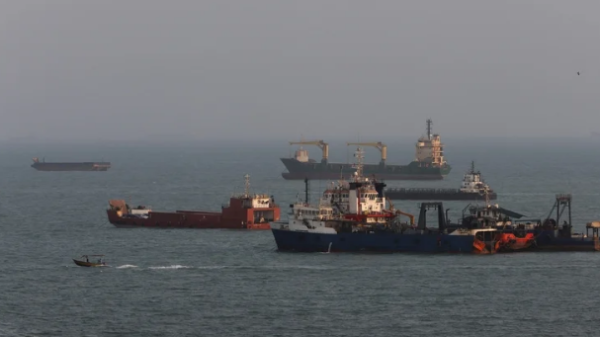
The political and economic stakes are high. Global supply chains, already under pressure from rising protectionism, have struggled to absorb the uncertainty. Markets have responded with volatility, and businesses on both sides of the Pacific have warned of deepening costs.
Leading the U.S. delegation in London will be Treasury Secretary Scott Bessent, Commerce Secretary Howard Lutnick, and U.S. Trade Representative Jamieson Greer. As both sides prepare to return to the negotiating table, the world will be watching to see if diplomacy can halt a spiraling trade war that has already begun to reshape the global economic landscape.