












Connect with us

Hi, what are you looking for?

Politics

Judge Blocks Trump Administration’s Use of 18th Century Law for Mass Deportations

A federal judge issued an emergency ruling on Saturday, blocking the Trump administration from using a rarely invoked 18th-century law to deport Venezuelan migrants accused of gang affiliation. The decision came just hours after President Donald Trump invoked the Alien Enemies Act of 1798 to facilitate the rapid removal of alleged members of the Tren de Aragua gang.

U.S. District Judge James E. Boasberg ordered an immediate halt to the deportations, citing concerns that some migrants were already en route to El Salvador and Honduras, where they were set to be detained under agreements with those countries. El Salvador had previously agreed to take in up to 300 migrants classified as gang members.

“I do not believe I can wait any longer and am required to act,” Boasberg stated during an emergency hearing in response to a lawsuit filed by the American Civil Liberties Union (ACLU) and Democracy Forward. He ordered any planes already in flight to be turned around and emphasized that delaying removals would not harm the government, as the individuals remained in custody.

Trump Administration Invokes Wartime Powers

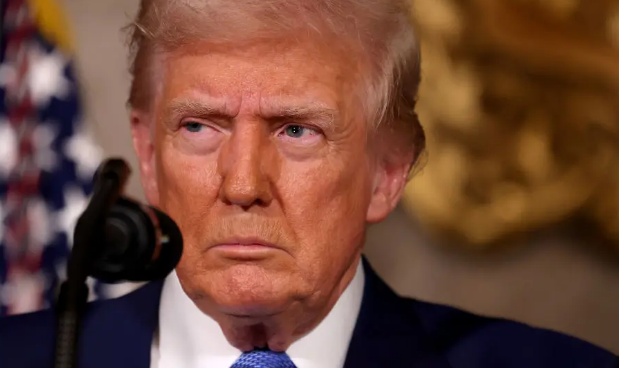
Trump’s proclamation, released just before Boasberg’s hearing, described Tren de Aragua as an “invading force” and claimed the gang posed a national security threat. The administration’s use of the Alien Enemies Act marks only the fourth time the law has been invoked, with previous instances occurring during major wars, including World War II.

“Over the years, Venezuelan national and local authorities have ceded ever-greater control over their territories to transnational criminal organizations, including TdA,” Trump stated in his proclamation. “The result is a hybrid criminal state that is perpetrating an invasion of and predatory incursion into the United States.”

By invoking the law, the administration sought to bypass standard immigration procedures, allowing for immediate deportations and stripping legal protections from those targeted. Critics argue this move grants the president unchecked authority over immigration enforcement.

Legal Challenges and Political Fallout

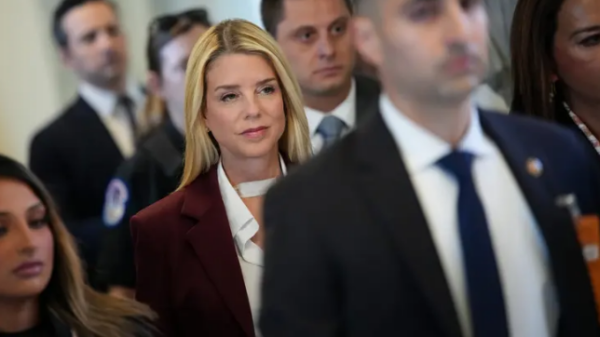
Attorney General Pam Bondi denounced Boasberg’s ruling, arguing that it undermined the president’s authority. “This order disregards well-established authority regarding President Trump’s power and puts the public and law enforcement at risk,” she said in a statement.

The Justice Department quickly appealed the decision, warning that blocking a presidential order on national security grounds could set a dangerous precedent. “If this order is allowed to stand, district courts would have license to enjoin virtually any urgent national-security action,” the department stated.

Deputy Assistant Attorney General Drew Ensign defended the administration’s position, citing past Supreme Court rulings that allowed President Harry Truman to detain a German citizen under the Alien Enemies Act three years after World War II ended. He argued that Trump had broad latitude to determine threats to national security and act accordingly.

However, ACLU attorney Lee Gelernt contended that the law had never been applied against a criminal gang rather than a recognized state. Boasberg acknowledged the legal complexity of the issue but ruled that the plaintiffs had a strong case.

Implications of the Ruling

Boasberg’s order blocks deportations for 14 days and sets a hearing for Friday to further examine the legality of Trump’s actions. Immigration lawyers warned that if upheld, the administration could use the Alien Enemies Act to target other groups, such as MS-13, which Trump has frequently criticized.

Venezuela’s government condemned the proclamation, calling it a “flagrant violation of human rights” and likening it to past wartime abuses, including the internment of Japanese Americans during World War II.

As the legal battle unfolds, the case raises significant questions about presidential power, immigration enforcement, and the potential expansion of wartime laws into domestic policy.


Business

Fraudsters are increasingly using AI-generated images and videos to trick people into handing over sensitive personal and financial information, according to FraudSMART, the financial crime awareness initiative operated by the Banking and Payments Federation Ireland (BPFI). The organisation has reported a rise in online adverts promoting fake, State-backed investment schemes. These scams often use fabricated images of well-known politicians and business figures to make the offers appear legitimate and encourage users to click on registration links. Niamh Davenport, head of financial crime at BPFI, said scammers are deliberately exploiting recent media coverage of a planned State-backed savings and investment scheme to give their frauds a sense of credibility. “They often claim the scheme is open to everyone, but that places are limited and being ‘snapped up’ fast, in order to pressure people to act quickly,” she said. “They typically promise guaranteed returns or a guaranteed monthly income.” FraudSMART said that while anyone can be targeted, people in their early 50s are particularly vulnerable to investment scams. This age group is often focused on retirement planning, making them more receptive to financial offers that appear secure or high-yield. According to the organisation, most scams follow a similar pattern. Victims are first directed to click a registration link and complete a short online form providing their contact details. They are then contacted by someone posing as a financial adviser, who urges them to make an immediate “security deposit” to secure participation in the scheme. Once a payment is made, the money is quickly moved through multiple accounts, often overseas, making recovery extremely difficult. Davenport warned that scammers are becoming more sophisticated in their use of technology, particularly AI tools that allow them to create realistic but entirely fake promotional content. These materials are designed to mimic legitimate financial advertisements and build trust with potential victims. Recent figures from An Garda Síochána show investment fraud rose by 20% last year, with losses exceeding €20 million. The scale of individual scams varies widely, ranging from smaller crypto-related frauds involving a few hundred euro to large-scale investment schemes where victims lose tens of thousands. FraudSMART is urging the public to remain cautious when encountering online investment advertisements, especially those promising guaranteed returns or requiring urgent action. It also advises consumers to avoid sharing personal information with unverified sources and to be wary of pressure tactics designed to rush financial decisions. Authorities continue to warn that fraudsters are adapting quickly, using advanced digital tools to target victims across multiple platforms.

Trending

Business

Fraudsters are increasingly using AI-generated images and videos to trick people into handing over sensitive personal and financial information, according to FraudSMART, the financial crime awareness initiative operated by the Banking and Payments Federation Ireland (BPFI). The organisation has reported a rise in online adverts promoting fake, State-backed investment schemes. These scams often use fabricated images of well-known politicians and business figures to make the offers appear legitimate and encourage users to click on registration links. Niamh Davenport, head of financial crime at BPFI, said scammers are deliberately exploiting recent media coverage of a planned State-backed savings and investment scheme to give their frauds a sense of credibility. “They often claim the scheme is open to everyone, but that places are limited and being ‘snapped up’ fast, in order to pressure people to act quickly,” she said. “They typically promise guaranteed returns or a guaranteed monthly income.” FraudSMART said that while anyone can be targeted, people in their early 50s are particularly vulnerable to investment scams. This age group is often focused on retirement planning, making them more receptive to financial offers that appear secure or high-yield. According to the organisation, most scams follow a similar pattern. Victims are first directed to click a registration link and complete a short online form providing their contact details. They are then contacted by someone posing as a financial adviser, who urges them to make an immediate “security deposit” to secure participation in the scheme. Once a payment is made, the money is quickly moved through multiple accounts, often overseas, making recovery extremely difficult. Davenport warned that scammers are becoming more sophisticated in their use of technology, particularly AI tools that allow them to create realistic but entirely fake promotional content. These materials are designed to mimic legitimate financial advertisements and build trust with potential victims. Recent figures from An Garda Síochána show investment fraud rose by 20% last year, with losses exceeding €20 million. The scale of individual scams varies widely, ranging from smaller crypto-related frauds involving a few hundred euro to large-scale investment schemes where victims lose tens of thousands. FraudSMART is urging the public to remain cautious when encountering online investment advertisements, especially those promising guaranteed returns or requiring urgent action. It also advises consumers to avoid sharing personal information with unverified sources and to be wary of pressure tactics designed to rush financial decisions. Authorities continue to warn that fraudsters are adapting quickly, using advanced digital tools to target victims across multiple platforms.

You May Also Like

Politics

WASHINGTON — The Pentagon announced on Sunday that the United States will send a Terminal High Altitude Area Defense (THAAD) battery to Israel, alongside...

Health

NEW YORK — Teen smoking in the United States has reached an all-time low in 2024, with significant declines in overall youth tobacco use,...

Politics

WASHINGTON — As the countdown to the November 5 presidential election continues, former President Donald Trump is urging his supporters to aim for a...

Politics

In September, NASA announced that summer 2024 was the hottest on record. Just days later, the U.S. faced the dual impact of Hurricanes Helene...