

















Connect with us

Hi, what are you looking for?

Politics

U.S. Trade War Under Trump’s Second Term Strains Asian Economies

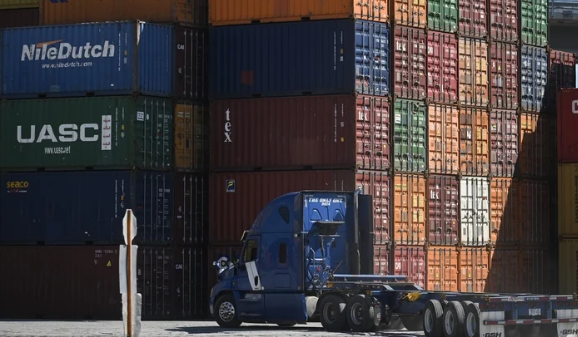
The escalating trade war led by U.S. President Donald Trump is becoming a significant challenge for many Asian economies, which have long relied on export manufacturing and free trade to drive economic growth. As tensions rise, Asian countries face increasing uncertainty amid tariffs and shifting trade agreements, potentially disrupting global supply chains.

The Trump Administration’s tariffs are aimed at compelling companies to relocate or maintain their factories in the United States, threatening existing trade agreements made with Asian nations. The White House has outlined criteria for raising tariffs, focusing not only on U.S. trade deficits but also on various economic factors like taxes, exchange rates, government subsidies, and non-tariff trade barriers. Among the most notable developments is the imposition of a 25% tariff on imported automobiles and auto parts, which will take effect Thursday. Trump’s trade measures also include tariffs on goods from China, Canada, Mexico, and countries importing oil from Venezuela, alongside plans to target pharmaceutical drugs, lumber, copper, and computer chips.

The immediate impact of these higher tariffs has prompted manufacturers to shift production away from China to other regions like South and Southeast Asia, Africa, and Latin America. However, as the future remains uncertain, many companies are adopting a wait-and-see approach before making further decisions.

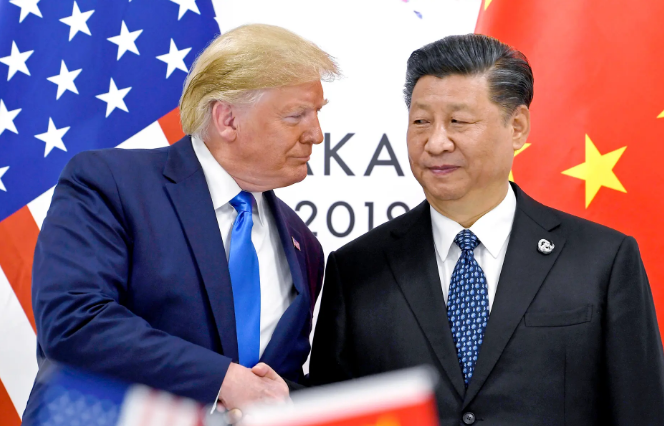
China, the world’s second-largest economy, continues to feel the effects of the trade war. Despite a decrease in trade with the U.S. since the start of the conflict, the U.S. trade deficit with China remains high, reaching $295.4 billion last year. The Chinese government has turned its focus to high-tech production, including electric vehicles and batteries, as U.S. tariffs on these products, including 27.5% duties on autos and 102.5% on electric vehicles, have largely closed the U.S. market to Chinese manufacturers. In response, China has imposed tariffs on U.S. farm goods and expanded export controls on key minerals used in high-tech products.

Japan is also feeling the heat, with Prime Minister Shigeru Ishiba urging the U.S. to exclude Japan from auto tariffs. The Japanese auto industry, which exports around 1.5 million cars to the U.S. annually, is a key sector, and rising tariffs could have severe repercussions. Japan’s broader economy, which relies on exports of electronics, machinery, and steel, is also vulnerable to U.S. tariff hikes. Business sentiment has already declined, with Japan’s Nikkei 225 index and shares of major automakers like Toyota dropping significantly.

Taiwan, with its export-driven economy, is heavily reliant on the U.S. market, especially for computer chips. Taiwan Semiconductor Manufacturing Corp. is expanding its U.S. operations, responding to both U.S. incentives and its own strategic interests. Meanwhile, South Korea, which ran a $66 billion trade surplus with the U.S. last year, is exploring ways to increase investments in U.S. manufacturing and is considering adjustments to its trade agreements with the U.S.

Vietnam, which had the third-largest trade surplus with the U.S. in 2024, is actively working to reduce its surplus by cutting tariffs on key goods such as LNG, autos, and farm products. The government is also seeking to bolster its relationship with the U.S. through a trial of SpaceX’s Starlink internet service.

India, with its sizable trade surplus with the U.S., faces similar challenges, as its pharmaceutical exports—key to its economy—could be affected by the growing tariffs. As the U.S. remains India’s largest overseas market, the country is closely monitoring the situation.

As Asian economies brace for the long-term effects of the trade war, uncertainty looms large, with many countries adjusting strategies to navigate the shifting landscape of global trade.


Business

Fraudsters are increasingly using AI-generated images and videos to trick people into handing over sensitive personal and financial information, according to FraudSMART, the financial crime awareness initiative operated by the Banking and Payments Federation Ireland (BPFI). The organisation has reported a rise in online adverts promoting fake, State-backed investment schemes. These scams often use fabricated images of well-known politicians and business figures to make the offers appear legitimate and encourage users to click on registration links. Niamh Davenport, head of financial crime at BPFI, said scammers are deliberately exploiting recent media coverage of a planned State-backed savings and investment scheme to give their frauds a sense of credibility. “They often claim the scheme is open to everyone, but that places are limited and being ‘snapped up’ fast, in order to pressure people to act quickly,” she said. “They typically promise guaranteed returns or a guaranteed monthly income.” FraudSMART said that while anyone can be targeted, people in their early 50s are particularly vulnerable to investment scams. This age group is often focused on retirement planning, making them more receptive to financial offers that appear secure or high-yield. According to the organisation, most scams follow a similar pattern. Victims are first directed to click a registration link and complete a short online form providing their contact details. They are then contacted by someone posing as a financial adviser, who urges them to make an immediate “security deposit” to secure participation in the scheme. Once a payment is made, the money is quickly moved through multiple accounts, often overseas, making recovery extremely difficult. Davenport warned that scammers are becoming more sophisticated in their use of technology, particularly AI tools that allow them to create realistic but entirely fake promotional content. These materials are designed to mimic legitimate financial advertisements and build trust with potential victims. Recent figures from An Garda Síochána show investment fraud rose by 20% last year, with losses exceeding €20 million. The scale of individual scams varies widely, ranging from smaller crypto-related frauds involving a few hundred euro to large-scale investment schemes where victims lose tens of thousands. FraudSMART is urging the public to remain cautious when encountering online investment advertisements, especially those promising guaranteed returns or requiring urgent action. It also advises consumers to avoid sharing personal information with unverified sources and to be wary of pressure tactics designed to rush financial decisions. Authorities continue to warn that fraudsters are adapting quickly, using advanced digital tools to target victims across multiple platforms.

Trending

Business

Fraudsters are increasingly using AI-generated images and videos to trick people into handing over sensitive personal and financial information, according to FraudSMART, the financial crime awareness initiative operated by the Banking and Payments Federation Ireland (BPFI). The organisation has reported a rise in online adverts promoting fake, State-backed investment schemes. These scams often use fabricated images of well-known politicians and business figures to make the offers appear legitimate and encourage users to click on registration links. Niamh Davenport, head of financial crime at BPFI, said scammers are deliberately exploiting recent media coverage of a planned State-backed savings and investment scheme to give their frauds a sense of credibility. “They often claim the scheme is open to everyone, but that places are limited and being ‘snapped up’ fast, in order to pressure people to act quickly,” she said. “They typically promise guaranteed returns or a guaranteed monthly income.” FraudSMART said that while anyone can be targeted, people in their early 50s are particularly vulnerable to investment scams. This age group is often focused on retirement planning, making them more receptive to financial offers that appear secure or high-yield. According to the organisation, most scams follow a similar pattern. Victims are first directed to click a registration link and complete a short online form providing their contact details. They are then contacted by someone posing as a financial adviser, who urges them to make an immediate “security deposit” to secure participation in the scheme. Once a payment is made, the money is quickly moved through multiple accounts, often overseas, making recovery extremely difficult. Davenport warned that scammers are becoming more sophisticated in their use of technology, particularly AI tools that allow them to create realistic but entirely fake promotional content. These materials are designed to mimic legitimate financial advertisements and build trust with potential victims. Recent figures from An Garda Síochána show investment fraud rose by 20% last year, with losses exceeding €20 million. The scale of individual scams varies widely, ranging from smaller crypto-related frauds involving a few hundred euro to large-scale investment schemes where victims lose tens of thousands. FraudSMART is urging the public to remain cautious when encountering online investment advertisements, especially those promising guaranteed returns or requiring urgent action. It also advises consumers to avoid sharing personal information with unverified sources and to be wary of pressure tactics designed to rush financial decisions. Authorities continue to warn that fraudsters are adapting quickly, using advanced digital tools to target victims across multiple platforms.

You May Also Like

Politics

WASHINGTON — The Pentagon announced on Sunday that the United States will send a Terminal High Altitude Area Defense (THAAD) battery to Israel, alongside...

Health

NEW YORK — Teen smoking in the United States has reached an all-time low in 2024, with significant declines in overall youth tobacco use,...

Politics

WASHINGTON — As the countdown to the November 5 presidential election continues, former President Donald Trump is urging his supporters to aim for a...

Politics

In September, NASA announced that summer 2024 was the hottest on record. Just days later, the U.S. faced the dual impact of Hurricanes Helene...