













After building up a massive military force in the Middle East over the last few weeks, US President Donald Trump said Friday that he was considering strikes against Iran to pressure its leaders into accepting a deal on its nuclear program.
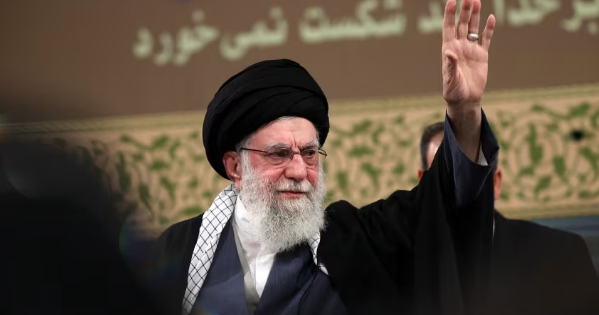
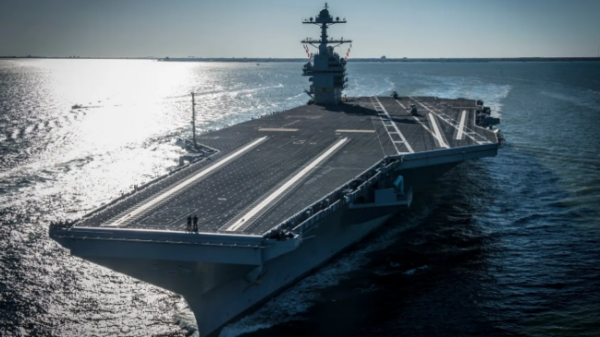
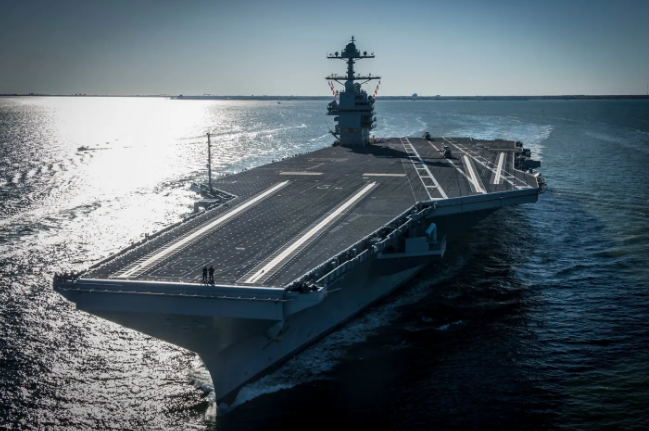
Trump has steadily increased threats of action against the Iranian leadership, with two aircraft carriers already deployed in the region and the USS Gerald Ford expected to arrive imminently. On Friday, when asked by reporters whether he was weighing limited strikes to push Iran toward a deal, he replied, “I guess I can say I am considering that.”
On Thursday, Trump gave Tehran a deadline of 10 to 15 days to finalize a nuclear agreement or face “really bad things.” The US President’s warnings follow a military operation in June 2025, led by Israel, that struck three Iranian nuclear sites. After that operation, Trump claimed Iran’s enrichment facilities had been “completely and totally obliterated.”
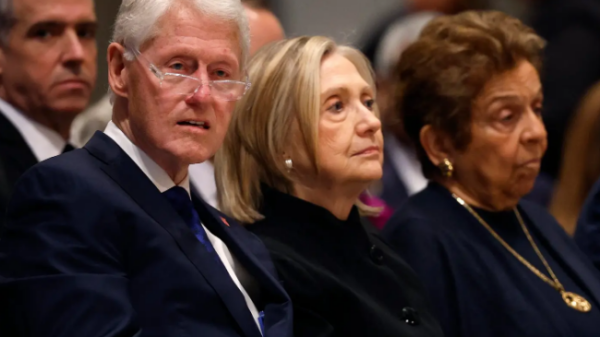
The prospect of further strikes has drawn criticism from both sides of the political aisle. Republican Representative Thomas Massie and Democratic Representative Ro Khanna announced plans to introduce a War Powers resolution to prevent the president from ordering military action in Iran without congressional approval. “Congress must vote on war according to our Constitution,” Massie wrote on social media, emphasizing that he would vote against any new conflict in the Middle East.
Legal experts have questioned the authority for any unilateral strikes. David Janovsky, Acting Director of The Constitution Project at the Project on Government Oversight, told TIME that such an action would likely be illegal under current circumstances. “Presidents have some inherent authority to deploy the military as Commander in Chief, but that is limited to true emergencies where there is an attack underway or an imminent threat,” he said. “There is no suggestion that is the case today. Any strike without congressional approval would be unlawful.”
Janovsky said the administration would need explicit congressional authorization for military action against a sovereign state, describing a potential strike as “an act of war.” He noted that the strikes against Iranian nuclear sites in 2025 were also legally questionable, relying on claims of inherent authority and collective self-defense with Israel.
Congressional oversight remains a key political factor. Janovsky suggested that a clear statement from Congress restricting military action could influence legal advisers in the executive branch and military lawyers reviewing strike orders. Historically, he said, the executive branch has often sought creative legal interpretations to justify overseas military action.
The situation highlights ongoing tensions between the executive and legislative branches over war powers, as well as the delicate balance between diplomacy and military pressure in the Middle East.