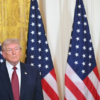










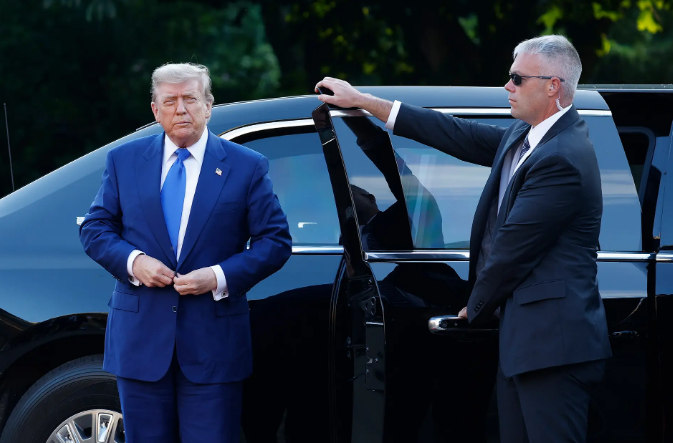
U.S. President Donald Trump received a warm welcome from King Willem-Alexander and Queen Máxima of the Netherlands on Monday evening, despite arriving late to a formal dinner attended by dozens of world leaders. Trump, the last guest to enter Paleis Huis ten Bosch, was nevertheless seated at the head table alongside the king and described his stay as receiving “the royal treatment.”
Trump’s visit to The Hague came during a moment of renewed assertiveness on the international stage. He was attending the NATO summit, where he touted a major victory: a new commitment from European allies to increase defense spending from 2% to 5% of GDP over the next decade. “Without President Trump, this would not have happened,” NATO Secretary-General Mark Rutte said at the summit.
The 5% target marks a historic shift in NATO policy, one Trump has long demanded. While past U.S. presidents had pressed European allies to contribute more to collective defense, Trump’s confrontational style—often involving threats and public pressure—finally yielded results.
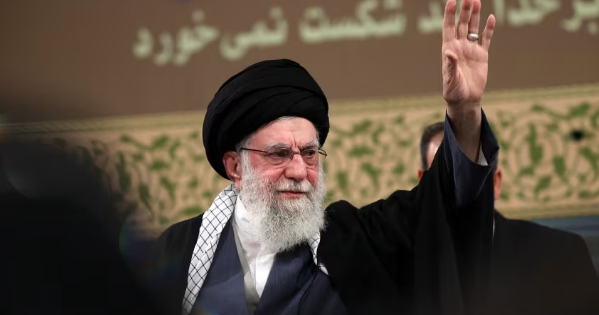
His trip to Europe also followed a string of high-profile foreign policy moves. Days before his arrival, Trump ordered strikes on Iranian nuclear sites in response to regional escalations, claiming it forced Iran into a ceasefire with Israel and crippled Tehran’s nuclear capabilities. However, a leaked assessment from the U.S. Defense Intelligence Agency (DIA) contradicted Trump’s statements, suggesting the damage may be less severe than reported and that Iran may still be capable of quickly reviving its program.
Trump dismissed the DIA report and instead pointed to Israeli intelligence, which he said confirmed long-term setbacks for Iran’s nuclear ambitions.
The NATO summit highlighted Trump’s unconventional approach to global diplomacy. While some allies remain wary of his disregard for multilateral institutions, others concede his unorthodox methods have achieved results. “His disruptive style opens new windows of opportunity,” said Benedikt Franke, head of the Munich Security Group.
Still, concerns linger. Critics warn that Trump’s push for greater defense spending could strain domestic budgets in Europe, where populist voices on both the left and right question sacrificing social services for foreign policy objectives. “Sending billions abroad while cutting services at home isn’t popular,” said Liana Fix of the Council on Foreign Relations.
Moreover, Trump’s antagonism toward traditional institutions—both international and domestic—has hollowed out parts of the U.S. foreign policy apparatus. He has sidelined the State Department and National Security Council and consolidated roles under figures like Secretary of State Marco Rubio. “President Trump’s just winging it,” said Democratic Senator Chris Coons.
Even as he celebrates diplomatic victories, the long-term effects of Trump’s disruptive diplomacy remain uncertain. Allies may be spending more on defense, but questions persist about the cost—political and strategic—of achieving it through confrontation.