


















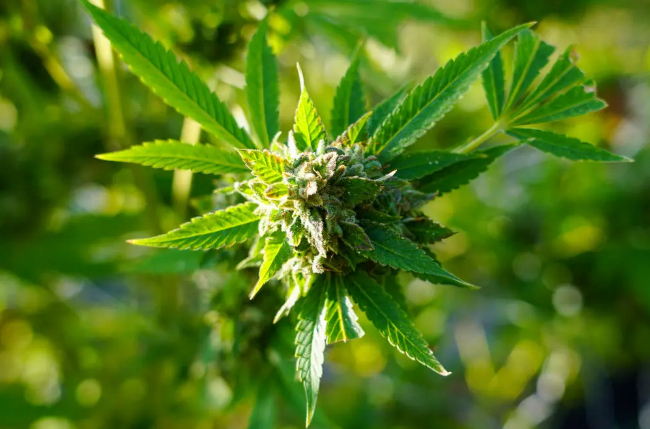
The U.S. Supreme Court is preparing to take up a high-stakes Second Amendment case that could redefine the boundaries of gun ownership for millions of Americans who use marijuana. The case, United States v. Hemani, will test whether federal restrictions barring unlawful drug users from owning firearms violate constitutional rights.
The case stems from the arrest of Ali Danial Hemani, a Texas man found with a Glock pistol, marijuana, and cocaine during a 2022 FBI search. Federal prosecutors charged Hemani under a law that prohibits firearm possession by anyone who is an “unlawful user” of controlled substances. His lawyers argued the law infringed on his Second Amendment rights, and both a district court and the Fifth Circuit Court of Appeals ruled in his favor.
The Justice Department, under the Trump administration, has asked the Supreme Court to overturn those rulings. In its petition, the department acknowledged the right to bear arms as “fundamental” but argued that the government can impose limited restrictions in “narrow circumstances,” such as when a person poses a risk of misusing firearms.
The case has far-reaching implications. Federal data shows that over 50 million American adults use marijuana each year, even as it remains illegal under federal law. Meanwhile, about one-third of U.S. adults report owning a firearm. With marijuana legalized in some form in nearly 40 states, the ruling could clarify how federal gun laws interact with evolving state drug policies.
At the heart of the debate is whether the ban on gun ownership for drug users is comparable to historical firearm restrictions. The Justice Department contends the law mirrors past regulations disarming “drunkards” and others deemed dangerous. Legal scholars say much depends on which historical period the Court uses for comparison—the founding era or the post-Civil War Reconstruction period.
Legal experts also note a key question remains unresolved: how long after ceasing drug use someone remains an “unlawful user.” Even if users quit, those convicted under the statute may still lose gun rights under separate laws applying to felons.
The Supreme Court’s decision follows its 2022 New York State Rifle & Pistol Association v. Bruen ruling, which reshaped the framework for evaluating gun restrictions based on historical precedent. Observers say Hemani could clarify how far that precedent extends.
While the Court’s direction remains uncertain, some analysts believe its recent ruling upholding a temporary gun ban for domestic violence offenders could influence the outcome. That decision emphasized the “temporary” nature of certain restrictions—a factor that may prove crucial when arguments are heard early next year.