





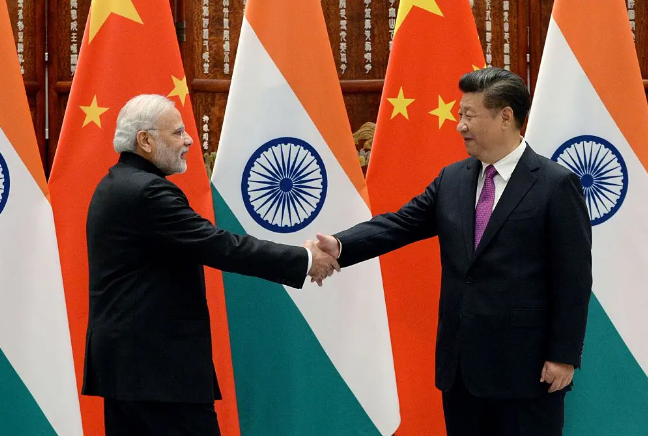
India and China appear to be entering a period of improved relations even as New Delhi’s longstanding partnership with Washington faces strains under U.S. President Donald Trump’s trade policies.
Chinese Foreign Minister Wang Yi is in New Delhi this week on his first visit in more than three years, holding talks with India’s National Security Adviser Ajit Doval and External Affairs Minister Subrahmanyam Jaishankar. The agenda reportedly includes reducing troop numbers along the disputed Himalayan border, a potential breakthrough since the deadly 2020 border clash that froze ties between the two neighbors.
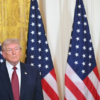
The shift comes as the Trump administration has taken a harder line against India, a nation traditionally seen as a counterweight to China in Asia. Washington recently imposed a “secondary tariff” on India, raising duties to 50% in response to its purchases of Russian oil. At the same time, Trump has ruled out similar penalties on China, despite Beijing being the largest buyer of Russian oil, as Washington and Beijing continue trade negotiations.
Trump’s trade adviser Peter Navarro described India’s oil purchases as “opportunistic and deeply corrosive,” warning in the Financial Times that U.S. tariffs would hit India’s access to American markets. The move has unsettled relations between Washington and New Delhi, with Indian Prime Minister Narendra Modi resisting U.S. demands for greater access to the country’s agricultural and dairy markets.
Analysts say the tensions risk undermining trust between the two partners. Ivan Lidarev, a research fellow at the National University of Singapore, noted that Washington’s expectation for India to align against China while also making broad trade concessions was “unrealistic.” Vivek Mishra of the Observer Research Foundation added that the approach resembled a “breach of strategic trust,” straining Modi’s ties with Trump.
At the same time, India and China have been moving to normalize relations. The two countries agreed late last year to begin disengagement along contested border areas, and they plan to resume direct passenger flights next month after a five-year pause. Jaishankar visited Beijing in July, while Modi is expected to make his first visit to China in seven years later this month for talks with President Xi Jinping.
Observers believe Trump’s tariffs have accelerated this rapprochement. “Both sides realized the importance of their economic relationship and the huge potential of bilateral trade in an increasingly protectionist world,” said Lidarev. While India remains firm on defending its Russian oil purchases, it is also diversifying trade partnerships, including with China.
The warming of India-China ties could complicate Washington’s strategy in Asia. Experts warn that while the U.S. still values India as a strategic partner, Trump’s punitive measures risk pushing New Delhi closer to Beijing and Moscow. As Lidarev noted, “The perception of the U.S. as an unreliable partner will only increase the international trend toward greater multipolarity.”