











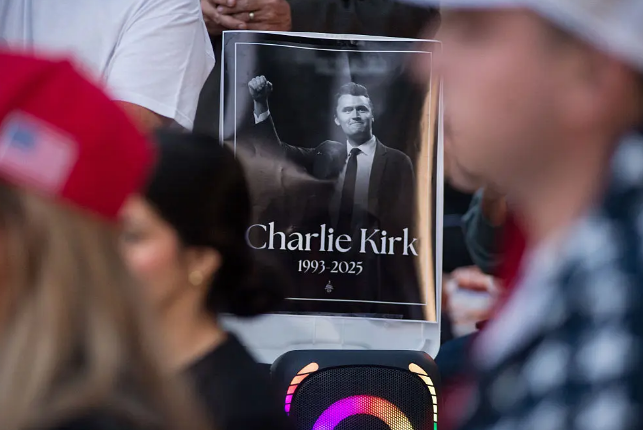
The killing of conservative commentator Charlie Kirk has sparked a wave of disciplinary actions across the United States, with individuals losing jobs, facing suspensions, and coming under public scrutiny for remarks seen as insensitive or celebratory. The fallout has also prompted the Trump Administration to tighten immigration screening, warning that foreigners who glorify political violence could face visa consequences.
Kirk, 31, was shot dead Wednesday while speaking at Utah Valley University, an attack widely condemned by leaders from both major parties. While officials have described the shooting as another alarming sign of rising political violence, the aftermath has deepened divisions, as debates over free speech collide with heightened security concerns.
Several high-profile figures have already faced workplace repercussions. MSNBC announced the departure of political analyst Matthew Dowd after he suggested Kirk’s rhetoric had contributed to the environment leading to his killing. Dowd later apologized, but the network said his comments were “inappropriate, insensitive and unacceptable.”
Elsewhere, universities and media outlets have also taken action. The University of Mississippi and Middle Tennessee State University confirmed they had dismissed staff members over social media remarks deemed offensive. DC Comics ended the contract of a writer who posted comments about the shooting, while PHNX Sports in Arizona fired a journalist after activists highlighted his criticisms of Kirk’s views. A reporter in Florida was suspended after asking a lawmaker about gun control in the immediate aftermath of the attack.
Republican lawmakers and activists have been vocal in demanding accountability. Sen. Marsha Blackburn of Tennessee called for dismissals of university staff and even a Secret Service agent who had posted disparaging remarks about Kirk. Conservative influencers such as Laura Loomer and Scott Presler have used their platforms to crowdsource names and workplaces of individuals celebrating Kirk’s death, vowing to expose them publicly.
The tensions extend beyond U.S. borders. Deputy Secretary of State Christopher Landau said Thursday that visa applicants and holders would be scrutinized for posts “praising, rationalizing, or making light” of Kirk’s death. He urged the public to flag such content, stating, “Foreigners who glorify violence and hatred are not welcome visitors to our country.” A State Department spokesperson later said the policy aligned with broader national security interests.
The administration’s stance follows earlier measures aimed at filtering immigration on ideological grounds, including restrictions targeting foreign students, journalists, and activists accused of anti-American speech. Officials say the goal is to protect free expression in the U.S. by rejecting those seen as undermining it.
Meanwhile, fears of unrest have prompted several historically Black colleges and universities to suspend classes and impose campus lockdowns, citing potential threats linked to the volatile political climate. Lawmakers in Washington have also renewed calls for expanded security protections amid warnings that the sharp rise in political violence could spiral further.