


















Connect with us

Hi, what are you looking for?

News

U.S. and China to Resume Trade Talks in London Amidst Escalating Tariff War

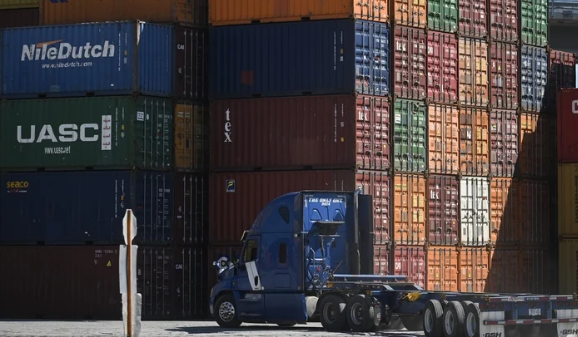
After months of escalating economic tensions and retaliatory trade measures, representatives from the United States and China are scheduled to meet in London on Monday in a bid to de-escalate what has become the most intense trade conflict between the two nations since former President Donald Trump returned to the White House.

The high-stakes meeting follows a turbulent stretch marked by rapidly rising tariffs, export controls, and mounting strain on global markets. President Trump, who reignited his hardline stance on China earlier this year, has publicly expressed optimism, stating last week on Truth Social, “The meeting should go very well,” following a rare phone call with Chinese President Xi Jinping.

Since February, the Trump administration has imposed multiple rounds of steep tariffs on Chinese imports, citing concerns ranging from fentanyl trafficking to unfair trade practices. These include the elimination of the de minimis exemption for low-value packages from China and a sweeping set of tariffs that peaked at 145% on Chinese goods. China responded in kind, with matching tariff increases, export restrictions on rare earth minerals, and a lawsuit filed at the World Trade Organization.

In April, Trump unveiled what he dubbed the “Liberation Day” tariffs, pushing the effective rate on Chinese goods to 54%, which was later raised even further. In retaliation, China imposed mirror-image duties and tightened licensing rules for exports of critical materials such as samarium and terbium, essential to tech and defense industries.

A temporary truce appeared to emerge in mid-May after bilateral talks in Geneva led to a short-lived reduction in tariff rates and a 90-day pause on additional barriers. However, that fragile agreement quickly unraveled. Trump accused Beijing of violating the deal, particularly by failing to ease restrictions on rare earth exports. China, in turn, accused Washington of acting in bad faith by tightening export rules on AI chips and software and revoking visas for Chinese students.

The political and economic stakes are high. Global supply chains, already under pressure from rising protectionism, have struggled to absorb the uncertainty. Markets have responded with volatility, and businesses on both sides of the Pacific have warned of deepening costs.

Leading the U.S. delegation in London will be Treasury Secretary Scott Bessent, Commerce Secretary Howard Lutnick, and U.S. Trade Representative Jamieson Greer. As both sides prepare to return to the negotiating table, the world will be watching to see if diplomacy can halt a spiraling trade war that has already begun to reshape the global economic landscape.


Business

Fraudsters are increasingly using AI-generated images and videos to trick people into handing over sensitive personal and financial information, according to FraudSMART, the financial crime awareness initiative operated by the Banking and Payments Federation Ireland (BPFI). The organisation has reported a rise in online adverts promoting fake, State-backed investment schemes. These scams often use fabricated images of well-known politicians and business figures to make the offers appear legitimate and encourage users to click on registration links. Niamh Davenport, head of financial crime at BPFI, said scammers are deliberately exploiting recent media coverage of a planned State-backed savings and investment scheme to give their frauds a sense of credibility. “They often claim the scheme is open to everyone, but that places are limited and being ‘snapped up’ fast, in order to pressure people to act quickly,” she said. “They typically promise guaranteed returns or a guaranteed monthly income.” FraudSMART said that while anyone can be targeted, people in their early 50s are particularly vulnerable to investment scams. This age group is often focused on retirement planning, making them more receptive to financial offers that appear secure or high-yield. According to the organisation, most scams follow a similar pattern. Victims are first directed to click a registration link and complete a short online form providing their contact details. They are then contacted by someone posing as a financial adviser, who urges them to make an immediate “security deposit” to secure participation in the scheme. Once a payment is made, the money is quickly moved through multiple accounts, often overseas, making recovery extremely difficult. Davenport warned that scammers are becoming more sophisticated in their use of technology, particularly AI tools that allow them to create realistic but entirely fake promotional content. These materials are designed to mimic legitimate financial advertisements and build trust with potential victims. Recent figures from An Garda Síochána show investment fraud rose by 20% last year, with losses exceeding €20 million. The scale of individual scams varies widely, ranging from smaller crypto-related frauds involving a few hundred euro to large-scale investment schemes where victims lose tens of thousands. FraudSMART is urging the public to remain cautious when encountering online investment advertisements, especially those promising guaranteed returns or requiring urgent action. It also advises consumers to avoid sharing personal information with unverified sources and to be wary of pressure tactics designed to rush financial decisions. Authorities continue to warn that fraudsters are adapting quickly, using advanced digital tools to target victims across multiple platforms.

Trending

Business

Fraudsters are increasingly using AI-generated images and videos to trick people into handing over sensitive personal and financial information, according to FraudSMART, the financial crime awareness initiative operated by the Banking and Payments Federation Ireland (BPFI). The organisation has reported a rise in online adverts promoting fake, State-backed investment schemes. These scams often use fabricated images of well-known politicians and business figures to make the offers appear legitimate and encourage users to click on registration links. Niamh Davenport, head of financial crime at BPFI, said scammers are deliberately exploiting recent media coverage of a planned State-backed savings and investment scheme to give their frauds a sense of credibility. “They often claim the scheme is open to everyone, but that places are limited and being ‘snapped up’ fast, in order to pressure people to act quickly,” she said. “They typically promise guaranteed returns or a guaranteed monthly income.” FraudSMART said that while anyone can be targeted, people in their early 50s are particularly vulnerable to investment scams. This age group is often focused on retirement planning, making them more receptive to financial offers that appear secure or high-yield. According to the organisation, most scams follow a similar pattern. Victims are first directed to click a registration link and complete a short online form providing their contact details. They are then contacted by someone posing as a financial adviser, who urges them to make an immediate “security deposit” to secure participation in the scheme. Once a payment is made, the money is quickly moved through multiple accounts, often overseas, making recovery extremely difficult. Davenport warned that scammers are becoming more sophisticated in their use of technology, particularly AI tools that allow them to create realistic but entirely fake promotional content. These materials are designed to mimic legitimate financial advertisements and build trust with potential victims. Recent figures from An Garda Síochána show investment fraud rose by 20% last year, with losses exceeding €20 million. The scale of individual scams varies widely, ranging from smaller crypto-related frauds involving a few hundred euro to large-scale investment schemes where victims lose tens of thousands. FraudSMART is urging the public to remain cautious when encountering online investment advertisements, especially those promising guaranteed returns or requiring urgent action. It also advises consumers to avoid sharing personal information with unverified sources and to be wary of pressure tactics designed to rush financial decisions. Authorities continue to warn that fraudsters are adapting quickly, using advanced digital tools to target victims across multiple platforms.

You May Also Like

Politics

WASHINGTON — The Pentagon announced on Sunday that the United States will send a Terminal High Altitude Area Defense (THAAD) battery to Israel, alongside...

Health

NEW YORK — Teen smoking in the United States has reached an all-time low in 2024, with significant declines in overall youth tobacco use,...

Politics

WASHINGTON — As the countdown to the November 5 presidential election continues, former President Donald Trump is urging his supporters to aim for a...

Politics

In September, NASA announced that summer 2024 was the hottest on record. Just days later, the U.S. faced the dual impact of Hurricanes Helene...