














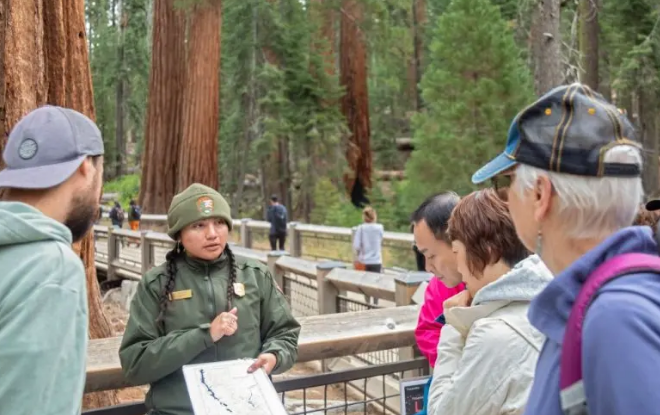
As peak season begins across the United States’ 63 national parks, the National Park Service (NPS) is facing mounting challenges under President Donald Trump’s second term. While millions of visitors prepare to explore natural treasures like Yellowstone and the Grand Canyon, park officials are grappling with deep budget cuts, policy rollbacks, and staffing crises that threaten the future of the country’s public lands.
In 2023, national parks drew a record 331 million visitors, generating $55.6 billion in economic benefit for surrounding communities and supporting over 400,000 jobs. Despite this, the Trump administration’s latest spending proposals appear to jeopardize the long-term stability of the system.
At the heart of the controversy is Trump’s so-called “Big, Beautiful Bill,” a sweeping budget that includes tax breaks and expansions for federal agencies like Immigration and Customs Enforcement (ICE), while slashing $267 million in previously allocated park funding. A proposed FY26 budget calls for an additional 31% reduction in NPS operational funding, which could eliminate over 5,000 jobs.
“This Administration appears to be systematically destroying the workforce and values of the National Park System,” said retired park superintendent Bob Krumenaker. “Morale is at an all-time low.”
The effects are already being felt. On Valentine’s Day, approximately 1,000 NPS employees were laid off under a directive from the Department of Government Efficiency (DOGE), prompting a coalition of unions and advocacy groups to file a lawsuit in April. A recent National Parks Conservation Association (NPCA) report revealed a 24% drop in permanent staff since January 2025, leaving parks stretched thin during the busiest season.
Kristen Brengel, NPCA’s senior vice president, warned, “There are fewer people protecting these places. It’s a threat to public safety, resource protection, and long-term stewardship.”
In addition to budget and staffing issues, the Trump administration’s stance on diversity, equity, and inclusion (DEI) has sparked fresh debate. In March, the NPS removed webpages celebrating LGBTQ+ history and notable activists, including Marsha P. Johnson and Sylvia Rivera. A subsequent executive order accused the Biden-era NPS of promoting racially biased interpretations of history.
Secretary of the Interior Doug Burgum has since instructed all parks to post signs urging visitors to report any “negative” information about Americans, further fueling criticism that the administration is attempting to rewrite history. Temporary edits to the Thomas Jefferson Memorial and the Harriet Tubman pages drew widespread concern.
“These are America’s classrooms,” said Krumenaker. “Telling the full story — even the painful parts — is essential to our national identity.”
In a separate move, Trump signed an executive order in July to raise entry fees for foreign visitors while promising improved access and affordability for U.S. residents. The Department of the Interior estimates the surcharge will generate over $90 million annually.
As national parks remain a cornerstone of American tourism and heritage, advocates warn that the current trajectory under Trump’s administration could undermine their preservation and accessibility for generations to come.
“The parks are more than scenic landscapes,” Brengel added. “They are a reflection of who we are as a nation — and right now, that legacy is under threat.”