















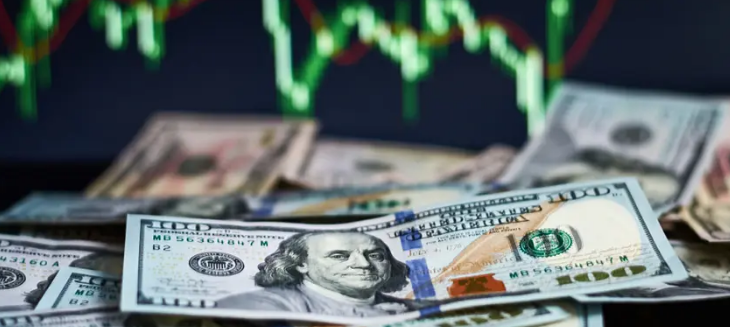
Sterling has climbed to $1.38 against the US dollar, reaching its strongest level since October 2021, as disruptions in the US economy, shifting interest rate expectations, and political uncertainty weigh on the greenback. Analysts say the rally is driven more by dollar softness than by a sudden strengthening of the pound, offering a rare opportunity for consumers and businesses needing US currency.
The move comes in the wake of Winter Storm Fern, which left nearly 600,000 homes across the United States without power and caused thousands of flight cancellations. Economists estimate the extreme weather could reduce US first-quarter GDP growth by up to 1.5 per cent.
Market expectations of lower US interest rates later this year have also contributed to the dollar’s decline, reducing its yield advantage compared with sterling. Political instability linked to former President Donald Trump, combined with volatility in commodities markets and record-high gold and silver prices, has prompted investors to move away from US assets.
Tony Redondo, founder of Cosmos Currency Exchange, described the pound’s rise as a “perfect storm” of factors. “The pound’s climb to $1.38 is being driven by US dollar weakness and UK rate expectations,” he said. “Investors are moving away from the dollar due to concerns over trade tariffs and the independence of the Federal Reserve. Meanwhile, persistent UK inflation suggests the Bank of England may keep rates higher for longer, attracting global capital.”
Redondo noted that for those needing dollars, current exchange rates are advantageous. “At $1.38, you’re getting almost 11 per cent more value than this time last year. Timing the absolute peak is nearly impossible, but buying now locks in a four-year high.”
Prem Raja, head of the trading floor at Currencies 4 You, agreed that the surge reflects dollar weakness rather than a sudden boost in sterling. “Markets are increasingly pricing in lower US interest rates, which reduces the dollar’s appeal and encourages investors to rotate out of USD exposure,” he said. Raja also cited political uncertainty, renewed tariff discussions, and the risk of a US government shutdown as factors reinforcing the trend. He suggested $1.40 as the next psychological level, but warned that short-term pullbacks are likely after such a rapid move.
Riz Malik, director at R3 Wealth, added that the dollar’s weakness may even be strategic. “The dollar is supposed to represent stability, but the US is anything but stable at the moment. A weaker dollar can support exports, so this could be by design,” he said.
The pound’s advance underscores how global economic and political developments are reshaping currency markets. Analysts caution that exchange rates can swing quickly, but current conditions highlight a favourable window for those looking to buy dollars, with sterling at its highest level in more than four years.