










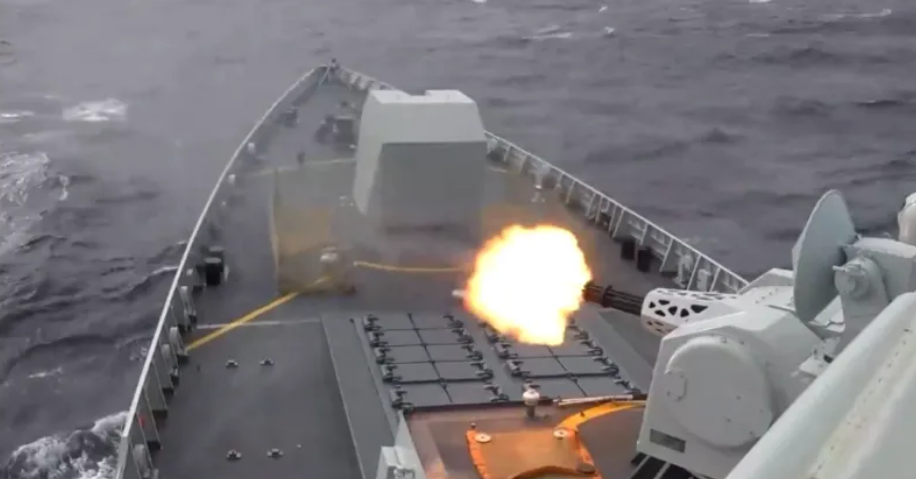
Beijing has launched extensive military exercises around Taiwan, simulating the seizure and blockade of key areas, in a demonstration against what it calls “separatist forces.” The drills involve China’s army, navy, air force, and rocket units and include live-fire exercises, according to the Chinese military.
Codenamed Justice Mission 2025, the exercises come days after the United States approved one of its largest arms sales to Taiwan, valued at $11 billion. Beijing responded by sanctioning US defence firms and criticising the deal as a threat to regional stability. Taiwan has also accelerated its own defence initiatives, prompting further anger in China, which claims the self-governing island as part of its territory.
Taiwan’s presidential office condemned the drills as a challenge to international norms. The island’s defence ministry reported detecting 89 Chinese military aircraft and 28 ships near its waters on Monday. Taiwan has deployed missile systems and additional forces to monitor the situation and stated that its troops remain on “high alert” to defend the island and protect its citizens.
The Chinese Eastern Theater Command, responsible for the Taiwan Strait, described the drills on social media as a “shield of justice,” warning that efforts to pursue independence would be met with annihilation. The military said the major portion of the exercises would take place Tuesday from 08:00 to 18:00 local time.
Beijing’s foreign ministry said the drills are a “severe punishment for separatist forces” and cautioned foreign nations against interfering. Spokesman Lin Jian stated that any attempts to obstruct China’s reunification efforts are “doomed to fail.” While China continues to advocate for “peaceful reunification,” it maintains a legal framework allowing “non-peaceful means” to prevent Taiwan’s secession.
Taiwanese President Lai Ching-te has rejected Beijing’s claims of a push for independence, stating that Taiwan is already sovereign. He told local media that Taiwan must maintain strong defence capabilities to deter potential Chinese aggression while preserving the status quo. Public opinion in Taiwan consistently supports this approach, with most residents opposing both unification with China and a formal declaration of independence.
The drills are disrupting civilian life. Taiwan’s transport ministry said domestic and international flights would be rerouted, affecting more than 100,000 passengers.
Since 2022, Beijing has increased military activity in the Taiwan Strait, often in response to perceived threats, including visits by foreign officials and Taiwan’s leadership changes. This week’s exercises are the first under Yang Zhibin, the new chief of the Eastern Theater Command, who assumed his position in October.
Tensions in the region have also affected relations with Japan. Beijing has lodged protests after Japanese officials suggested potential intervention if China attacked Taiwan, while military encounters between Chinese and Japanese forces have heightened diplomatic friction.
The Taiwan Strait remains a flashpoint as both sides conduct drills and strengthen defences, reflecting escalating tensions in East Asia.