



















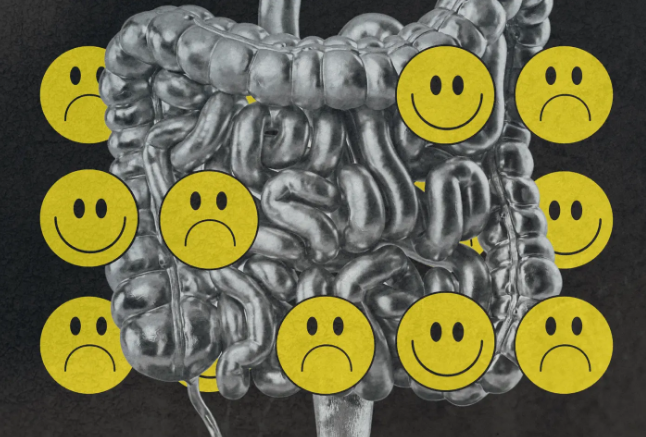
For decades, mental health was thought to reside solely in the brain. But new research is highlighting another key player—the gut. Scientists are finding that the trillions of bacteria living in the human digestive tract may influence emotions, stress levels, and even mental-health disorders through what’s known as the gut–brain axis.
“The gut microbiome or other gut bacteria can absolutely impact neuronal function,” said Dr. Karl Kwok, a gastroenterologist with Kaiser Permanente in Southern California. “There is now more scientific proof than ever of a direct link between gut health and brain health.”
The gut and brain communicate through a complex network involving nerves, hormones, and immune signals. The vagus nerve acts as a direct line, while biochemical “messages” also travel via inflammatory molecules and neurotransmitters like serotonin and GABA. In fact, roughly 90% of serotonin—the neurotransmitter often called the “happy chemical”—is produced in the gut.
“This connection explains why antidepressants that target serotonin can cause gastrointestinal side effects,” said Dr. Catherine Ngo, director of motility at the Hoag Digestive Health Institute in California. “They’re working on systems that are deeply interconnected.”
Emerging research suggests that people with depression or anxiety often show lower microbial diversity and higher levels of inflammation-related bacteria. Animal studies have found that gut microbes transplanted from people with depression can induce depressive-like behavior in mice. Still, experts caution that while the link is strong, proof that changing gut bacteria improves mood remains limited.
“Most evidence ties the gut microbiome to depression and anxiety, but results from human trials are mixed,” said Dr. Roy Ziegelstein of Johns Hopkins University. “More rigorous studies are needed to know which interventions really work.”
A 2021 review in Advances in Nutrition found that probiotics and diet changes show early promise in reducing symptoms of depression and anxiety, though sample sizes remain small. More recently, a 2024 review in Frontiers in Pharmacology reported that probiotics may reduce inflammation and improve cognition.
Lifestyle habits play a major role in this gut–brain conversation. Diets rich in whole grains, fruits, vegetables, and omega-3 fats foster healthy gut bacteria, while ultra-processed foods—now over half of the average American diet—can harm the gut lining and trigger inflammation. Stress, sleep, and exercise also affect microbial balance and, in turn, emotional well-being.
Experts agree that nurturing the gut is not a cure for mental illness, but it may enhance overall health. “Eating well, managing stress, and supporting your gut can boost your mood,” said Ngo. “But these should complement, not replace, proven therapies.”
As researchers continue to unravel the gut–brain connection, one thing is clear: the path to mental wellness may begin not just in the mind—but in the microbiome.