



















Connect with us

Hi, what are you looking for?

Health

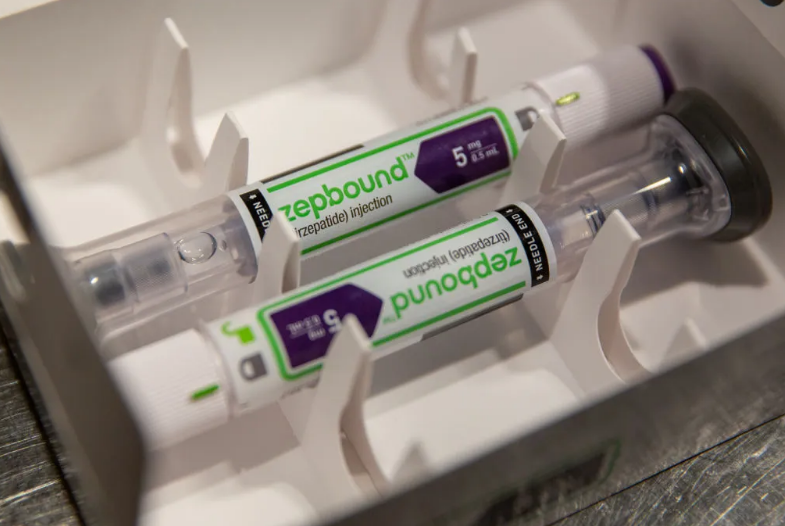
New Study Explores Wide-Ranging Effects of Popular Weight-Loss Drugs Wegovy and Zepbound

Doctors are uncovering the wide-reaching health effects—both positive and negative—of GLP-1 receptor agonists like Wegovy and Zepbound, which have skyrocketed in popularity as weight-loss treatments.

A new report in Nature Medicine, led by Dr. Ziyad Al-Aly from Washington University School of Medicine and the VA St. Louis Health Care System, analyzed the broader health outcomes of these drugs, originally developed to treat diabetes. Al-Aly’s team examined health records of over two million individuals with diabetes in the Veterans Affairs database, comparing those on GLP-1 medications with patients on other diabetes treatments.

The study tracked 175 health conditions over four years, revealing a complex picture of risks and benefits. People using GLP-1 drugs exhibited a reduced risk for several conditions, including Alzheimer’s disease, heart issues, blood clots, addiction, and infections. However, these medications were also linked to gastrointestinal problems, low blood pressure, arthritis, kidney conditions, and pancreatitis—most of which are known side effects.

“Treating obesity and metabolic syndrome has a broad health profile,” said Al-Aly. “We now have evidence that addressing obesity yields widespread health benefits beyond just weight loss. But there are also risks, and we hope these findings prompt conversations between patients and healthcare providers.”

Broad Health Impacts

The U.S. Food and Drug Administration (FDA) recently acknowledged some of the benefits of these medications. Wegovy’s label now includes evidence that it reduces the risk of heart events by 20% in people with obesity. Similarly, Zepbound was updated in December 2024 to reflect its effectiveness in alleviating obstructive sleep apnea symptoms.

The study also found a 12% reduced risk of Alzheimer’s disease among people taking GLP-1 drugs, though this benefit is still under investigation. Many tissues in the body have GLP-1 receptors, which likely explains the drugs’ varied effects.

GLP-1 medications work by mimicking a natural hormone that regulates appetite and blood sugar. They suppress reward signaling in the brain associated with food, which could also explain their ability to reduce addictions to alcohol, tobacco, and opioids. Additionally, their anti-inflammatory properties may stabilize blood vessel function and reduce clotting risks.

Unanswered Questions

While promising, the findings leave several questions unanswered. The study could not determine whether the health benefits are solely due to weight loss or whether the drugs provide independent effects.

“These medications are rewriting the book on obesity treatment,” Al-Aly said. “We’re just beginning to map out their full potential and limitations. The story of GLP-1s is still being written.”

As newer drug formulations targeting multiple hormones are developed, scientists hope to unlock even greater health benefits in the years ahead.


Business

Fraudsters are increasingly using AI-generated images and videos to trick people into handing over sensitive personal and financial information, according to FraudSMART, the financial crime awareness initiative operated by the Banking and Payments Federation Ireland (BPFI). The organisation has reported a rise in online adverts promoting fake, State-backed investment schemes. These scams often use fabricated images of well-known politicians and business figures to make the offers appear legitimate and encourage users to click on registration links. Niamh Davenport, head of financial crime at BPFI, said scammers are deliberately exploiting recent media coverage of a planned State-backed savings and investment scheme to give their frauds a sense of credibility. “They often claim the scheme is open to everyone, but that places are limited and being ‘snapped up’ fast, in order to pressure people to act quickly,” she said. “They typically promise guaranteed returns or a guaranteed monthly income.” FraudSMART said that while anyone can be targeted, people in their early 50s are particularly vulnerable to investment scams. This age group is often focused on retirement planning, making them more receptive to financial offers that appear secure or high-yield. According to the organisation, most scams follow a similar pattern. Victims are first directed to click a registration link and complete a short online form providing their contact details. They are then contacted by someone posing as a financial adviser, who urges them to make an immediate “security deposit” to secure participation in the scheme. Once a payment is made, the money is quickly moved through multiple accounts, often overseas, making recovery extremely difficult. Davenport warned that scammers are becoming more sophisticated in their use of technology, particularly AI tools that allow them to create realistic but entirely fake promotional content. These materials are designed to mimic legitimate financial advertisements and build trust with potential victims. Recent figures from An Garda Síochána show investment fraud rose by 20% last year, with losses exceeding €20 million. The scale of individual scams varies widely, ranging from smaller crypto-related frauds involving a few hundred euro to large-scale investment schemes where victims lose tens of thousands. FraudSMART is urging the public to remain cautious when encountering online investment advertisements, especially those promising guaranteed returns or requiring urgent action. It also advises consumers to avoid sharing personal information with unverified sources and to be wary of pressure tactics designed to rush financial decisions. Authorities continue to warn that fraudsters are adapting quickly, using advanced digital tools to target victims across multiple platforms.

Trending

Business

Fraudsters are increasingly using AI-generated images and videos to trick people into handing over sensitive personal and financial information, according to FraudSMART, the financial crime awareness initiative operated by the Banking and Payments Federation Ireland (BPFI). The organisation has reported a rise in online adverts promoting fake, State-backed investment schemes. These scams often use fabricated images of well-known politicians and business figures to make the offers appear legitimate and encourage users to click on registration links. Niamh Davenport, head of financial crime at BPFI, said scammers are deliberately exploiting recent media coverage of a planned State-backed savings and investment scheme to give their frauds a sense of credibility. “They often claim the scheme is open to everyone, but that places are limited and being ‘snapped up’ fast, in order to pressure people to act quickly,” she said. “They typically promise guaranteed returns or a guaranteed monthly income.” FraudSMART said that while anyone can be targeted, people in their early 50s are particularly vulnerable to investment scams. This age group is often focused on retirement planning, making them more receptive to financial offers that appear secure or high-yield. According to the organisation, most scams follow a similar pattern. Victims are first directed to click a registration link and complete a short online form providing their contact details. They are then contacted by someone posing as a financial adviser, who urges them to make an immediate “security deposit” to secure participation in the scheme. Once a payment is made, the money is quickly moved through multiple accounts, often overseas, making recovery extremely difficult. Davenport warned that scammers are becoming more sophisticated in their use of technology, particularly AI tools that allow them to create realistic but entirely fake promotional content. These materials are designed to mimic legitimate financial advertisements and build trust with potential victims. Recent figures from An Garda Síochána show investment fraud rose by 20% last year, with losses exceeding €20 million. The scale of individual scams varies widely, ranging from smaller crypto-related frauds involving a few hundred euro to large-scale investment schemes where victims lose tens of thousands. FraudSMART is urging the public to remain cautious when encountering online investment advertisements, especially those promising guaranteed returns or requiring urgent action. It also advises consumers to avoid sharing personal information with unverified sources and to be wary of pressure tactics designed to rush financial decisions. Authorities continue to warn that fraudsters are adapting quickly, using advanced digital tools to target victims across multiple platforms.

You May Also Like

Politics

WASHINGTON — The Pentagon announced on Sunday that the United States will send a Terminal High Altitude Area Defense (THAAD) battery to Israel, alongside...

Health

NEW YORK — Teen smoking in the United States has reached an all-time low in 2024, with significant declines in overall youth tobacco use,...

Politics

WASHINGTON — As the countdown to the November 5 presidential election continues, former President Donald Trump is urging his supporters to aim for a...

Politics

In September, NASA announced that summer 2024 was the hottest on record. Just days later, the U.S. faced the dual impact of Hurricanes Helene...