



















The U.S. Department of Health and Human Services (HHS) has confirmed a rare case of human infestation by the New World screwworm, a flesh-eating parasite that typically preys on livestock but can also be fatal to people.
The patient, a Maryland resident, developed the condition after traveling to El Salvador, officials told TIME. The case, first reported by Reuters, was confirmed by the U.S. Centers for Disease Control and Prevention (CDC) on August 4 following a review of images showing the insect responsible.
“This is the first human case of travel-associated New World screwworm infestation from an outbreak-affected country identified in the United States,” HHS said in a statement. The agency stressed that the risk to public health in the U.S. remains “very low.”
Outbreaks of the parasite, which has long plagued Central America, have recently intensified. The U.S. embassy in Nicaragua reported in July that more than 120 human cases had been recorded in the past year alone.
The news has raised concern in the American cattle industry. According to the U.S. Department of Agriculture, the pest threatens $100 billion in economic activity tied to cattle and livestock. The National Cattlemen’s Beef Association warned that screwworm can kill a fully grown cow in just seven to ten days if left untreated.
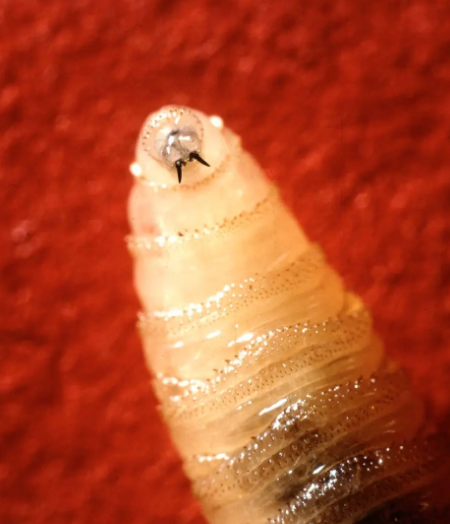
The New World screwworm is a species of fly that lays its eggs in open wounds or mucous membranes of mammals and birds. Once hatched, maggots burrow into healthy tissue using hook-like mouthparts, causing severe pain, tissue destruction, and in some cases death. Treatment requires the manual removal of the maggots by medical professionals, as there are no approved drugs for human infestations.
While details about the Maryland patient remain limited, state health officials confirmed that the individual has recovered and there is no evidence the infection spread to others, The Herald-Mail reported.
The case comes as U.S. authorities announce new steps to guard against the parasite’s spread. Measures include permitting emergency use of veterinary medications and constructing a sterile fly production facility in Texas. The sterilization technique—where male flies are released in large numbers to prevent reproduction—was crucial to eradicating the screwworm from the U.S. in the 1960s and again during a small outbreak in Florida in 2017.
Though rare in people, the parasite has reappeared in recent years among travelers returning from affected regions. In 2023, a patient in Arkansas contracted the infestation after visiting Argentina and Brazil, while a case was reported in Florida last year linked to travel in the Dominican Republic.
The Maryland case serves as a reminder of the parasite’s persistent threat abroad and the need for continued vigilance to protect both public health and the nation’s livestock industry.