

















As millions of Americans prepare to turn their clocks back on November 2, scientists and sleep experts are once again calling for an end to the century-old practice of Daylight Saving Time (DST), arguing that the biannual clock changes disrupt sleep patterns and harm public health.
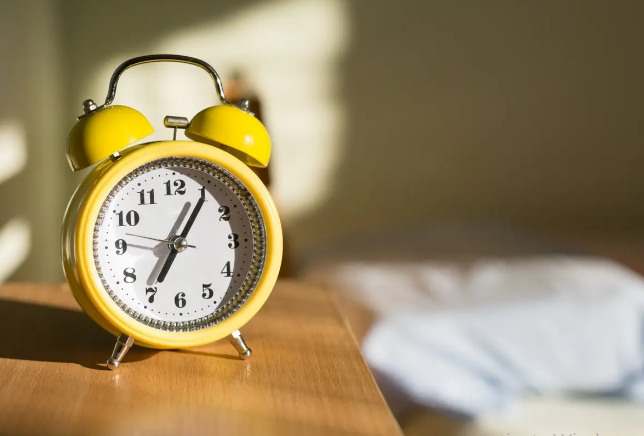
More than one-third of Americans fail to get the recommended seven hours of sleep each night, according to public health data. The problem is widespread across the developed world, says Dr. Eva Winnebeck, a chronobiologist at the University of Surrey in the U.K. “Sleep deprivation abounds,” she explains. “People struggle to get up. Alarm clock use is high, lack of sleep is high.”
Despite growing scientific consensus, governments have been slow to act. The American Academy of Sleep Medicine (AASM) and several European scientific bodies have publicly urged the abolition of seasonal clock changes. Both advocate for a permanent standard time, arguing it aligns more closely with natural sunlight patterns and supports human health.
Health risks tied to sleep loss
Decades of research link sleep deprivation to higher risks of heart disease, diabetes, obesity, and mental health problems. Studies show that disrupting the body’s natural circadian rhythm — its internal clock that regulates sleep, metabolism, and hormones — can have long-term consequences. “When biological processes that should be synchronized start to overlap, the result is an elevated risk of disease,” says Dr. Winnebeck.
Daylight Saving Time, in particular, compounds the issue. The annual time shifts were formalized in the U.S. with the Uniform Time Act of 1966, initially introduced to save energy and streamline transportation schedules. Today, Americans spend eight months each year on Daylight Saving Time, with only four months on Standard Time.
The science behind the debate
Experts argue that these artificial adjustments throw millions of people out of sync with solar time. “With Daylight Saving Time, you need to use the alarm clock more,” says Dr. Martha Merrow, a chronobiologist at Ludwig Maximilian University of Munich. “Every time we use an alarm clock, we deprive ourselves of sleep.”
Some studies even suggest that people living on the western edges of time zones — where solar and clock time are most misaligned — experience higher rates of cancer, obesity, and diabetes. Short-term risks also spike after the spring time change, including increased car accidents and heart attacks.
Debate over reform
While the European Parliament voted in 2019 to abolish seasonal time changes, progress has stalled as member states remain divided over whether to adopt permanent Standard or Daylight Saving Time. In the U.S., legislation to end the practice has similarly failed to gain traction.
Experts say aligning human schedules more closely with sunlight — and allowing flexibility in work hours — could restore healthier sleep cycles. “It’s easiest for our bodies to follow the sun,” says Manuel Schabus, a sleep researcher at the University of Salzburg. “That’s how we evolved.”