
















Connect with us

Hi, what are you looking for?

Business

US Small Businesses Skeptical About Tariff Refunds After Supreme Court Ruling

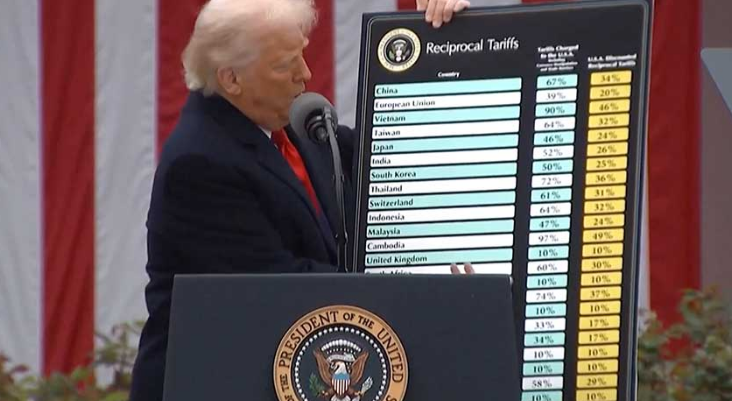
Small business owners across the United States remain doubtful they will receive refunds after the Supreme Court struck down large parts of former President Donald Trump’s tariff regime, a decision that could theoretically free up as much as $175 billion in repayments to companies that paid import duties under the controversial policy.

While the ruling opens the door to compensation claims, many entrepreneurs warn that the legal and administrative hurdles involved in pursuing refunds may make the process prohibitively complex, particularly for smaller firms already struggling with rising costs. Trump himself has acknowledged that litigation could drag on for years, leaving businesses uncertain whether filing claims is worthwhile.

The tariffs, implemented under Trump’s so-called “Liberation Day” trade policy, targeted a wide range of imported goods, sharply increasing the cost of materials for companies reliant on global supply chains. Many firms have already absorbed the financial strain, raising prices and delaying investment plans.

Elizabeth Vitanza, who co-owns a lighting and home furnishings business in Los Angeles, described the impact as widespread. “All of the modern brands we carry have raised prices by at least 12 percent over the past year. None of this is pro-business or pro-American,” she said.

Vitanza and her husband, John Ballon, rushed an order with a Swedish partner to avoid incoming tariffs following Trump’s 2024 re-election, but the shipment was still subject to duties. “We ended up paying a five-figure tariff bill. Money we had earmarked to renovate the showroom and possibly increase staff salaries suddenly had to cover unexpected import taxes,” Ballon said. The couple has since scaled back expansion plans.

Other sectors have reported similar disruptions. A Texas furniture manufacturer cited rising costs for imported lumber and specialized hardware, forcing the company to pass on expenses to customers. Minnesota-based outdoor equipment company Granite Gear faced uncertainty when import duties fluctuated from 18 to 46 percent, later reduced to 20 percent following trade negotiations with Vietnam. Manager Rob Coughlin said the volatility made pricing nearly impossible.

“For small brands, we just don’t have leverage with retailers,” Coughlin said. “Big companies can push back on price increases. We cannot.”

Niche businesses have also struggled. Dr. Charlie Elrod, founder of a natural livestock health products company, said tariffs on Brazilian imports added roughly $1 million in costs over a year, ultimately forcing a 5 percent price increase for customers.

More than 1,000 companies have filed lawsuits seeking reimbursement, and a US trade court recently ordered the government to begin processing refunds. Despite this, entrepreneurs warn that legal fees and administrative burdens may outweigh potential repayment. Vitanza said her company is tracking payments in case they pursue a claim but is cautious about expectations.

Howard Trenholme, a bakery owner in Utah, described the process as impractical. “As an end user buying through multiple suppliers, the legal fees alone could wipe out any refund,” he said. Granite Gear’s Coughlin agreed, adding that seeking reimbursement would likely be a “waste of time and money.”

For many small businesses, the legacy of Trump’s tariff policy continues to influence decisions. With global supply chains now less predictable and trade policy subject to abrupt change, entrepreneurs say the priority is staying afloat rather than fighting protracted legal battles over past losses.

Word count: 470

Business

Fraudsters are increasingly using AI-generated images and videos to trick people into handing over sensitive personal and financial information, according to FraudSMART, the financial crime awareness initiative operated by the Banking and Payments Federation Ireland (BPFI). The organisation has reported a rise in online adverts promoting fake, State-backed investment schemes. These scams often use fabricated images of well-known politicians and business figures to make the offers appear legitimate and encourage users to click on registration links. Niamh Davenport, head of financial crime at BPFI, said scammers are deliberately exploiting recent media coverage of a planned State-backed savings and investment scheme to give their frauds a sense of credibility. “They often claim the scheme is open to everyone, but that places are limited and being ‘snapped up’ fast, in order to pressure people to act quickly,” she said. “They typically promise guaranteed returns or a guaranteed monthly income.” FraudSMART said that while anyone can be targeted, people in their early 50s are particularly vulnerable to investment scams. This age group is often focused on retirement planning, making them more receptive to financial offers that appear secure or high-yield. According to the organisation, most scams follow a similar pattern. Victims are first directed to click a registration link and complete a short online form providing their contact details. They are then contacted by someone posing as a financial adviser, who urges them to make an immediate “security deposit” to secure participation in the scheme. Once a payment is made, the money is quickly moved through multiple accounts, often overseas, making recovery extremely difficult. Davenport warned that scammers are becoming more sophisticated in their use of technology, particularly AI tools that allow them to create realistic but entirely fake promotional content. These materials are designed to mimic legitimate financial advertisements and build trust with potential victims. Recent figures from An Garda Síochána show investment fraud rose by 20% last year, with losses exceeding €20 million. The scale of individual scams varies widely, ranging from smaller crypto-related frauds involving a few hundred euro to large-scale investment schemes where victims lose tens of thousands. FraudSMART is urging the public to remain cautious when encountering online investment advertisements, especially those promising guaranteed returns or requiring urgent action. It also advises consumers to avoid sharing personal information with unverified sources and to be wary of pressure tactics designed to rush financial decisions. Authorities continue to warn that fraudsters are adapting quickly, using advanced digital tools to target victims across multiple platforms.

Trending

Business

Fraudsters are increasingly using AI-generated images and videos to trick people into handing over sensitive personal and financial information, according to FraudSMART, the financial crime awareness initiative operated by the Banking and Payments Federation Ireland (BPFI). The organisation has reported a rise in online adverts promoting fake, State-backed investment schemes. These scams often use fabricated images of well-known politicians and business figures to make the offers appear legitimate and encourage users to click on registration links. Niamh Davenport, head of financial crime at BPFI, said scammers are deliberately exploiting recent media coverage of a planned State-backed savings and investment scheme to give their frauds a sense of credibility. “They often claim the scheme is open to everyone, but that places are limited and being ‘snapped up’ fast, in order to pressure people to act quickly,” she said. “They typically promise guaranteed returns or a guaranteed monthly income.” FraudSMART said that while anyone can be targeted, people in their early 50s are particularly vulnerable to investment scams. This age group is often focused on retirement planning, making them more receptive to financial offers that appear secure or high-yield. According to the organisation, most scams follow a similar pattern. Victims are first directed to click a registration link and complete a short online form providing their contact details. They are then contacted by someone posing as a financial adviser, who urges them to make an immediate “security deposit” to secure participation in the scheme. Once a payment is made, the money is quickly moved through multiple accounts, often overseas, making recovery extremely difficult. Davenport warned that scammers are becoming more sophisticated in their use of technology, particularly AI tools that allow them to create realistic but entirely fake promotional content. These materials are designed to mimic legitimate financial advertisements and build trust with potential victims. Recent figures from An Garda Síochána show investment fraud rose by 20% last year, with losses exceeding €20 million. The scale of individual scams varies widely, ranging from smaller crypto-related frauds involving a few hundred euro to large-scale investment schemes where victims lose tens of thousands. FraudSMART is urging the public to remain cautious when encountering online investment advertisements, especially those promising guaranteed returns or requiring urgent action. It also advises consumers to avoid sharing personal information with unverified sources and to be wary of pressure tactics designed to rush financial decisions. Authorities continue to warn that fraudsters are adapting quickly, using advanced digital tools to target victims across multiple platforms.

You May Also Like

Politics

WASHINGTON — The Pentagon announced on Sunday that the United States will send a Terminal High Altitude Area Defense (THAAD) battery to Israel, alongside...

Health

NEW YORK — Teen smoking in the United States has reached an all-time low in 2024, with significant declines in overall youth tobacco use,...

Politics

WASHINGTON — As the countdown to the November 5 presidential election continues, former President Donald Trump is urging his supporters to aim for a...

Politics

In September, NASA announced that summer 2024 was the hottest on record. Just days later, the U.S. faced the dual impact of Hurricanes Helene...