
















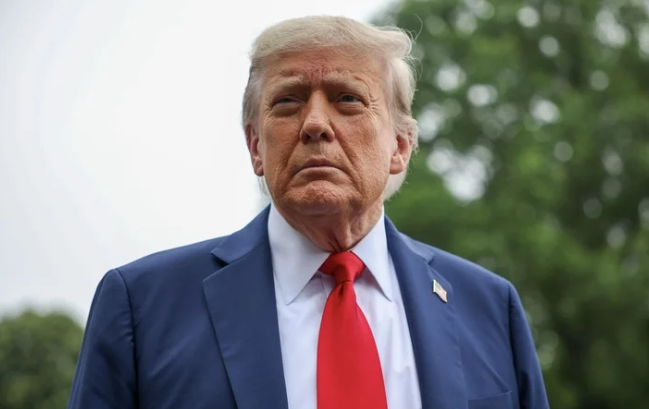
U.S. President Donald Trump has announced the immediate suspension of trade negotiations with Canada, citing Ottawa’s digital services tax as the reason for the breakdown in talks. The move could signal the beginning of a new tariff regime targeting Canadian goods, with details expected within a week.
The announcement, made via Mr. Trump’s Truth Social platform on Thursday, came in response to Canada’s 3% digital services tax, which applies to major multinational tech companies including Alphabet, Amazon, and Meta. The tax, enacted in 2023, is forecast to raise C$5.9 billion (US$4.2 billion) over five years. Though not a new measure, the U.S. tech sector faces a looming deadline, with the first major payment due June 30.
“Based on this egregious tax, we are hereby terminating ALL discussions on trade with Canada, effective immediately,” Trump posted.
Washington had previously raised objections to the tax, requesting formal dispute settlement talks under international trade mechanisms. The Computer & Communications Industry Association recently warned that the tax places U.S. service providers on the hook for billions in Canada.
Canadian Prime Minister Mark Carney has acknowledged the growing tensions, saying this week that Ottawa is prepared to adjust its 25% counter-tariffs on U.S. steel and aluminum—imposed in retaliation to the U.S. doubling its own tariffs to 50%—if a trade deal is not reached within 30 days.
“We will continue to conduct these complex negotiations in the best interest of Canadians,” Carney said, confirming he had not spoken to Trump directly.
U.S. Treasury Secretary Scott Bessent expressed disappointment at Canada’s refusal to pause the tax as a goodwill gesture. He indicated the U.S. Trade Representative, Jamieson Greer, is expected to launch a formal investigation into the tax’s economic impact.
Progress with China Amid Canada Standoff
The announcement comes in stark contrast to progress made in trade talks between the U.S. and China. Both sides have agreed on a framework to implement a Geneva agreement reached in May, aimed at easing tariffs and resolving disputes around China’s rare earth export controls. Beijing had previously tightened rules on rare earth shipments, critical for technologies like electric vehicles and military hardware.
China’s commerce ministry confirmed it would resume approving export license applications in accordance with Chinese law. In return, the U.S. will begin rolling back certain restrictive measures.
Wider Trade Agenda Ahead
While Canada faces potential tariffs, dozens of other countries have until July 9 to reach trade agreements before steeper duties—rising from 10%—take effect. Trump hinted that talks with the EU remain tense but expressed confidence, saying, “We have the cards.”
Bessent added that the U.S. hopes to conclude key trade deals by early September, aiming to finalise agreements with 10 to 12 out of 18 priority partners.
Despite the rift with Canada, Wall Street markets closed at record highs on Friday, buoyed by signs of progress with China and optimism over the U.S. trade agenda.