















Oil prices climbed to their highest level in more than a month on Thursday, extending gains for a fifth consecutive session after Yemen’s Houthi movement said it had attacked two Saudi oil tankers.
The attacks increased concerns that disruptions to global energy supplies could spread beyond the Strait of Hormuz, one of the world’s most important oil shipping routes.
Brent crude futures rose $4.52, or 4.8 per cent, to $98.59 a barrel, after reaching their highest level since June 3. US West Texas Intermediate crude gained $3.39, or 3.9 per cent, to $90.22, after touching its highest level since June 11.
“The immediate outlook for crude oil remains supportive as markets price a worrying probability of supply interruptions in a second chokepoint,” said Ahmad Assiri, research strategist at Pepperstone.
The Iranian-aligned Houthis said they had struck two Saudi oil tankers as part of what they described as a naval blockade of Saudi Arabia. The attacks opened a new threat to shipping through the Bab el-Mandeb Strait, which connects the Red Sea with the Gulf of Aden.
The development has raised concerns over simultaneous risks to oil shipments through both the Bab el-Mandeb and the Strait of Hormuz.
Shipping data showed that two Chinese supertankers carrying a combined 4 million barrels of Saudi Arabian oil were leaving the Red Sea through the Bab el-Mandeb on Thursday, even as a Saudi vessel was reported to have come under attack in the region.
Goldman Sachs said oil flows through the Bab el-Mandeb had averaged almost 9 million barrels per day over the past month. Nearly 4 million barrels per day of those shipments could be difficult to reroute if multiple key waterways were blocked.
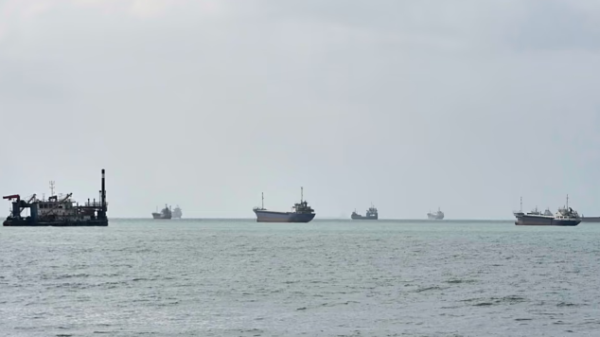
Tensions also remained high around the Strait of Hormuz. Iran’s Revolutionary Guards said an oil tanker caught fire following an explosion while attempting to travel through what they described as a mined route near Oman’s coast. Two other vessels reportedly turned back.
The Guards said the strait was under Iranian control and “completely closed” while US military operations continued, warning that tankers would need coordination with Iran to enter or leave.
The US military said it had completed a 12th consecutive night of attacks on Iran. President Donald Trump had earlier threatened to destroy Iranian infrastructure in response to attacks on ships in the Strait of Hormuz.
Goldman Sachs expects oil prices to hold most of their recent gains through July and August as global inventories decline, Middle East production falls and summer fuel demand remains strong.
European diesel margins have also surged, reaching a record $66.25 a barrel on July 17 amid Russia’s diesel export restrictions, attacks on Ukrainian refineries and concerns over further supply disruptions in the Middle East.