














Connect with us

Hi, what are you looking for?

Business

Bulgaria Joins Eurozone Amid Public Concerns Over Prices and Political Instability

Bulgaria is set to become the 21st country to adopt the euro on Thursday, ending years of debate over the single currency. The move, aimed at integrating the country further into the European Union, has stirred both support and skepticism among citizens, with critics warning of higher prices and increased economic uncertainty.

Adoption of the euro has been a long-term goal for successive Bulgarian governments. Proponents argue it will strengthen economic ties to the West, enhance trade, and reduce Russia’s influence in the country. European Central Bank president Christine Lagarde visited Sofia last month, highlighting potential benefits, including lower financing costs, smoother trade, and more stable prices. Small and medium-sized enterprises alone could save an estimated €500 million in currency exchange fees, while the tourism sector, which contributes roughly 8% of Bulgaria’s GDP, stands to gain from easier transactions with eurozone visitors.

Despite these arguments, public sentiment remains divided. A recent Eurobarometer survey found that 49% of Bulgarians oppose switching to the euro. Concerns are particularly pronounced in rural areas, where residents worry about price increases. “Prices will go up. That’s what friends of mine who live in Western Europe told me,” said Bilyana Nikolova, a shop owner in Chuprene, northwestern Bulgaria. Food prices in November rose 5% year-on-year, more than double the eurozone average, adding to anxiety over living costs.

The transition comes as Bulgaria faces ongoing political instability. Anti-corruption protests recently forced a conservative-led government from office, bringing the country closer to its eighth election in five years. Analysts warn that any disruption could delay reforms needed to fully benefit from euro adoption. “The challenge will be to have a stable government for at least one to two years, so we can fully reap the benefits of joining the euro area,” said Georgi Angelov, senior economist at the Open Society Institute in Sofia.

To help manage the changeover, Parliament approved new oversight bodies to investigate sharp price hikes and curb “unjustified” surges linked to the euro adoption. Lagarde predicted that the impact on consumer prices would be modest, likely between 0.2 and 0.4 percentage points, based on previous euro transitions.

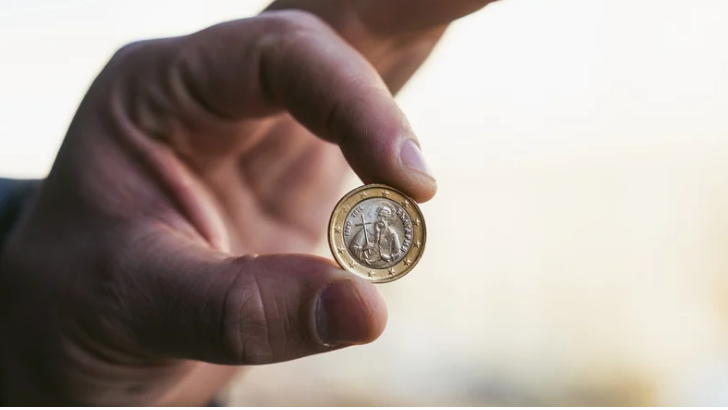
Bulgaria’s euro coins will feature national symbols. The €1 coin depicts patron saint John of Rila, founder of the Rila Monastery, while the €2 coin features monk Paisius of Hilandar, an important figure in Bulgaria’s national revival. Cent coins will display the Madara Rider, a UNESCO-listed rock relief from the 8th century, along with the inscription “God protect Bulgaria” along the edge.

While some Bulgarians fear immediate economic challenges, the government and EU officials maintain that joining the euro is a long-term investment in stability, growth, and European integration. The coming months will test whether the promised benefits outweigh public concerns in Bulgaria’s latest step toward the eurozone.


Business

Fraudsters are increasingly using AI-generated images and videos to trick people into handing over sensitive personal and financial information, according to FraudSMART, the financial crime awareness initiative operated by the Banking and Payments Federation Ireland (BPFI). The organisation has reported a rise in online adverts promoting fake, State-backed investment schemes. These scams often use fabricated images of well-known politicians and business figures to make the offers appear legitimate and encourage users to click on registration links. Niamh Davenport, head of financial crime at BPFI, said scammers are deliberately exploiting recent media coverage of a planned State-backed savings and investment scheme to give their frauds a sense of credibility. “They often claim the scheme is open to everyone, but that places are limited and being ‘snapped up’ fast, in order to pressure people to act quickly,” she said. “They typically promise guaranteed returns or a guaranteed monthly income.” FraudSMART said that while anyone can be targeted, people in their early 50s are particularly vulnerable to investment scams. This age group is often focused on retirement planning, making them more receptive to financial offers that appear secure or high-yield. According to the organisation, most scams follow a similar pattern. Victims are first directed to click a registration link and complete a short online form providing their contact details. They are then contacted by someone posing as a financial adviser, who urges them to make an immediate “security deposit” to secure participation in the scheme. Once a payment is made, the money is quickly moved through multiple accounts, often overseas, making recovery extremely difficult. Davenport warned that scammers are becoming more sophisticated in their use of technology, particularly AI tools that allow them to create realistic but entirely fake promotional content. These materials are designed to mimic legitimate financial advertisements and build trust with potential victims. Recent figures from An Garda Síochána show investment fraud rose by 20% last year, with losses exceeding €20 million. The scale of individual scams varies widely, ranging from smaller crypto-related frauds involving a few hundred euro to large-scale investment schemes where victims lose tens of thousands. FraudSMART is urging the public to remain cautious when encountering online investment advertisements, especially those promising guaranteed returns or requiring urgent action. It also advises consumers to avoid sharing personal information with unverified sources and to be wary of pressure tactics designed to rush financial decisions. Authorities continue to warn that fraudsters are adapting quickly, using advanced digital tools to target victims across multiple platforms.

Trending

Business

Fraudsters are increasingly using AI-generated images and videos to trick people into handing over sensitive personal and financial information, according to FraudSMART, the financial crime awareness initiative operated by the Banking and Payments Federation Ireland (BPFI). The organisation has reported a rise in online adverts promoting fake, State-backed investment schemes. These scams often use fabricated images of well-known politicians and business figures to make the offers appear legitimate and encourage users to click on registration links. Niamh Davenport, head of financial crime at BPFI, said scammers are deliberately exploiting recent media coverage of a planned State-backed savings and investment scheme to give their frauds a sense of credibility. “They often claim the scheme is open to everyone, but that places are limited and being ‘snapped up’ fast, in order to pressure people to act quickly,” she said. “They typically promise guaranteed returns or a guaranteed monthly income.” FraudSMART said that while anyone can be targeted, people in their early 50s are particularly vulnerable to investment scams. This age group is often focused on retirement planning, making them more receptive to financial offers that appear secure or high-yield. According to the organisation, most scams follow a similar pattern. Victims are first directed to click a registration link and complete a short online form providing their contact details. They are then contacted by someone posing as a financial adviser, who urges them to make an immediate “security deposit” to secure participation in the scheme. Once a payment is made, the money is quickly moved through multiple accounts, often overseas, making recovery extremely difficult. Davenport warned that scammers are becoming more sophisticated in their use of technology, particularly AI tools that allow them to create realistic but entirely fake promotional content. These materials are designed to mimic legitimate financial advertisements and build trust with potential victims. Recent figures from An Garda Síochána show investment fraud rose by 20% last year, with losses exceeding €20 million. The scale of individual scams varies widely, ranging from smaller crypto-related frauds involving a few hundred euro to large-scale investment schemes where victims lose tens of thousands. FraudSMART is urging the public to remain cautious when encountering online investment advertisements, especially those promising guaranteed returns or requiring urgent action. It also advises consumers to avoid sharing personal information with unverified sources and to be wary of pressure tactics designed to rush financial decisions. Authorities continue to warn that fraudsters are adapting quickly, using advanced digital tools to target victims across multiple platforms.

You May Also Like

Politics

WASHINGTON — The Pentagon announced on Sunday that the United States will send a Terminal High Altitude Area Defense (THAAD) battery to Israel, alongside...

Health

NEW YORK — Teen smoking in the United States has reached an all-time low in 2024, with significant declines in overall youth tobacco use,...

Politics

WASHINGTON — As the countdown to the November 5 presidential election continues, former President Donald Trump is urging his supporters to aim for a...

Politics

In September, NASA announced that summer 2024 was the hottest on record. Just days later, the U.S. faced the dual impact of Hurricanes Helene...