
















Concerns over a possible wealth tax have intensified after incoming UK Prime Minister Andy Burnham declined to rule out the measure, prompting warnings from financial advisers that continued uncertainty could discourage investment and encourage wealthy individuals to move assets overseas.
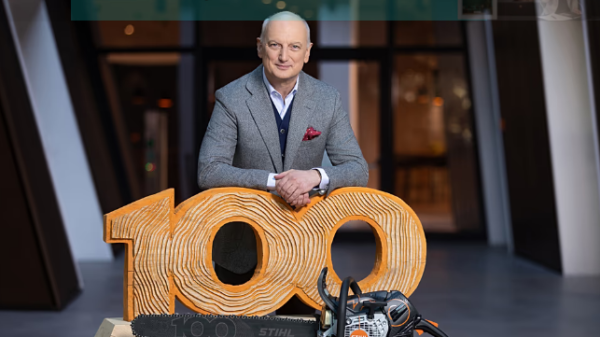
Nigel Green, chief executive of independent financial advisory firm deVere Group, said speculation surrounding a potential levy on the assets of Britain’s wealthiest residents is already affecting investor confidence, even though no formal proposal has been announced.
Speaking on a recent podcast, Burnham suggested that the country’s highest earners could eventually be asked to contribute “a little more” as part of efforts to improve fairness in the tax system. His comments have fuelled debate over whether the new government could introduce a wealth tax after taking office.
Green argued that uncertainty itself is creating risks for the UK economy.
“A wealth tax that has not been proposed is already doing damage,” he said, adding that investors often react to policy signals long before legislation is introduced. He called on the incoming government to provide greater clarity over its tax plans.
The warning comes as Britain continues to experience an outflow of wealthy residents. Industry estimates suggest around 16,500 millionaires left the UK during 2025, making it one of the largest annual departures of high-net-worth individuals recorded globally. Some analysts expect that number could rise further in 2026 following changes to the country’s non-domiciled tax regime.
Several countries, including the United Arab Emirates, Switzerland and Italy, have introduced policies designed to attract internationally mobile investors and entrepreneurs, increasing competition for global wealth and business investment.
Green pointed to previous international examples, arguing that wealth taxes have often encouraged wealthy individuals and businesses to relocate. He cited France and Sweden as countries that experienced capital outflows before changing their tax policies.
According to deVere Group, the wider economic impact extends beyond tax revenue. Wealthy investors frequently provide funding for start-up companies, venture capital, family businesses and charitable organisations. A decline in that investment, Green said, could affect smaller firms seeking finance for expansion and job creation.
He also warned that entrepreneurs and family offices are already discussing relocation options while awaiting greater certainty over future tax policy.
The debate over taxation is expected to become a key issue for the new government as it prepares its first Budget. Business groups and investors will be closely watching whether ministers introduce measures affecting wealth, investment or capital gains as part of broader efforts to strengthen public finances.
While no wealth tax has been formally proposed, the discussion has highlighted growing concern within parts of the business and financial community about the potential impact of policy uncertainty on investment decisions.
The government has yet to outline its detailed tax agenda, leaving markets and businesses awaiting further clarity in the months ahead.