



















Connect with us

Hi, what are you looking for?

Politics

Trump Extends Iran Cease-Fire as Talks Remain Uncertain

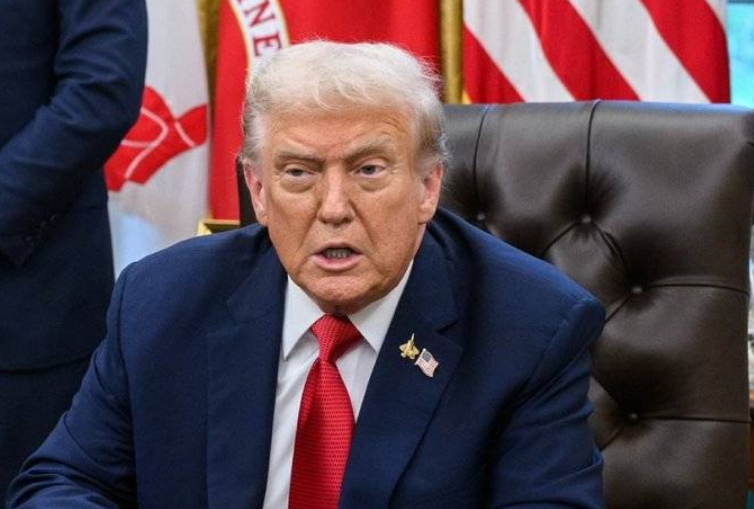
U.S. President Donald Trump announced on Tuesday that Washington will extend its cease-fire with Iran, just hours before the two-week truce was due to expire, following a request from Pakistan to allow more time for diplomatic efforts.

In a statement, Trump said Pakistan’s army chief, Field Marshal Asim Munir, and Prime Minister Shehbaz Sharif had urged the United States to pause military action so Iranian leaders could present a unified proposal aimed at ending the conflict. He confirmed that U.S. forces would maintain their current positions, including a naval blockade, while awaiting progress in negotiations.

Trump said the U.S. military would “remain ready and able” as discussions continue, adding that the cease-fire would last until Iran submits a proposal and talks reach a decisive point. He also suggested that divisions within Iran’s leadership were complicating the process.

Prime Minister Sharif welcomed the decision, thanking Washington for granting additional time for diplomacy. He expressed hope that both sides would continue to respect the cease-fire and move toward a negotiated settlement.

The extension marks a shift from Trump’s earlier remarks on the same day, when he indicated reluctance to prolong the truce. In an interview, he had warned that the United States could resume military operations if talks failed to advance, stating that American forces were prepared for further action.

Uncertainty continues to surround the next round of negotiations, which are expected to take place in Islamabad. A U.S. delegation led by Vice President JD Vance had been scheduled to travel to Pakistan, but the visit has now been postponed. Iranian officials have also not confirmed whether they will participate.

Tehran has maintained that it will not engage in talks under pressure. Foreign Ministry spokesperson Esmail Baghaei said there was “no final decision” on attending negotiations, citing what he described as inconsistent signals from Washington.

Tensions have remained high in the Strait of Hormuz, a critical shipping route for global energy supplies. The U.S. Navy recently seized an Iranian vessel in the Gulf of Oman, accusing it of attempting to bypass the blockade. Iran has condemned the action, calling it a violation of the cease-fire and demanding the ship’s immediate release.

Washington, in turn, has accused Iran of breaching the truce through hostile actions in the waterway. Trump said earlier that Iran had violated the cease-fire multiple times, a claim Tehran disputes.

Global leaders continue to push for stability in the region and the full reopening of the Strait of Hormuz, which carries a significant share of the world’s oil and gas shipments. With both sides holding firm positions and negotiations still uncertain, the path toward a lasting agreement remains unclear.


Business

Fraudsters are increasingly using AI-generated images and videos to trick people into handing over sensitive personal and financial information, according to FraudSMART, the financial crime awareness initiative operated by the Banking and Payments Federation Ireland (BPFI). The organisation has reported a rise in online adverts promoting fake, State-backed investment schemes. These scams often use fabricated images of well-known politicians and business figures to make the offers appear legitimate and encourage users to click on registration links. Niamh Davenport, head of financial crime at BPFI, said scammers are deliberately exploiting recent media coverage of a planned State-backed savings and investment scheme to give their frauds a sense of credibility. “They often claim the scheme is open to everyone, but that places are limited and being ‘snapped up’ fast, in order to pressure people to act quickly,” she said. “They typically promise guaranteed returns or a guaranteed monthly income.” FraudSMART said that while anyone can be targeted, people in their early 50s are particularly vulnerable to investment scams. This age group is often focused on retirement planning, making them more receptive to financial offers that appear secure or high-yield. According to the organisation, most scams follow a similar pattern. Victims are first directed to click a registration link and complete a short online form providing their contact details. They are then contacted by someone posing as a financial adviser, who urges them to make an immediate “security deposit” to secure participation in the scheme. Once a payment is made, the money is quickly moved through multiple accounts, often overseas, making recovery extremely difficult. Davenport warned that scammers are becoming more sophisticated in their use of technology, particularly AI tools that allow them to create realistic but entirely fake promotional content. These materials are designed to mimic legitimate financial advertisements and build trust with potential victims. Recent figures from An Garda Síochána show investment fraud rose by 20% last year, with losses exceeding €20 million. The scale of individual scams varies widely, ranging from smaller crypto-related frauds involving a few hundred euro to large-scale investment schemes where victims lose tens of thousands. FraudSMART is urging the public to remain cautious when encountering online investment advertisements, especially those promising guaranteed returns or requiring urgent action. It also advises consumers to avoid sharing personal information with unverified sources and to be wary of pressure tactics designed to rush financial decisions. Authorities continue to warn that fraudsters are adapting quickly, using advanced digital tools to target victims across multiple platforms.

Trending

Business

Fraudsters are increasingly using AI-generated images and videos to trick people into handing over sensitive personal and financial information, according to FraudSMART, the financial crime awareness initiative operated by the Banking and Payments Federation Ireland (BPFI). The organisation has reported a rise in online adverts promoting fake, State-backed investment schemes. These scams often use fabricated images of well-known politicians and business figures to make the offers appear legitimate and encourage users to click on registration links. Niamh Davenport, head of financial crime at BPFI, said scammers are deliberately exploiting recent media coverage of a planned State-backed savings and investment scheme to give their frauds a sense of credibility. “They often claim the scheme is open to everyone, but that places are limited and being ‘snapped up’ fast, in order to pressure people to act quickly,” she said. “They typically promise guaranteed returns or a guaranteed monthly income.” FraudSMART said that while anyone can be targeted, people in their early 50s are particularly vulnerable to investment scams. This age group is often focused on retirement planning, making them more receptive to financial offers that appear secure or high-yield. According to the organisation, most scams follow a similar pattern. Victims are first directed to click a registration link and complete a short online form providing their contact details. They are then contacted by someone posing as a financial adviser, who urges them to make an immediate “security deposit” to secure participation in the scheme. Once a payment is made, the money is quickly moved through multiple accounts, often overseas, making recovery extremely difficult. Davenport warned that scammers are becoming more sophisticated in their use of technology, particularly AI tools that allow them to create realistic but entirely fake promotional content. These materials are designed to mimic legitimate financial advertisements and build trust with potential victims. Recent figures from An Garda Síochána show investment fraud rose by 20% last year, with losses exceeding €20 million. The scale of individual scams varies widely, ranging from smaller crypto-related frauds involving a few hundred euro to large-scale investment schemes where victims lose tens of thousands. FraudSMART is urging the public to remain cautious when encountering online investment advertisements, especially those promising guaranteed returns or requiring urgent action. It also advises consumers to avoid sharing personal information with unverified sources and to be wary of pressure tactics designed to rush financial decisions. Authorities continue to warn that fraudsters are adapting quickly, using advanced digital tools to target victims across multiple platforms.

You May Also Like

Politics

WASHINGTON — The Pentagon announced on Sunday that the United States will send a Terminal High Altitude Area Defense (THAAD) battery to Israel, alongside...

Health

NEW YORK — Teen smoking in the United States has reached an all-time low in 2024, with significant declines in overall youth tobacco use,...

Politics

WASHINGTON — As the countdown to the November 5 presidential election continues, former President Donald Trump is urging his supporters to aim for a...

Politics

In September, NASA announced that summer 2024 was the hottest on record. Just days later, the U.S. faced the dual impact of Hurricanes Helene...