


















Connect with us

Hi, what are you looking for?

Politics

Virginia Redistricting Vote Reshapes Midterm Landscape

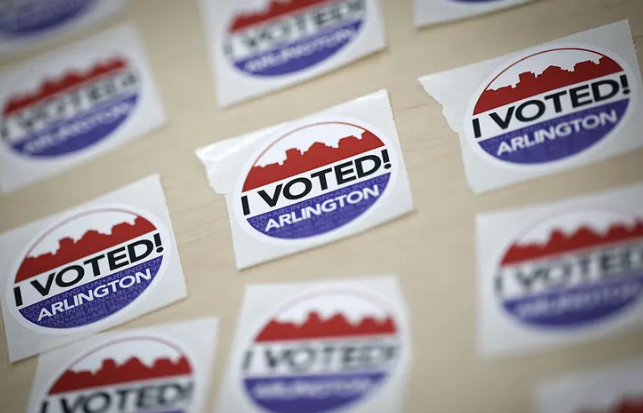
A closely contested referendum in Virginia has passed, opening the door for Democrats to redraw congressional districts and potentially gain ground in the U.S. House ahead of the 2026 midterm elections.

The ballot measure secured 51 percent support from roughly three million voters, according to results confirmed late Tuesday. The outcome temporarily grants the state’s Democrat-controlled General Assembly authority to redraw Virginia’s congressional map, a move that could shift the balance of power in Washington.

“Virginia just changed the trajectory of the 2026 midterms,” said Don Scott, speaker of the state’s House of Delegates, after the result was called.

Virginia currently has 11 congressional districts, six of which are held by Democrats. Under the proposed changes, Democrats could gain an advantage in up to 10 districts, strengthening their position as they seek to reclaim control of the House, where Republicans now hold a narrow majority.

The measure allows lawmakers to redraw district lines until October 31, 2030. After that, authority will return to the state’s nonpartisan redistricting commission. The decision marks a significant moment in an ongoing national contest between the two major parties to reshape electoral maps in their favor.

The vote followed an intense and costly campaign. Nearly $100 million in funding from tax-exempt groups flowed into the state, much of it from organizations not required to disclose their donors. The main group backing the referendum, Virginians for Fair Elections, received about $64 million between December 2025 and April. Opponents, led by the Virginians for Fair Maps committee, raised at least $23 million.

Legal challenges had threatened to derail the referendum. A lower court initially blocked the measure, but the Virginia Supreme Court allowed the vote to proceed, stating it would review the amendment’s legality afterward.

The outcome comes amid a broader push across the United States to redraw congressional maps outside the traditional once-a-decade cycle tied to the census. Last year, Donald Trump urged Republican-led states to revisit district boundaries to strengthen their electoral prospects.

Several states have already acted. Texas approved a new map that could add up to five Republican seats, while Missouri and North Carolina each stand to gain one. Ohio could also see an increase in Republican representation under a recently approved plan.

Democrats, meanwhile, have pursued similar strategies. California voters backed a measure allowing new district lines that could favor Democrats, and a court ruling in Utah may open the door for an additional Democratic seat.

With both parties seeking every possible advantage, Virginia’s decision is expected to play a key role in shaping the political landscape in the months leading up to the midterms.


Business

Fraudsters are increasingly using AI-generated images and videos to trick people into handing over sensitive personal and financial information, according to FraudSMART, the financial crime awareness initiative operated by the Banking and Payments Federation Ireland (BPFI). The organisation has reported a rise in online adverts promoting fake, State-backed investment schemes. These scams often use fabricated images of well-known politicians and business figures to make the offers appear legitimate and encourage users to click on registration links. Niamh Davenport, head of financial crime at BPFI, said scammers are deliberately exploiting recent media coverage of a planned State-backed savings and investment scheme to give their frauds a sense of credibility. “They often claim the scheme is open to everyone, but that places are limited and being ‘snapped up’ fast, in order to pressure people to act quickly,” she said. “They typically promise guaranteed returns or a guaranteed monthly income.” FraudSMART said that while anyone can be targeted, people in their early 50s are particularly vulnerable to investment scams. This age group is often focused on retirement planning, making them more receptive to financial offers that appear secure or high-yield. According to the organisation, most scams follow a similar pattern. Victims are first directed to click a registration link and complete a short online form providing their contact details. They are then contacted by someone posing as a financial adviser, who urges them to make an immediate “security deposit” to secure participation in the scheme. Once a payment is made, the money is quickly moved through multiple accounts, often overseas, making recovery extremely difficult. Davenport warned that scammers are becoming more sophisticated in their use of technology, particularly AI tools that allow them to create realistic but entirely fake promotional content. These materials are designed to mimic legitimate financial advertisements and build trust with potential victims. Recent figures from An Garda Síochána show investment fraud rose by 20% last year, with losses exceeding €20 million. The scale of individual scams varies widely, ranging from smaller crypto-related frauds involving a few hundred euro to large-scale investment schemes where victims lose tens of thousands. FraudSMART is urging the public to remain cautious when encountering online investment advertisements, especially those promising guaranteed returns or requiring urgent action. It also advises consumers to avoid sharing personal information with unverified sources and to be wary of pressure tactics designed to rush financial decisions. Authorities continue to warn that fraudsters are adapting quickly, using advanced digital tools to target victims across multiple platforms.

Trending

Business

Fraudsters are increasingly using AI-generated images and videos to trick people into handing over sensitive personal and financial information, according to FraudSMART, the financial crime awareness initiative operated by the Banking and Payments Federation Ireland (BPFI). The organisation has reported a rise in online adverts promoting fake, State-backed investment schemes. These scams often use fabricated images of well-known politicians and business figures to make the offers appear legitimate and encourage users to click on registration links. Niamh Davenport, head of financial crime at BPFI, said scammers are deliberately exploiting recent media coverage of a planned State-backed savings and investment scheme to give their frauds a sense of credibility. “They often claim the scheme is open to everyone, but that places are limited and being ‘snapped up’ fast, in order to pressure people to act quickly,” she said. “They typically promise guaranteed returns or a guaranteed monthly income.” FraudSMART said that while anyone can be targeted, people in their early 50s are particularly vulnerable to investment scams. This age group is often focused on retirement planning, making them more receptive to financial offers that appear secure or high-yield. According to the organisation, most scams follow a similar pattern. Victims are first directed to click a registration link and complete a short online form providing their contact details. They are then contacted by someone posing as a financial adviser, who urges them to make an immediate “security deposit” to secure participation in the scheme. Once a payment is made, the money is quickly moved through multiple accounts, often overseas, making recovery extremely difficult. Davenport warned that scammers are becoming more sophisticated in their use of technology, particularly AI tools that allow them to create realistic but entirely fake promotional content. These materials are designed to mimic legitimate financial advertisements and build trust with potential victims. Recent figures from An Garda Síochána show investment fraud rose by 20% last year, with losses exceeding €20 million. The scale of individual scams varies widely, ranging from smaller crypto-related frauds involving a few hundred euro to large-scale investment schemes where victims lose tens of thousands. FraudSMART is urging the public to remain cautious when encountering online investment advertisements, especially those promising guaranteed returns or requiring urgent action. It also advises consumers to avoid sharing personal information with unverified sources and to be wary of pressure tactics designed to rush financial decisions. Authorities continue to warn that fraudsters are adapting quickly, using advanced digital tools to target victims across multiple platforms.

You May Also Like

Politics

WASHINGTON — The Pentagon announced on Sunday that the United States will send a Terminal High Altitude Area Defense (THAAD) battery to Israel, alongside...

Health

NEW YORK — Teen smoking in the United States has reached an all-time low in 2024, with significant declines in overall youth tobacco use,...

Politics

WASHINGTON — As the countdown to the November 5 presidential election continues, former President Donald Trump is urging his supporters to aim for a...

Politics

In September, NASA announced that summer 2024 was the hottest on record. Just days later, the U.S. faced the dual impact of Hurricanes Helene...