

















Connect with us

Hi, what are you looking for?

Business

Trump Announces 25% Tariff on Countries Doing Business with Iran

US President Donald Trump has announced a 25 percent tariff on all countries conducting trade with Iran, a move he described as “final and conclusive” in a post on Truth Social on Monday. The announcement comes as Iran faces a harsh crackdown on anti-government protests, with thousands feared dead.

Trump did not provide details on how the tariff would be implemented or which countries would be affected. Analysts said it was unclear whether the levy would target all trading partners or focus on major importers, and whether it would be applied on top of existing US tariffs. The legal basis for the measure has also not been specified, raising questions about enforcement.

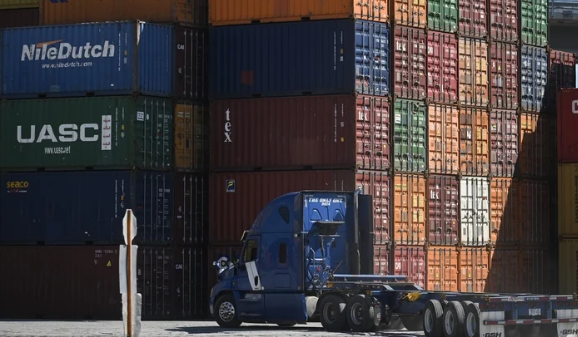
Iran trades with over 100 countries, with China its largest partner. Between October 2024 and October 2025, China imported more than $14 billion in Iranian goods. Iraq follows with $10.5 billion in imports, while Turkey and the United Arab Emirates also rank among Iran’s top customers. Exports are largely fuel-based, with Iran shipping oil, gas, and petrochemical products. It also exports food products such as pistachios and tomatoes.

Iran’s imports are dominated by staples including corn, rice, sunflower seeds, and soybeans, alongside gold, its single largest import. In the 12 months to October 2025, Iran imported $6.7 billion in gold, up from $4.8 billion the previous year.

Implementing the tariff could prove difficult. Iran reportedly evaded some sanctions in 2024 through opaque shipping practices and by selling oil in Chinese yuan rather than US dollars. Observers warned that the announcement could further strain relations between the US and China. Chinese goods already face an average 30.8 percent tariff in the US, and a new levy could be seen as highly provocative. Beijing has previously retaliated with trade restrictions and warned it would “take all necessary measures to safeguard its legitimate rights and interests.”

Iran’s economy has struggled under years of sanctions, mismanagement, and declining oil sales. Inflation reached 48.4 percent in October, and the local currency has weakened sharply against the US dollar. Essential goods and services, including food, electricity, and water, remain expensive and unreliable, contributing to the widespread protests. The recent removal of fuel subsidies and potential trade restrictions from new tariffs could worsen the economic crisis.

Trump has used the threat of tariffs in the past as a diplomatic tool, though analysts caution that past announcements have not always translated into immediate action. Legal challenges could also delay or limit the implementation of the new 25 percent levy, with the US Supreme Court scheduled to rule on related tariff powers this week.

The announcement adds another layer of uncertainty to an already volatile geopolitical and economic environment, with potential impacts on global trade and the Iranian economy.


Business

Fraudsters are increasingly using AI-generated images and videos to trick people into handing over sensitive personal and financial information, according to FraudSMART, the financial crime awareness initiative operated by the Banking and Payments Federation Ireland (BPFI). The organisation has reported a rise in online adverts promoting fake, State-backed investment schemes. These scams often use fabricated images of well-known politicians and business figures to make the offers appear legitimate and encourage users to click on registration links. Niamh Davenport, head of financial crime at BPFI, said scammers are deliberately exploiting recent media coverage of a planned State-backed savings and investment scheme to give their frauds a sense of credibility. “They often claim the scheme is open to everyone, but that places are limited and being ‘snapped up’ fast, in order to pressure people to act quickly,” she said. “They typically promise guaranteed returns or a guaranteed monthly income.” FraudSMART said that while anyone can be targeted, people in their early 50s are particularly vulnerable to investment scams. This age group is often focused on retirement planning, making them more receptive to financial offers that appear secure or high-yield. According to the organisation, most scams follow a similar pattern. Victims are first directed to click a registration link and complete a short online form providing their contact details. They are then contacted by someone posing as a financial adviser, who urges them to make an immediate “security deposit” to secure participation in the scheme. Once a payment is made, the money is quickly moved through multiple accounts, often overseas, making recovery extremely difficult. Davenport warned that scammers are becoming more sophisticated in their use of technology, particularly AI tools that allow them to create realistic but entirely fake promotional content. These materials are designed to mimic legitimate financial advertisements and build trust with potential victims. Recent figures from An Garda Síochána show investment fraud rose by 20% last year, with losses exceeding €20 million. The scale of individual scams varies widely, ranging from smaller crypto-related frauds involving a few hundred euro to large-scale investment schemes where victims lose tens of thousands. FraudSMART is urging the public to remain cautious when encountering online investment advertisements, especially those promising guaranteed returns or requiring urgent action. It also advises consumers to avoid sharing personal information with unverified sources and to be wary of pressure tactics designed to rush financial decisions. Authorities continue to warn that fraudsters are adapting quickly, using advanced digital tools to target victims across multiple platforms.

Trending

Business

Fraudsters are increasingly using AI-generated images and videos to trick people into handing over sensitive personal and financial information, according to FraudSMART, the financial crime awareness initiative operated by the Banking and Payments Federation Ireland (BPFI). The organisation has reported a rise in online adverts promoting fake, State-backed investment schemes. These scams often use fabricated images of well-known politicians and business figures to make the offers appear legitimate and encourage users to click on registration links. Niamh Davenport, head of financial crime at BPFI, said scammers are deliberately exploiting recent media coverage of a planned State-backed savings and investment scheme to give their frauds a sense of credibility. “They often claim the scheme is open to everyone, but that places are limited and being ‘snapped up’ fast, in order to pressure people to act quickly,” she said. “They typically promise guaranteed returns or a guaranteed monthly income.” FraudSMART said that while anyone can be targeted, people in their early 50s are particularly vulnerable to investment scams. This age group is often focused on retirement planning, making them more receptive to financial offers that appear secure or high-yield. According to the organisation, most scams follow a similar pattern. Victims are first directed to click a registration link and complete a short online form providing their contact details. They are then contacted by someone posing as a financial adviser, who urges them to make an immediate “security deposit” to secure participation in the scheme. Once a payment is made, the money is quickly moved through multiple accounts, often overseas, making recovery extremely difficult. Davenport warned that scammers are becoming more sophisticated in their use of technology, particularly AI tools that allow them to create realistic but entirely fake promotional content. These materials are designed to mimic legitimate financial advertisements and build trust with potential victims. Recent figures from An Garda Síochána show investment fraud rose by 20% last year, with losses exceeding €20 million. The scale of individual scams varies widely, ranging from smaller crypto-related frauds involving a few hundred euro to large-scale investment schemes where victims lose tens of thousands. FraudSMART is urging the public to remain cautious when encountering online investment advertisements, especially those promising guaranteed returns or requiring urgent action. It also advises consumers to avoid sharing personal information with unverified sources and to be wary of pressure tactics designed to rush financial decisions. Authorities continue to warn that fraudsters are adapting quickly, using advanced digital tools to target victims across multiple platforms.

You May Also Like

Politics

WASHINGTON — The Pentagon announced on Sunday that the United States will send a Terminal High Altitude Area Defense (THAAD) battery to Israel, alongside...

Health

NEW YORK — Teen smoking in the United States has reached an all-time low in 2024, with significant declines in overall youth tobacco use,...

Politics

WASHINGTON — As the countdown to the November 5 presidential election continues, former President Donald Trump is urging his supporters to aim for a...

Politics

In September, NASA announced that summer 2024 was the hottest on record. Just days later, the U.S. faced the dual impact of Hurricanes Helene...