



















Connect with us

Hi, what are you looking for?

Business

US Outlines Key Demands to Keep Canada Trade Deal Intact

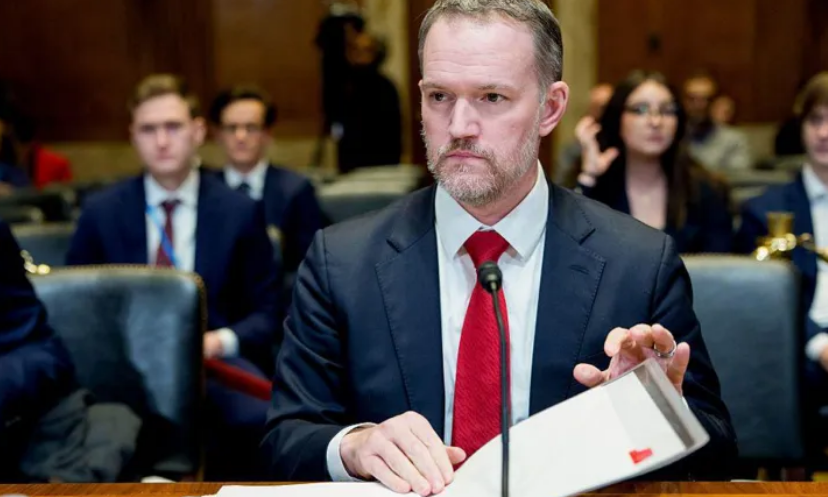
With US-Canada trade talks on hold, American officials have presented their clearest demands yet to maintain free trade under the United States-Mexico-Canada Agreement (USMCA). The proposals, outlined by US Trade Representative Jamieson Greer during a Congressional hearing on Wednesday, focus on market access, digital media, and energy disputes.

One of the primary US demands is increased access to Canada’s dairy market. Canada operates a supply-management system that strictly regulates dairy production and imports to support local farmers. The US argues this system limits market access for its dairy products and has accused Canada of dumping nonfat milk solids at low prices internationally. While Canada imported $1.1 billion of US dairy in 2024, the US seeks expanded quotas and reduced restrictions.

Greer also raised concerns about Canadian laws affecting streaming services. The 2023 Online Streaming Act requires platforms like Netflix and Spotify to pay to promote Canadian content and gives regulators authority to impose penalties. The US contends the law discriminates against American tech and media firms. Greer also cited the Online News Act, which obliges tech companies such as Google and Meta to pay Canadian news outlets. Meta has blocked news access for Canadian users on Facebook and Instagram in protest.

The US is pressing Canada to lift its provincial bans on American liquor, imposed in response to President Trump’s tariffs on Canadian goods. Most provinces, except Alberta and Saskatchewan, removed US alcohol from store shelves, causing significant sales declines for American producers. Greer said reinstating US liquor sales would be a key condition for extending the USMCA.

Other US concerns include electricity trade and regulatory barriers. Greer highlighted a dispute between Montana-based electricity providers and Alberta, alleging that Alberta’s non-profit grid operator restricts access for American suppliers. Alberta officials have denied discriminatory treatment, noting that the province continues to import more electricity from Montana than from neighboring Canadian provinces.

Greer also mentioned “discriminatory procurement measures” in Ontario, Quebec, and British Columbia, along with complex customs registration procedures that hinder US exports.

While the USMCA has been in effect since 2020 and both Canada and Mexico support its continuation, President Trump has suggested the US could leave the agreement. Greer told Congress that while the pact has been “successful to a certain degree,” modifications are needed to address ongoing trade frictions.

The latest US demands underscore the administration’s push to address long-standing trade imbalances, with particular focus on dairy, digital services, and energy. The proposals set the stage for renewed negotiations aimed at keeping the North American trade framework intact while responding to both American and Canadian economic interests.


Business

Fraudsters are increasingly using AI-generated images and videos to trick people into handing over sensitive personal and financial information, according to FraudSMART, the financial crime awareness initiative operated by the Banking and Payments Federation Ireland (BPFI). The organisation has reported a rise in online adverts promoting fake, State-backed investment schemes. These scams often use fabricated images of well-known politicians and business figures to make the offers appear legitimate and encourage users to click on registration links. Niamh Davenport, head of financial crime at BPFI, said scammers are deliberately exploiting recent media coverage of a planned State-backed savings and investment scheme to give their frauds a sense of credibility. “They often claim the scheme is open to everyone, but that places are limited and being ‘snapped up’ fast, in order to pressure people to act quickly,” she said. “They typically promise guaranteed returns or a guaranteed monthly income.” FraudSMART said that while anyone can be targeted, people in their early 50s are particularly vulnerable to investment scams. This age group is often focused on retirement planning, making them more receptive to financial offers that appear secure or high-yield. According to the organisation, most scams follow a similar pattern. Victims are first directed to click a registration link and complete a short online form providing their contact details. They are then contacted by someone posing as a financial adviser, who urges them to make an immediate “security deposit” to secure participation in the scheme. Once a payment is made, the money is quickly moved through multiple accounts, often overseas, making recovery extremely difficult. Davenport warned that scammers are becoming more sophisticated in their use of technology, particularly AI tools that allow them to create realistic but entirely fake promotional content. These materials are designed to mimic legitimate financial advertisements and build trust with potential victims. Recent figures from An Garda Síochána show investment fraud rose by 20% last year, with losses exceeding €20 million. The scale of individual scams varies widely, ranging from smaller crypto-related frauds involving a few hundred euro to large-scale investment schemes where victims lose tens of thousands. FraudSMART is urging the public to remain cautious when encountering online investment advertisements, especially those promising guaranteed returns or requiring urgent action. It also advises consumers to avoid sharing personal information with unverified sources and to be wary of pressure tactics designed to rush financial decisions. Authorities continue to warn that fraudsters are adapting quickly, using advanced digital tools to target victims across multiple platforms.

Trending

Business

Fraudsters are increasingly using AI-generated images and videos to trick people into handing over sensitive personal and financial information, according to FraudSMART, the financial crime awareness initiative operated by the Banking and Payments Federation Ireland (BPFI). The organisation has reported a rise in online adverts promoting fake, State-backed investment schemes. These scams often use fabricated images of well-known politicians and business figures to make the offers appear legitimate and encourage users to click on registration links. Niamh Davenport, head of financial crime at BPFI, said scammers are deliberately exploiting recent media coverage of a planned State-backed savings and investment scheme to give their frauds a sense of credibility. “They often claim the scheme is open to everyone, but that places are limited and being ‘snapped up’ fast, in order to pressure people to act quickly,” she said. “They typically promise guaranteed returns or a guaranteed monthly income.” FraudSMART said that while anyone can be targeted, people in their early 50s are particularly vulnerable to investment scams. This age group is often focused on retirement planning, making them more receptive to financial offers that appear secure or high-yield. According to the organisation, most scams follow a similar pattern. Victims are first directed to click a registration link and complete a short online form providing their contact details. They are then contacted by someone posing as a financial adviser, who urges them to make an immediate “security deposit” to secure participation in the scheme. Once a payment is made, the money is quickly moved through multiple accounts, often overseas, making recovery extremely difficult. Davenport warned that scammers are becoming more sophisticated in their use of technology, particularly AI tools that allow them to create realistic but entirely fake promotional content. These materials are designed to mimic legitimate financial advertisements and build trust with potential victims. Recent figures from An Garda Síochána show investment fraud rose by 20% last year, with losses exceeding €20 million. The scale of individual scams varies widely, ranging from smaller crypto-related frauds involving a few hundred euro to large-scale investment schemes where victims lose tens of thousands. FraudSMART is urging the public to remain cautious when encountering online investment advertisements, especially those promising guaranteed returns or requiring urgent action. It also advises consumers to avoid sharing personal information with unverified sources and to be wary of pressure tactics designed to rush financial decisions. Authorities continue to warn that fraudsters are adapting quickly, using advanced digital tools to target victims across multiple platforms.

You May Also Like

Politics

WASHINGTON — The Pentagon announced on Sunday that the United States will send a Terminal High Altitude Area Defense (THAAD) battery to Israel, alongside...

Health

NEW YORK — Teen smoking in the United States has reached an all-time low in 2024, with significant declines in overall youth tobacco use,...

Politics

WASHINGTON — As the countdown to the November 5 presidential election continues, former President Donald Trump is urging his supporters to aim for a...

Politics

In September, NASA announced that summer 2024 was the hottest on record. Just days later, the U.S. faced the dual impact of Hurricanes Helene...