


















Connect with us

Hi, what are you looking for?

Health

Measles Cases in U.S. Hit 33-Year High, Raising Fears of Wider Vaccine-Preventable Disease Resurgence

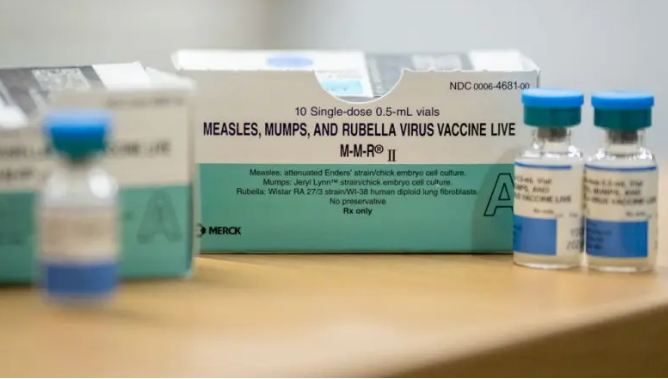
The United States has recorded its highest number of measles cases in more than three decades, with 1,288 infections confirmed so far in 2025, according to the latest data from the U.S. Centers for Disease Control and Prevention (CDC). The figure marks the worst outbreak since 1992—eight years before the disease was declared eliminated in the U.S.—and has triggered renewed concern among public health experts.

Measles, one of the most contagious viruses known, is preventable through the measles, mumps, and rubella (MMR) vaccine. But a steady decline in vaccination rates has left communities increasingly vulnerable. The CDC reports that 92% of this year’s cases occurred in individuals who were either unvaccinated or whose vaccination status is unknown.

Experts warn that this surge could be a harbinger of wider trouble.

“This was expected—but still alarming,” said epidemiologist Katelyn Jetelina. “We’re at a turning point. Measles is the first to reappear when vaccination coverage slips, but it won’t be the last.”

Indeed, the drop in immunization rates is raising red flags across the public health sector. The CDC reported that MMR vaccination coverage among kindergartners fell to 92.7% during the 2023–2024 school year—below the 95% threshold required to maintain herd immunity.

The decline is attributed to multiple factors, including rising vaccine hesitancy during the COVID-19 pandemic and growing influence of vaccine skeptics. The issue has been further inflamed by recent decisions under Health and Human Services Secretary Robert F. Kennedy Jr., a known critic of vaccines. Kennedy recently disbanded the CDC’s vaccine advisory committee and replaced it with individuals who have expressed skepticism about immunizations. The new panel has already voted to halt recommendations for certain flu vaccines and is reviewing the childhood vaccination schedule.

The broader implications of such moves are concerning, say experts. Michael Osterholm, director of the Center for Infectious Disease Research and Policy (CIDRAP), warned that diseases like mumps, rubella, and whooping cough could be next.

“We’re at risk of undoing decades of progress,” he said. “If vaccination rates keep falling, more children will fall seriously ill—and some will die.”

Already this year, three measles-related deaths have been confirmed, including two young girls in Texas. CDC data show that 13% of measles patients were hospitalized, with the rate rising to 21% among children under five.

Dr. Paul Offit of the Children’s Hospital of Philadelphia stressed the deadly reality of the disease: “Those two girls were perfectly healthy. Measles can kill anyone.”

Beyond the immediate health crisis, experts view the resurgence as a symptom of deeper issues. “This isn’t just about measles,” Jetelina said. “It’s about a breakdown of trust, rising individualism over collective health, and systems buckling under disinvestment.”

With measles emerging as a symbol of eroding public health protections, officials and experts alike are urging a renewed commitment to immunization—and to restoring confidence in science.


Business

Fraudsters are increasingly using AI-generated images and videos to trick people into handing over sensitive personal and financial information, according to FraudSMART, the financial crime awareness initiative operated by the Banking and Payments Federation Ireland (BPFI). The organisation has reported a rise in online adverts promoting fake, State-backed investment schemes. These scams often use fabricated images of well-known politicians and business figures to make the offers appear legitimate and encourage users to click on registration links. Niamh Davenport, head of financial crime at BPFI, said scammers are deliberately exploiting recent media coverage of a planned State-backed savings and investment scheme to give their frauds a sense of credibility. “They often claim the scheme is open to everyone, but that places are limited and being ‘snapped up’ fast, in order to pressure people to act quickly,” she said. “They typically promise guaranteed returns or a guaranteed monthly income.” FraudSMART said that while anyone can be targeted, people in their early 50s are particularly vulnerable to investment scams. This age group is often focused on retirement planning, making them more receptive to financial offers that appear secure or high-yield. According to the organisation, most scams follow a similar pattern. Victims are first directed to click a registration link and complete a short online form providing their contact details. They are then contacted by someone posing as a financial adviser, who urges them to make an immediate “security deposit” to secure participation in the scheme. Once a payment is made, the money is quickly moved through multiple accounts, often overseas, making recovery extremely difficult. Davenport warned that scammers are becoming more sophisticated in their use of technology, particularly AI tools that allow them to create realistic but entirely fake promotional content. These materials are designed to mimic legitimate financial advertisements and build trust with potential victims. Recent figures from An Garda Síochána show investment fraud rose by 20% last year, with losses exceeding €20 million. The scale of individual scams varies widely, ranging from smaller crypto-related frauds involving a few hundred euro to large-scale investment schemes where victims lose tens of thousands. FraudSMART is urging the public to remain cautious when encountering online investment advertisements, especially those promising guaranteed returns or requiring urgent action. It also advises consumers to avoid sharing personal information with unverified sources and to be wary of pressure tactics designed to rush financial decisions. Authorities continue to warn that fraudsters are adapting quickly, using advanced digital tools to target victims across multiple platforms.

Trending

Business

Fraudsters are increasingly using AI-generated images and videos to trick people into handing over sensitive personal and financial information, according to FraudSMART, the financial crime awareness initiative operated by the Banking and Payments Federation Ireland (BPFI). The organisation has reported a rise in online adverts promoting fake, State-backed investment schemes. These scams often use fabricated images of well-known politicians and business figures to make the offers appear legitimate and encourage users to click on registration links. Niamh Davenport, head of financial crime at BPFI, said scammers are deliberately exploiting recent media coverage of a planned State-backed savings and investment scheme to give their frauds a sense of credibility. “They often claim the scheme is open to everyone, but that places are limited and being ‘snapped up’ fast, in order to pressure people to act quickly,” she said. “They typically promise guaranteed returns or a guaranteed monthly income.” FraudSMART said that while anyone can be targeted, people in their early 50s are particularly vulnerable to investment scams. This age group is often focused on retirement planning, making them more receptive to financial offers that appear secure or high-yield. According to the organisation, most scams follow a similar pattern. Victims are first directed to click a registration link and complete a short online form providing their contact details. They are then contacted by someone posing as a financial adviser, who urges them to make an immediate “security deposit” to secure participation in the scheme. Once a payment is made, the money is quickly moved through multiple accounts, often overseas, making recovery extremely difficult. Davenport warned that scammers are becoming more sophisticated in their use of technology, particularly AI tools that allow them to create realistic but entirely fake promotional content. These materials are designed to mimic legitimate financial advertisements and build trust with potential victims. Recent figures from An Garda Síochána show investment fraud rose by 20% last year, with losses exceeding €20 million. The scale of individual scams varies widely, ranging from smaller crypto-related frauds involving a few hundred euro to large-scale investment schemes where victims lose tens of thousands. FraudSMART is urging the public to remain cautious when encountering online investment advertisements, especially those promising guaranteed returns or requiring urgent action. It also advises consumers to avoid sharing personal information with unverified sources and to be wary of pressure tactics designed to rush financial decisions. Authorities continue to warn that fraudsters are adapting quickly, using advanced digital tools to target victims across multiple platforms.

You May Also Like

Politics

WASHINGTON — The Pentagon announced on Sunday that the United States will send a Terminal High Altitude Area Defense (THAAD) battery to Israel, alongside...

Health

NEW YORK — Teen smoking in the United States has reached an all-time low in 2024, with significant declines in overall youth tobacco use,...

Politics

WASHINGTON — As the countdown to the November 5 presidential election continues, former President Donald Trump is urging his supporters to aim for a...

Politics

In September, NASA announced that summer 2024 was the hottest on record. Just days later, the U.S. faced the dual impact of Hurricanes Helene...