


















Connect with us

Hi, what are you looking for?

Politics

China Mocks U.S. Manufacturing in Viral AI Memes Amid Intensifying Trade War

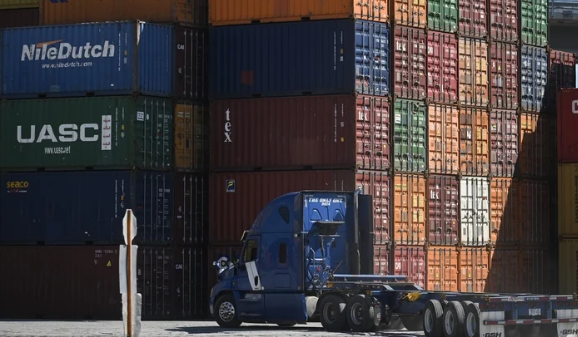
As the U.S.-China trade war escalates, a new front has emerged—not on factory floors or shipping lanes, but on social media. Chinese netizens are flooding platforms with AI-generated satire, ridiculing the idea of American workers returning to sweatshop-style manufacturing, a jab at U.S. President Donald Trump’s aggressive tariff strategy.

The viral videos, many showing overweight Americans assembling sneakers or slumped over sewing machines beneath banners reading “Make America Strong Again,” have become a cultural sensation in China. The imagery lampoons the notion that the U.S. can revive its manufacturing sector by slapping heavy tariffs on imports.

The mockery follows Trump’s declaration of “Liberation Day” on April 2, when his administration imposed sweeping tariffs on all global trading partners. China was hit hardest, with U.S. tariffs on Chinese goods soaring to 145%. In response, Beijing raised its own tariffs on U.S. imports to 125%, though it vowed to avoid further tit-for-tat escalation.

“This isn’t a joke to China,” said a statement from China’s Ministry of Finance, “but retaliating endlessly is just a numbers game.”

Despite the sharp economic consequences, Chinese citizens are finding humor in the situation—especially in highlighting the implausibility of a U.S. manufacturing renaissance. “The joke is Americans don’t want to do those jobs,” said Mark Cogan, a U.S. academic based in Japan. “We’re the punchline.”

Trump has long promised that tariffs would trigger a “golden age” for American industry. However, economists argue the opposite is more likely. Jayant Menon of the ISEAS-Yusof Ishak Institute points out that trade deficits are often a sign of economic strength, not weakness. He adds, “The U.S. is trying to reverse what developing countries aspire to achieve—an evolved service economy.”

While Trump hopes high import costs will shift production stateside, experts warn that logistical and labor challenges make this unlikely. China’s massive, low-wage manufacturing workforce—over 100 million people—outpaces America’s 13 million factory workers. Moreover, U.S. consumers may simply buy less as prices climb, and businesses are unlikely to relocate given the higher cost of American labor.

Adding to the irony, the U.S. engineering talent needed for high-tech manufacturing is increasingly scarce. Much of it comes from international students—a group facing stricter visa restrictions under Trump’s immigration policies.

The AI videos may be satire, but they tap into serious concerns about global supply chains and the limits of economic nationalism. As tariffs drive up prices, Chinese factories have started promoting direct-to-consumer sales, while warning Western buyers of scams posing as brand-affiliated manufacturers.

The meme war, it seems, is a messaging win for Beijing. According to analysts, China’s retaliatory stance enjoys broad domestic support and is being used to project strength both at home and abroad. “China is ready to fight for its place at the table,” said consumer analyst Ashley Dudarenok.

And with the AI-powered propaganda now spreading across TikTok and X, even outside of China’s Great Firewall, experts say the message is resonating far beyond Beijing’s reach.


Business

Fraudsters are increasingly using AI-generated images and videos to trick people into handing over sensitive personal and financial information, according to FraudSMART, the financial crime awareness initiative operated by the Banking and Payments Federation Ireland (BPFI). The organisation has reported a rise in online adverts promoting fake, State-backed investment schemes. These scams often use fabricated images of well-known politicians and business figures to make the offers appear legitimate and encourage users to click on registration links. Niamh Davenport, head of financial crime at BPFI, said scammers are deliberately exploiting recent media coverage of a planned State-backed savings and investment scheme to give their frauds a sense of credibility. “They often claim the scheme is open to everyone, but that places are limited and being ‘snapped up’ fast, in order to pressure people to act quickly,” she said. “They typically promise guaranteed returns or a guaranteed monthly income.” FraudSMART said that while anyone can be targeted, people in their early 50s are particularly vulnerable to investment scams. This age group is often focused on retirement planning, making them more receptive to financial offers that appear secure or high-yield. According to the organisation, most scams follow a similar pattern. Victims are first directed to click a registration link and complete a short online form providing their contact details. They are then contacted by someone posing as a financial adviser, who urges them to make an immediate “security deposit” to secure participation in the scheme. Once a payment is made, the money is quickly moved through multiple accounts, often overseas, making recovery extremely difficult. Davenport warned that scammers are becoming more sophisticated in their use of technology, particularly AI tools that allow them to create realistic but entirely fake promotional content. These materials are designed to mimic legitimate financial advertisements and build trust with potential victims. Recent figures from An Garda Síochána show investment fraud rose by 20% last year, with losses exceeding €20 million. The scale of individual scams varies widely, ranging from smaller crypto-related frauds involving a few hundred euro to large-scale investment schemes where victims lose tens of thousands. FraudSMART is urging the public to remain cautious when encountering online investment advertisements, especially those promising guaranteed returns or requiring urgent action. It also advises consumers to avoid sharing personal information with unverified sources and to be wary of pressure tactics designed to rush financial decisions. Authorities continue to warn that fraudsters are adapting quickly, using advanced digital tools to target victims across multiple platforms.

Trending

Business

Fraudsters are increasingly using AI-generated images and videos to trick people into handing over sensitive personal and financial information, according to FraudSMART, the financial crime awareness initiative operated by the Banking and Payments Federation Ireland (BPFI). The organisation has reported a rise in online adverts promoting fake, State-backed investment schemes. These scams often use fabricated images of well-known politicians and business figures to make the offers appear legitimate and encourage users to click on registration links. Niamh Davenport, head of financial crime at BPFI, said scammers are deliberately exploiting recent media coverage of a planned State-backed savings and investment scheme to give their frauds a sense of credibility. “They often claim the scheme is open to everyone, but that places are limited and being ‘snapped up’ fast, in order to pressure people to act quickly,” she said. “They typically promise guaranteed returns or a guaranteed monthly income.” FraudSMART said that while anyone can be targeted, people in their early 50s are particularly vulnerable to investment scams. This age group is often focused on retirement planning, making them more receptive to financial offers that appear secure or high-yield. According to the organisation, most scams follow a similar pattern. Victims are first directed to click a registration link and complete a short online form providing their contact details. They are then contacted by someone posing as a financial adviser, who urges them to make an immediate “security deposit” to secure participation in the scheme. Once a payment is made, the money is quickly moved through multiple accounts, often overseas, making recovery extremely difficult. Davenport warned that scammers are becoming more sophisticated in their use of technology, particularly AI tools that allow them to create realistic but entirely fake promotional content. These materials are designed to mimic legitimate financial advertisements and build trust with potential victims. Recent figures from An Garda Síochána show investment fraud rose by 20% last year, with losses exceeding €20 million. The scale of individual scams varies widely, ranging from smaller crypto-related frauds involving a few hundred euro to large-scale investment schemes where victims lose tens of thousands. FraudSMART is urging the public to remain cautious when encountering online investment advertisements, especially those promising guaranteed returns or requiring urgent action. It also advises consumers to avoid sharing personal information with unverified sources and to be wary of pressure tactics designed to rush financial decisions. Authorities continue to warn that fraudsters are adapting quickly, using advanced digital tools to target victims across multiple platforms.

You May Also Like

Politics

WASHINGTON — The Pentagon announced on Sunday that the United States will send a Terminal High Altitude Area Defense (THAAD) battery to Israel, alongside...

Health

NEW YORK — Teen smoking in the United States has reached an all-time low in 2024, with significant declines in overall youth tobacco use,...

Politics

WASHINGTON — As the countdown to the November 5 presidential election continues, former President Donald Trump is urging his supporters to aim for a...

Politics

In September, NASA announced that summer 2024 was the hottest on record. Just days later, the U.S. faced the dual impact of Hurricanes Helene...