


















Connect with us

Hi, what are you looking for?

Politics

Trump Officials Defend Use of Signal for Military Planning Amid Security Concerns

Two top intelligence officials from the Trump Administration defended the use of a private group chat for high-level military planning during a heated Senate Intelligence Committee hearing on Tuesday. The session, which had been scheduled prior to recent revelations, was dominated by concerns over national security after reports surfaced that senior officials had discussed U.S. military operations on an unsecured messaging app.

The controversy erupted following a report by The Atlantic’s Jeffrey Goldberg, which revealed that Vice President J.D. Vance, Defense Secretary Pete Hegseth, National Security Adviser Michael Waltz, and other senior officials used Signal, a commercial messaging app, to coordinate U.S. airstrikes on Yemen’s Houthi militants. The group chat inadvertently included a journalist, raising alarms about the handling of sensitive military information.

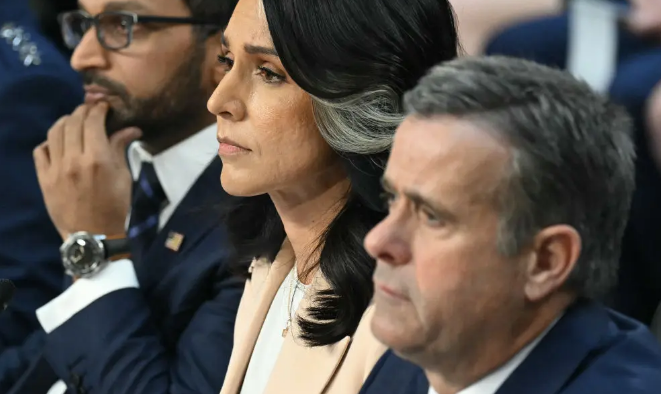
During the hearing, Director of National Intelligence Tulsi Gabbard and CIA Director John Ratcliffe faced tough questioning from Senate Democrats. Senator Mark Warner (D-VA) condemned the use of an unsecured platform, calling it “sloppy, careless, and incompetent.” While Gabbard refused to confirm her involvement in the chat, she and Ratcliffe insisted that no classified information had been shared. Gabbard maintained that the discussion complied with internal protocols, stating, “There was no classified material that was shared.”

Goldberg’s report, however, suggested otherwise, citing details in the chat regarding weapons packages, strike timing, and target locations. Ratcliffe defended the practice, asserting that “Signal is a permissible work-use application” within the CIA, provided that formal decisions are recorded through official government channels. He and Gabbard agreed to an audit of their communications after pressure from Senator Ron Wyden (D-OR).

The White House sought to downplay the incident, with Press Secretary Karoline Leavitt insisting that “no war plans were shared.” President Donald Trump also dismissed concerns, calling the situation his administration’s “only glitch in two months.” He expressed confidence in Waltz, stating, “Michael Waltz has learned a lesson, and he’s a good man.”

Despite these reassurances, the issue sparked outrage among Democrats, with some calling for resignations. Senator Michael Bennet (D-CO) denounced the officials’ actions as an “embarrassment,” while Warner argued that Waltz and Hegseth should step down. Former Air Force Brigadier General Rep. Don Bacon (R-NE) stopped short of demanding resignations but warned that the breach was reckless, stating, “There’s no doubt that Russia and China saw this stuff within hours.”

The hearing also highlighted broader concerns over security protocols within the Trump Administration. Intelligence experts warned that using any unclassified platform to discuss military operations was a significant breach of protocol, regardless of encryption. The controversy reached a boiling point when Senator Jon Ossoff (D-GA) pressed Ratcliffe on the severity of the mistake. In a tense exchange, Ratcliffe initially dismissed the incident but later conceded that adding a journalist to the chat was an “inadvertent mistake.”

With national security concerns mounting, the administration faces increasing pressure to reassess its protocols for handling sensitive information. The fallout from this breach may have long-lasting implications for the credibility of the administration’s security measures and its relationships with intelligence agencies.


Business

Fraudsters are increasingly using AI-generated images and videos to trick people into handing over sensitive personal and financial information, according to FraudSMART, the financial crime awareness initiative operated by the Banking and Payments Federation Ireland (BPFI). The organisation has reported a rise in online adverts promoting fake, State-backed investment schemes. These scams often use fabricated images of well-known politicians and business figures to make the offers appear legitimate and encourage users to click on registration links. Niamh Davenport, head of financial crime at BPFI, said scammers are deliberately exploiting recent media coverage of a planned State-backed savings and investment scheme to give their frauds a sense of credibility. “They often claim the scheme is open to everyone, but that places are limited and being ‘snapped up’ fast, in order to pressure people to act quickly,” she said. “They typically promise guaranteed returns or a guaranteed monthly income.” FraudSMART said that while anyone can be targeted, people in their early 50s are particularly vulnerable to investment scams. This age group is often focused on retirement planning, making them more receptive to financial offers that appear secure or high-yield. According to the organisation, most scams follow a similar pattern. Victims are first directed to click a registration link and complete a short online form providing their contact details. They are then contacted by someone posing as a financial adviser, who urges them to make an immediate “security deposit” to secure participation in the scheme. Once a payment is made, the money is quickly moved through multiple accounts, often overseas, making recovery extremely difficult. Davenport warned that scammers are becoming more sophisticated in their use of technology, particularly AI tools that allow them to create realistic but entirely fake promotional content. These materials are designed to mimic legitimate financial advertisements and build trust with potential victims. Recent figures from An Garda Síochána show investment fraud rose by 20% last year, with losses exceeding €20 million. The scale of individual scams varies widely, ranging from smaller crypto-related frauds involving a few hundred euro to large-scale investment schemes where victims lose tens of thousands. FraudSMART is urging the public to remain cautious when encountering online investment advertisements, especially those promising guaranteed returns or requiring urgent action. It also advises consumers to avoid sharing personal information with unverified sources and to be wary of pressure tactics designed to rush financial decisions. Authorities continue to warn that fraudsters are adapting quickly, using advanced digital tools to target victims across multiple platforms.

Trending

Business

Fraudsters are increasingly using AI-generated images and videos to trick people into handing over sensitive personal and financial information, according to FraudSMART, the financial crime awareness initiative operated by the Banking and Payments Federation Ireland (BPFI). The organisation has reported a rise in online adverts promoting fake, State-backed investment schemes. These scams often use fabricated images of well-known politicians and business figures to make the offers appear legitimate and encourage users to click on registration links. Niamh Davenport, head of financial crime at BPFI, said scammers are deliberately exploiting recent media coverage of a planned State-backed savings and investment scheme to give their frauds a sense of credibility. “They often claim the scheme is open to everyone, but that places are limited and being ‘snapped up’ fast, in order to pressure people to act quickly,” she said. “They typically promise guaranteed returns or a guaranteed monthly income.” FraudSMART said that while anyone can be targeted, people in their early 50s are particularly vulnerable to investment scams. This age group is often focused on retirement planning, making them more receptive to financial offers that appear secure or high-yield. According to the organisation, most scams follow a similar pattern. Victims are first directed to click a registration link and complete a short online form providing their contact details. They are then contacted by someone posing as a financial adviser, who urges them to make an immediate “security deposit” to secure participation in the scheme. Once a payment is made, the money is quickly moved through multiple accounts, often overseas, making recovery extremely difficult. Davenport warned that scammers are becoming more sophisticated in their use of technology, particularly AI tools that allow them to create realistic but entirely fake promotional content. These materials are designed to mimic legitimate financial advertisements and build trust with potential victims. Recent figures from An Garda Síochána show investment fraud rose by 20% last year, with losses exceeding €20 million. The scale of individual scams varies widely, ranging from smaller crypto-related frauds involving a few hundred euro to large-scale investment schemes where victims lose tens of thousands. FraudSMART is urging the public to remain cautious when encountering online investment advertisements, especially those promising guaranteed returns or requiring urgent action. It also advises consumers to avoid sharing personal information with unverified sources and to be wary of pressure tactics designed to rush financial decisions. Authorities continue to warn that fraudsters are adapting quickly, using advanced digital tools to target victims across multiple platforms.

You May Also Like

Politics

WASHINGTON — The Pentagon announced on Sunday that the United States will send a Terminal High Altitude Area Defense (THAAD) battery to Israel, alongside...

Health

NEW YORK — Teen smoking in the United States has reached an all-time low in 2024, with significant declines in overall youth tobacco use,...

Politics

WASHINGTON — As the countdown to the November 5 presidential election continues, former President Donald Trump is urging his supporters to aim for a...

Politics

In September, NASA announced that summer 2024 was the hottest on record. Just days later, the U.S. faced the dual impact of Hurricanes Helene...