


















Connect with us

Hi, what are you looking for?

Health

Lawmakers Push for Abortion Criminalization Bills in Multiple States

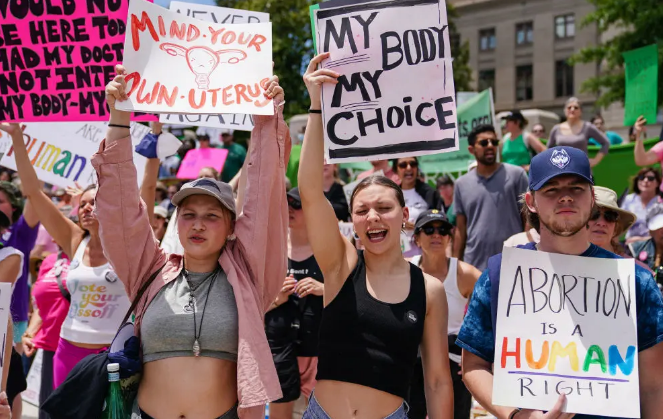
Abortion rights advocates are raising alarms over a new wave of legislation that could allow authorities to charge individuals who obtain abortions with homicide. At least 10 states—Georgia, Idaho, Indiana, Iowa, Kentucky, Missouri, North Dakota, Oklahoma, South Carolina, and Texas—have introduced such bills for the 2025 legislative session, according to the Center for Reproductive Rights.

Most of these states have already imposed strict abortion bans, with exceptions in Missouri and North Dakota, where previous near-total bans were overturned. The proposed laws redefine embryos and fetuses as “unborn children” or “preborn children,” positioning them as potential homicide victims and paving the way for criminal prosecution of those who seek abortions. Some bills also propose removing existing legal protections that prevent pregnant individuals from being charged.

Increasing Push for Criminalization

Lizzy Hinkley, senior state legislative counsel at the Center for Reproductive Rights, describes the trend as “very, very alarming,” noting an increase in such proposals this year. She highlights that several states advancing these bills, such as South Carolina, permit the death penalty, raising further concerns about their implications.

“It’s very much right out of the anti-abortion playbook to introduce bills that seek to control, oppress, and punish pregnant people,” Hinkley said.

Three of the proposed bills—introduced in Indiana, North Dakota, and Oklahoma—have already failed to advance. However, legal experts caution that while the remaining bills face an uphill battle, their persistence signals a shift in the anti-abortion movement’s strategy.

Mary Ziegler, a professor at the University of California, Davis School of Law, notes that these proposals remain relatively unpopular, even among conservatives and anti-abortion activists. “Having said that, they are more likely to pass now than in previous years, and the fact that they keep coming back is significant,” she said.

Growing Criminalization of Abortion

Since the Supreme Court’s 2022 decision in Dobbs v. Jackson Women’s Health Organization, which ended federal abortion protections, state-level abortion restrictions have escalated. While most anti-abortion laws have historically targeted medical providers, recent developments suggest a shift toward prosecuting individuals seeking abortion care.

On March 17, Texas authorities arrested a midwife on charges of illegally providing abortions—the first such case in the state since the Dobbs ruling. Additionally, a New York-based doctor is facing both civil and criminal charges in Texas and Louisiana for allegedly prescribing abortion pills via telemedicine.

These bills also introduce “fetal personhood” language, a controversial legal doctrine that seeks to grant embryos and fetuses the same rights as people. This concept was reinforced by a recent executive order from President Donald Trump, which stated that the U.S. government recognizes “only two sexes, male and female,” and referenced sex being “assigned at conception.” Abortion rights advocates argue that this language aligns with fetal personhood rhetoric and could be used to justify further abortion restrictions.

The Future of Abortion Legislation

Advocates worry that even if these bills do not pass in 2025, they will resurface in future legislative sessions. Hinkley points to a September report from Pregnancy Justice, which found that at least 210 pregnant individuals faced criminal charges related to pregnancy in the year following the Dobbs decision—the highest number recorded in a single year.

“It doesn’t matter if the bills pass this year; they’ll be back next year,” Hinkley warned. “There was a time when total abortion bans without exceptions for rape, incest, or even a pregnant person’s health seemed unthinkable. But that’s the reality now. This is a harrowing indication of what anti-abortion legislators and activists ultimately want.”

As the legal battles over reproductive rights continue, both supporters and opponents of abortion are bracing for more political and legal fights in the coming years.


Business

Fraudsters are increasingly using AI-generated images and videos to trick people into handing over sensitive personal and financial information, according to FraudSMART, the financial crime awareness initiative operated by the Banking and Payments Federation Ireland (BPFI). The organisation has reported a rise in online adverts promoting fake, State-backed investment schemes. These scams often use fabricated images of well-known politicians and business figures to make the offers appear legitimate and encourage users to click on registration links. Niamh Davenport, head of financial crime at BPFI, said scammers are deliberately exploiting recent media coverage of a planned State-backed savings and investment scheme to give their frauds a sense of credibility. “They often claim the scheme is open to everyone, but that places are limited and being ‘snapped up’ fast, in order to pressure people to act quickly,” she said. “They typically promise guaranteed returns or a guaranteed monthly income.” FraudSMART said that while anyone can be targeted, people in their early 50s are particularly vulnerable to investment scams. This age group is often focused on retirement planning, making them more receptive to financial offers that appear secure or high-yield. According to the organisation, most scams follow a similar pattern. Victims are first directed to click a registration link and complete a short online form providing their contact details. They are then contacted by someone posing as a financial adviser, who urges them to make an immediate “security deposit” to secure participation in the scheme. Once a payment is made, the money is quickly moved through multiple accounts, often overseas, making recovery extremely difficult. Davenport warned that scammers are becoming more sophisticated in their use of technology, particularly AI tools that allow them to create realistic but entirely fake promotional content. These materials are designed to mimic legitimate financial advertisements and build trust with potential victims. Recent figures from An Garda Síochána show investment fraud rose by 20% last year, with losses exceeding €20 million. The scale of individual scams varies widely, ranging from smaller crypto-related frauds involving a few hundred euro to large-scale investment schemes where victims lose tens of thousands. FraudSMART is urging the public to remain cautious when encountering online investment advertisements, especially those promising guaranteed returns or requiring urgent action. It also advises consumers to avoid sharing personal information with unverified sources and to be wary of pressure tactics designed to rush financial decisions. Authorities continue to warn that fraudsters are adapting quickly, using advanced digital tools to target victims across multiple platforms.

Trending

Business

Fraudsters are increasingly using AI-generated images and videos to trick people into handing over sensitive personal and financial information, according to FraudSMART, the financial crime awareness initiative operated by the Banking and Payments Federation Ireland (BPFI). The organisation has reported a rise in online adverts promoting fake, State-backed investment schemes. These scams often use fabricated images of well-known politicians and business figures to make the offers appear legitimate and encourage users to click on registration links. Niamh Davenport, head of financial crime at BPFI, said scammers are deliberately exploiting recent media coverage of a planned State-backed savings and investment scheme to give their frauds a sense of credibility. “They often claim the scheme is open to everyone, but that places are limited and being ‘snapped up’ fast, in order to pressure people to act quickly,” she said. “They typically promise guaranteed returns or a guaranteed monthly income.” FraudSMART said that while anyone can be targeted, people in their early 50s are particularly vulnerable to investment scams. This age group is often focused on retirement planning, making them more receptive to financial offers that appear secure or high-yield. According to the organisation, most scams follow a similar pattern. Victims are first directed to click a registration link and complete a short online form providing their contact details. They are then contacted by someone posing as a financial adviser, who urges them to make an immediate “security deposit” to secure participation in the scheme. Once a payment is made, the money is quickly moved through multiple accounts, often overseas, making recovery extremely difficult. Davenport warned that scammers are becoming more sophisticated in their use of technology, particularly AI tools that allow them to create realistic but entirely fake promotional content. These materials are designed to mimic legitimate financial advertisements and build trust with potential victims. Recent figures from An Garda Síochána show investment fraud rose by 20% last year, with losses exceeding €20 million. The scale of individual scams varies widely, ranging from smaller crypto-related frauds involving a few hundred euro to large-scale investment schemes where victims lose tens of thousands. FraudSMART is urging the public to remain cautious when encountering online investment advertisements, especially those promising guaranteed returns or requiring urgent action. It also advises consumers to avoid sharing personal information with unverified sources and to be wary of pressure tactics designed to rush financial decisions. Authorities continue to warn that fraudsters are adapting quickly, using advanced digital tools to target victims across multiple platforms.

You May Also Like

Politics

WASHINGTON — The Pentagon announced on Sunday that the United States will send a Terminal High Altitude Area Defense (THAAD) battery to Israel, alongside...

Health

NEW YORK — Teen smoking in the United States has reached an all-time low in 2024, with significant declines in overall youth tobacco use,...

Politics

WASHINGTON — As the countdown to the November 5 presidential election continues, former President Donald Trump is urging his supporters to aim for a...

Politics

In September, NASA announced that summer 2024 was the hottest on record. Just days later, the U.S. faced the dual impact of Hurricanes Helene...